Table of Contents
Solid Wood Panel Moisture: Agree on Receiving Conditions
Solid wood panel moisture should be evaluated against a defined production task. For indoor joinery procurement, the priority is to match moisture measurement and conditioning to the intended service environment. That turns a broad material search into a decision about the finished component, the process needed to make it and the evidence required before a repeat order.
This guide focuses on that specific buying situation. The useful next step is to record meter type, species setting and sampling positions. In particular, avoid accepting a moisture number with no measurement method. A clear sample and written specification make it easier to compare solid wood panel moisture offers without relying on a surface photograph or an undefined quality claim.

The decision for indoor joinery procurement
Begin the solid wood panel moisture evaluation by separating the part requirement from the general product description. The solid wood panel moisture buyer needs to match moisture measurement and conditioning to the intended service environment; the workshop needs a repeatable way to produce the approved result. Put those two responsibilities on one trial sheet with the component drawing, material identity and acceptance decision.
For indoor joinery procurement, use the final viewing position and the hardest production detail to define acceptance. Record what the supplied solid wood panel moisture sample represents and what it leaves unresolved. If a finish, hardware arrangement or service condition changes, revisit the relevant trial before assuming the original result still applies. The goal is a solid wood panel moisture order the receiving team can inspect and the workshop can reproduce.
Map exposure at the finished detail
List where water or humidity can reach the completed part: cut edges, joints, service holes, floor contact or condensation-prone locations. For solid wood panel moisture, distinguish ordinary indoor humidity from repeated wetting or continuous exposure. Those are different selection problems and may require different products or assembly details.
Ask the supplier for information covering the exact supplied construction, then test the vulnerable detail using a project-appropriate method. Include the adhesive, edge treatment and adjacent fittings in that assessment. For solid wood panel moisture, a successful wipe of the broad face does not establish the condition of an unprotected cut edge. Resolve drainage, cleaning and maintenance expectations before approving the material so the finished product is used within the conditions actually evaluated.
Agree on moisture measurement and conditioning
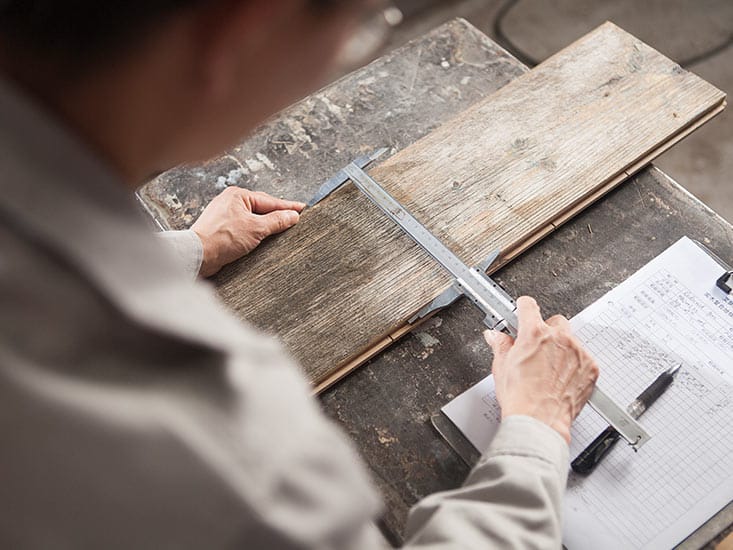
A moisture reading is meaningful only when the measurement method and sample identity are clear. Meter settings, species information and the location of the reading can affect interpretation. For solid wood panel moisture, agree on the receiving method and the conditioning expected before machining or assembly. Record the storage environment with the results.
Measure representative material from the commercial lot rather than only one convenient board. Follow the material and instrument suppliers' guidance, and use a more suitable method when a formal specification calls for it. An approval for solid wood panel moisture should describe the relevant conditions instead of treating an isolated number as proof that every board is ready for every indoor environment. Keep suspect material separate until the cause is understood.
Resolve interfaces with a full-size mockup
A panel's installed result depends on the wall, frame, opening or neighboring component. For solid wood panel moisture, survey those interfaces before cutting and identify fixing locations, clearances and removable sections. Coordinate appliance or equipment details with the relevant manufacturer's instructions where the panel forms an enclosure or access wall.
Build a representative mockup that includes a corner, opening or service detail rather than only a flat face. Check alignment and removal access using the final thickness and finish. Approval of solid wood panel moisture should include the fixing and support arrangement relevant to the use. This helps prevent late site cuts, inaccessible services or forced fits that damage a correctly supplied decorative panel during installation.
Allow movement across the grain
Solid wood exchanges moisture with its environment and changes dimensions differently along and across the grain. Wide components therefore need a considered fixing arrangement. For solid wood panel moisture, review grain direction and expected indoor conditions before setting clearances or rigidly attaching the panel to another material.
Use the designer's joinery detail and an appropriate full-size trial where movement affects fit. Do not assume that a protective finish eliminates dimensional change. When specifying solid wood panel moisture, coordinate grooves, fixings and adjacent parts so movement can occur as intended. A joint that looks tight in the workshop can become problematic in a different environment if the design has locked a wide cross-grain component into an incompatible frame.
Confirm the service environment before choosing a panel
Indoor decoration, occasional construction moisture and permanent exterior exposure are different conditions. For solid wood panel moisture, describe the actual environment in the RFQ and ask for product-specific information that addresses it. Do not assume that a decorative finish or a familiar panel family establishes the suitability of a particular construction.
Review the complete detail, including cut edges, fixings, joints and maintenance. Where structural or exterior use requires formal evidence, the responsible designer should approve the exact product and installation instructions. With solid wood panel moisture, keep that review separate from color and texture approval. A change in facing or a surface seal does not automatically extend the permitted use of an underlying panel beyond the conditions for which the supplied product has been evaluated.
Approve the coating on representative wood
Species, grain and surface preparation influence how wood appears after finishing. A stain approved on one sample may look different on a board with another grain pattern or sanding history. For solid wood panel moisture, make the finish trial on representative material from the intended construction and include the full coating sequence.
Examine edges, end grain and permitted knots as well as the broad face. Review the result under the lighting expected in use. With solid wood panel moisture, retain the finished reference and record the surface preparation so the workshop can repeat it. A clear finish is not visually neutral in every situation, and a color name alone cannot define the finished appearance across naturally variable boards.

Trial the intended cleaning routine
Choose a cleaning method that is compatible with the actual surface and edge construction. For solid wood panel moisture, follow the finish supplier's guidance and test the products the end user plans to use. Include textured areas, joints and exposed edges rather than wiping only the easiest part of a smooth sample.
Inspect residue, gloss changes, staining and edge condition after the agreed trial. Define acceptable maintenance instructions with the project team before ordering. For solid wood panel moisture, a durable decorative face does not mean every solvent or abrasive pad is suitable, and a cleanable face does not protect an unfinished edge from standing water. A realistic routine helps the buyer select a finish that can be maintained consistently in the intended furniture or interior environment.
Support long panels throughout storage and transport
Long wood components can be damaged by uneven support, rubbing or impact at the ends. For solid wood panel moisture, align pack supports and protect edges according to the supplied construction. Keep the material away from uncontrolled moisture sources and preserve the labels needed to identify the approved lot.
Inspect panels from more than one position in the pack, including lower boards that may experience different support or handling conditions. Separate damage caused during transport from permitted natural features. A practical receiving check for solid wood panel moisture records the pack condition before unpacking and the board condition afterward. This gives the supplier and carrier useful evidence if a claim is needed, while keeping undamaged material available for production.
Worked example for indoor joinery procurement
A sink-base sample should include a plumbing penetration, a cut upper edge and the lower edge near the plinth. Those locations create different routes for moisture, even when every broad face has the same decorative finish. For solid wood panel moisture, mark the intended edge protection on the drawing and check that it remains continuous around each penetration. Use a project-appropriate trial and the product's stated limitations. Inspect the solid wood panel moisture assembly after drying as well as during exposure, and record the detail rather than describing the whole cabinet with an undefined waterproof label.
Comparison of three purchasing approaches
| Approach | What it resolves | What remains to check |
|---|---|---|
| Buy from a face sample | Initial color or texture preference | Core, finished detail, component fit and documented use |
| Buy to a written construction | Defined material, dimensions and delivered condition | Whether the workshop can produce the intended finished part |
| Approve a representative finished trial | Construction and processing tested on the relevant component | Commercial-lot consistency and any later material or process changes |
For solid wood panel moisture in indoor joinery procurement, the third approach usually provides the clearest evidence for this decision: match moisture measurement and conditioning to the intended service environment. It also makes the limits explicit. A finished trial covers its documented construction and conditions; it does not qualify every product sold under the same material name.
A practical trial for this order
Identify the requirement: match moisture measurement and conditioning to the intended service environment. Add the drawing revision, intended environment and delivered material construction to the trial record.
Prepare representative solid wood panel moisture samples from the proposed commercial construction. Include both the visible face and the critical machined or assembled detail.
Run the agreed verification: record meter type, species setting and sampling positions. Use the intended equipment, adjacent components and finishing route so the result represents normal production.
Record acceptance and unresolved questions. Specifically check whether the process risks accepting a moisture number with no measurement method. Keep extra repair or finishing labor visible in the cost comparison.
Retain the approved solid wood panel moisture sample and transfer the same specification to the purchase order. Review a substitution or changed process before releasing the affected repeat batch.
For background on wood structure, moisture, composite panels, joints and finishing, consult the USDA Forest Products Laboratory Wood Handbook. This independent technical reference supports material understanding; it is not a certification or test report for any DA AO product.
Discuss the specified construction with DA AO
DA AO lists DA AO door-panel construction options within its panel range. Its wood-panel services describe customization of size, thickness, surface finish and decorative pattern. Send the proposed application and drawing so the available construction can be checked against the requirement before quotation.
For a solid wood panel moisture inquiry about indoor joinery procurement, include dimensions, quantity, required finish, exposed edges, hardware or fixing details and the evidence needed for approval. Ask the team to confirm the supplied construction and sample arrangement in writing. Use the inquiry form after the FAQ to request a specification review and a quotation based on the same information.
Frequently asked questions
What is the first check when buying solid wood panel moisture for this application?
For indoor joinery procurement, first match moisture measurement and conditioning to the intended service environment. Identify the supplied construction and put that requirement in the quotation request so the supplier and workshop evaluate the same finished component.
What sample should I request for solid wood panel moisture?
Request representative commercial material, then record meter type, species setting and sampling positions. Keep the drawing, material identity and process conditions with the result. A sample that omits the critical detail cannot establish whether that detail will work in production.
Which mistake should this solid wood panel moisture order avoid?
Avoid accepting a moisture number with no measurement method. Agree on the intended construction, finished detail and acceptance method before batch processing, then check a representative commercial lot against the retained approval.
Can a supplier substitute another solid wood panel moisture construction?
Review the proposed change against the signed specification and the critical trial. A matching name or finish does not establish equivalent machining, fit or service behavior. Obtain written approval and repeat the affected evaluation where necessary.
What should a solid wood panel moisture quotation include?
Include actual dimensions, quantity, supplied finish, packing and delivery basis, together with the requirements for indoor joinery procurement. Identify sample approval and any required technical evidence separately so the commercial offer can be compared consistently.