Table of Contents
Key Takeaways
- Oriented strand board OSB and plywood are both engineered wood panels, but their internal structures and visible surfaces are different.
- OSB usually provides consistent panel strength, efficient large-format coverage, and a recognizable wood-strand appearance.
- Plywood is often selected when buyers value veneer grain, lighter panel weight, edge performance, or conventional woodworking characteristics.
- The right material depends on the application, moisture exposure, support spacing, required thickness, surface finish, and local construction standards.
- Structural grade, test reports, emission documentation, and manufacturing consistency matter more than the product name alone.
- Buyers should compare total project requirements instead of selecting a board only by its initial quotation.
- OSB can be used in roofing, wall sheathing, subflooring, packaging, furniture, displays, partitions, and decorative interiors when the correct specification is chosen.
- Samples and technical documents should be approved before placing a large wholesale order.
Introduction
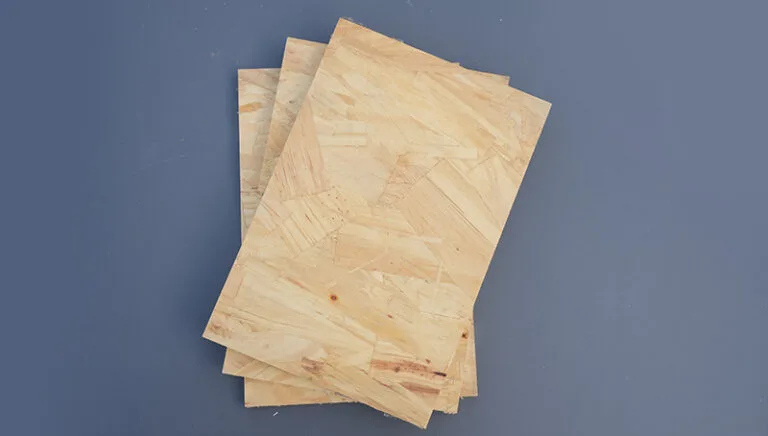
Choosing between oriented strand board OSB and plywood is a common decision for builders, furniture manufacturers, distributors, interior contractors, and international wood-panel buyers.
At first glance, both products appear to perform similar functions. They are available in large sheets, can be cut into different component sizes, and may be used for walls, floors, roofs, furniture, packaging, and temporary structures.
However, they are not identical.
Their raw materials, internal construction, surface appearance, edge behavior, moisture response, machining characteristics, and purchasing considerations can differ. A panel that performs well in one project may be unnecessary or unsuitable in another.
This guide compares oriented strand board OSB with plywood from a practical buyer’s perspective. It explains how to evaluate both materials and how to select an appropriate panel for different construction, manufacturing, and decorative applications.
What Is Oriented Strand Board OSB?
Oriented strand board OSB is an engineered wood panel made from long, thin wood strands. These strands are arranged in directional layers and bonded under controlled heat and pressure.
The orientation of the strands helps distribute forces through the panel. It also creates the distinctive flake-like surface that makes OSB visually different from plywood, MDF, and particle board.
Oriented Wood Strands
The wood pieces used in OSB are larger than the particles used in particle board. Their length and directional arrangement contribute to the structure of the finished panel.
When the panel remains exposed, the strands also create a natural industrial appearance. This makes OSB useful for both structural and decorative projects.
Layered Panel Construction
OSB normally contains several layers whose strand directions vary. The outer layers and core layers work together to improve stiffness and dimensional performance.
The precise layer configuration depends on the manufacturer, product grade, thickness, raw material, and intended application.
Resin Bonding
Specialized resins bind the strands during hot pressing. The resin system influences moisture performance, emissions, internal bonding, and the environment in which the panel may be used.
Buyers should ask for product-specific information rather than assuming that all OSB panels have the same adhesive system.
Hot-Pressing Process
Heat and pressure compress the strand mat into a stable board. Accurate control of temperature, pressure, moisture, and pressing time is important for consistent thickness and panel performance.
Production consistency becomes especially important when a buyer orders multiple containers for continuous manufacturing or construction use.
A general overview of the material and its development is available from the Wikipedia page about oriented strand board.
What Is Plywood?
.jpg)
Plywood is an engineered panel manufactured from thin layers of wood veneer. These veneers are generally bonded with the grain direction of adjacent layers positioned at an angle to each other.
Cross-laminating the veneers helps balance the panel and improves strength across multiple directions.
Wood Veneer Layers
Each plywood layer consists of a thin sheet peeled or sliced from a log. The species, veneer grade, thickness, and number of layers influence the appearance and performance of the finished board.
Visible outer veneers may be selected for decorative quality, while internal veneers primarily contribute to panel structure.
Cross-Laminated Structure
The alternating grain direction helps reduce some of the directional movement associated with solid wood. It also provides strength across the length and width of the sheet.
The quality of the veneer layers and the presence of internal gaps can influence machining, fastener holding, and edge appearance.
Face and Back Grades
Plywood may be supplied with different face and back qualities. Decorative plywood usually requires a more uniform visible veneer, while structural or packaging plywood may permit more surface variation.
Buyers should define whether the panel will remain exposed, be painted, receive a laminate, or be hidden inside a finished assembly.
Oriented Strand Board OSB vs Plywood at a Glance
The following table provides a general comparison. Exact performance depends on the grade, thickness, manufacturer, test standard, and installation method.
| Comparison Factor | Oriented Strand Board OSB | Plywood |
|---|---|---|
| Main raw material | Directional wood strands | Thin wood veneers |
| Visible appearance | Layered strand texture | Natural veneer grain |
| Panel consistency | Generally uniform across large sheets | Can vary with veneer quality |
| Structural potential | High when correctly graded | High when correctly graded |
| Surface smoothness | Textured or sanded | Usually smoother on higher face grades |
| Edge appearance | Compressed visible strands | Layered veneer edges |
| Large-format availability | Often suitable for broad coverage | Depends on manufacturing range |
| Decorative style | Industrial, natural, contemporary | Traditional, clean, wood-grain focused |
| Painting | Possible with preparation | Possible with preparation |
| Clear finishing | Highlights strand pattern | Highlights veneer grain |
| Moisture performance | Depends on OSB grade and sealing | Depends on plywood type and adhesive |
| Typical uses | Sheathing, roofing, flooring, packaging, interiors | Construction, furniture, cabinetry, marine-specific systems |
| Buyer priority | Grade, strand quality, density, resin and thickness | Veneer species, ply count, face grade and bonding |
OSB vs Plywood: Which Is Stronger?
There is no universal answer because strength depends on the exact panel specification and the direction in which the load is applied.
Both oriented strand board OSB and plywood can be manufactured as structural panels. Buyers should compare certified performance values rather than relying on a general statement that one material is always stronger.
Bending Strength
Bending performance is influenced by panel thickness, layer structure, wood quality, density, moisture content, and manufacturing control.
The required performance should be matched to joist spacing, stud spacing, expected loads, panel orientation, and local building requirements.
Shear Performance
Structural wall and floor systems may require panels to resist forces acting within the plane of the board. Both OSB and plywood can be used in engineered assemblies when their grade and installation comply with the applicable design.
Fastener type, spacing, panel edges, framing, and joint layout are also part of the system.
Impact Resistance
Worksite handling, transport, installation, and finished use can expose panels to impacts. A board’s response depends on thickness, density, surface quality, edge condition, and support.
Buyers should consider real handling conditions instead of comparing only laboratory values.
Fastener Holding
Fastener performance depends on the selected screw or nail, its distance from the edge, penetration depth, panel thickness, framing, and expected load.
Heavy fixtures should be connected to suitable structural support rather than relying only on a decorative panel.
Is Oriented Strand Board OSB Better Than Plywood for Roofing?
OSB is widely considered for roof sheathing because it provides broad, consistent panel coverage and can be supplied in structural grades. Plywood is also used for roof systems and may be preferred by some contractors based on local practice, handling preferences, or exposure conditions.
Neither panel should be chosen without considering the full roof assembly.
Roof Support Spacing
Panel thickness and grade must match the spacing of rafters or trusses. A board that is too thin for the support spacing may deflect or produce an uneven roof surface.
The required specification should be confirmed from approved construction documents and local standards.
Temporary Weather Exposure
Roof panels may be exposed to rain during construction. Appropriate OSB and plywood products can tolerate defined exposure conditions, but neither should be left unprotected indefinitely.
Standing water, unsealed edges, poor storage, and delayed roof covering can increase the risk of swelling or surface damage.
Edge Support
Unsupported panel edges may require clips, blocking, tongue-and-groove profiles, or another approved support method. The correct detail depends on the product and roof design.
Buyers should ask whether the OSB panel is square-edged or profiled for the intended installation.
Roofing Recommendation
Choose OSB when the project requires consistent structural sheets, efficient area coverage, and a specification supported by the roof design.
Choose plywood when veneer construction, local installer preference, weight, or a specified plywood system is important.
The final decision should follow engineering requirements rather than appearance or price alone.
Is OSB or Plywood Better for Wall Sheathing?
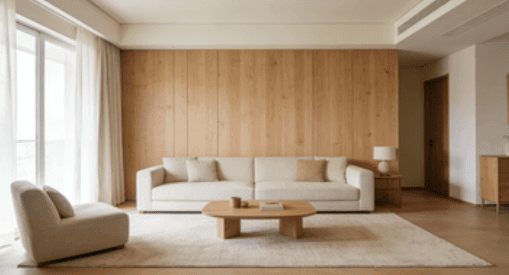
Oriented strand board OSB is frequently evaluated for wall sheathing because it can provide uniform coverage and structural performance across large wall areas. Plywood can perform a similar function when the correct structural grade is used.
The better option depends on wall design, weather exposure, fastening schedule, insulation system, cladding, and local code requirements.
Structural Wall Bracing
Sheathing may help a framed wall resist lateral movement. Panel grade, thickness, orientation, fastener spacing, and framing connections all contribute to performance.
Changing the specified panel without professional review may affect the complete wall system.
Air and Moisture Control
OSB or plywood sheathing is only one part of the building envelope. Membranes, flashing, drainage cavities, joints, penetrations, insulation, and exterior cladding must work together.
A moisture-resistant panel does not eliminate the need for proper envelope design.
Interior Wall Lining
When OSB is used on the interior face of a wall, its strand texture may become a decorative feature. Plywood creates a smoother and more traditional wood-grain appearance.
Interior selection is therefore influenced by aesthetics as well as mechanical requirements.
OSB vs Plywood for Subflooring
Subfloor panels must support repeated loads while maintaining a stable base for the finished flooring. Both OSB and plywood may be used when the panel specification matches the floor design.
The installation should account for joist spacing, panel edges, moisture conditions, adhesives, fasteners, and the selected floor covering.
Tongue-and-Groove Edges
Tongue-and-groove panels help support adjoining edges between floor joists. They can reduce vertical movement and create a more continuous surface.
Buyers should confirm the profile dimensions and compatibility before ordering panels from different production batches.
Panel Thickness
Floor panels must have sufficient thickness for the joist spacing and expected load. Thin panels may feel flexible, while excessively thick panels add material weight and may be unnecessary.
The project designer should determine the required panel rating.
Construction Moisture
Subfloors can be exposed to weather before the building is enclosed. Water should be removed promptly, and panels should be allowed to dry before sensitive floor finishes are installed.
Edges, cutouts, and joints require particular attention because they may absorb moisture faster than the panel surface.
Surface Preparation
Before installing finished flooring, inspect the subfloor for raised joints, debris, damaged areas, loose fasteners, and excessive moisture.
Flooring manufacturers may specify maximum moisture levels and surface tolerances.
Oriented Strand Board OSB vs Plywood for Furniture
Furniture manufacturers evaluate different factors from structural builders. Machining accuracy, surface finish, edge treatment, screw holding, panel weight, appearance, and compatibility with laminates may become more important.
OSB can create distinctive furniture, while plywood offers visible veneer grain and layered edges.
Furniture Made from OSB
OSB is used for shelving, tables, storage units, shop displays, exhibition furniture, cabinets, stools, partitions, and industrial-style interiors.
A sanded board with controlled strand appearance is usually more suitable for exposed furniture than a rough structural sheet.
Furniture Made from Plywood
Plywood is commonly selected for cabinets, chairs, tables, drawer parts, shelving, curved components, and decorative joinery.
Higher face grades are valuable when the outer veneer remains visible.
Edge Finishing
OSB edges display compressed strands and can become part of the design. They may be sanded and sealed, covered with edge strips, or enclosed within a frame.
Plywood edges reveal alternating veneer layers. Some designers leave them exposed, while others apply solid wood or decorative edge banding.
Surface Coating
Both materials may be painted, stained, laminated, or clear-coated. However, their absorption and visual results differ.
Always test the complete finishing system on an actual sample before beginning mass production.
DA AO Wood Industry provides factory-direct oriented strand board OSB for panel applications and also offers additional wood-based materials for buyers comparing different furniture substrates.
OSB vs MDF for Decorative Manufacturing
Although the main comparison in this guide is OSB versus plywood, many furniture and interior buyers also consider MDF.
MDF is made from refined wood fibers and provides a smooth, uniform surface. It is particularly suitable for painting, routing, veneering, and decorative processing.
Choose OSB When
- The wood-strand pattern will remain visible.
- The design requires an industrial or raw-material appearance.
- Panel stiffness and structural potential are important.
- The project uses exposed edges as a design feature.
- Large decorative surfaces require natural variation.
Choose MDF When
- A smooth painted finish is required.
- The product contains routed patterns or detailed machining.
- Uniform surface absorption is important.
- Decorative film, veneer, or another overlay will cover the board.
- The visible strand texture of OSB is not desired.
Buyers seeking a smoother furniture substrate can compare the company’s MDF medium-density fiberboard with its OSB range.
OSB vs Particle Board
Particle board and OSB are both engineered wood products, but their wood elements and typical applications differ.
Particle board uses smaller wood particles, while OSB uses longer strands arranged in directional layers.
OSB Characteristics
OSB generally offers a more visible structure and greater potential for demanding panel applications, depending on grade.
It is commonly considered for construction, packaging, furniture, displays, and decorative walls.
Particle Board Characteristics
Particle board provides a relatively uniform core and is frequently used beneath melamine paper, laminate, veneer, or other decorative surfaces.
It is common in wardrobes, desks, shelves, cabinets, and mass-produced panel furniture.
For furniture projects requiring a finished decorative surface, buyers can also review melamine-faced particleboard and the broader particle board product category.
How to Choose the Correct OSB Grade
OSB products are divided into grades according to applicable regional standards and intended performance. The names and requirements may differ between markets.
In markets using European-style classification, buyers may encounter OSB/1, OSB/2, OSB/3, and OSB/4.
| OSB Grade | General Classification | Typical Conditions | Common Buyer Consideration |
| OSB/1 | General-purpose, non-load-bearing | Dry interior conditions | Decorative interiors and light applications |
| OSB/2 | Load-bearing panel | Dry conditions | Structural uses protected from humidity |
| OSB/3 | Load-bearing, moisture-resistant | Humid conditions | Construction and demanding interior projects |
| OSB/4 | Heavy-duty load-bearing | Humid conditions | Higher-performance structural applications |
This table is a simplified guide. Buyers should obtain the actual standard, declaration, test report, and recommended use from the manufacturer.
Structural Grade
A structural designation indicates that the panel is manufactured and assessed for defined mechanical requirements.
It does not mean that the board can be used in any structure without design calculations.
Moisture-Resistant Grade
Moisture-resistant OSB is formulated for more demanding humidity conditions than general-purpose dry-use panels.
It should not be marketed or treated as permanently waterproof.
Decorative Grade
Decorative OSB is selected primarily for surface appearance. It may have finer strands, a sanded face, controlled color, and more consistent visual quality.
Decorative appearance and structural classification should be specified separately when both are required.
What OSB Thickness Should Buyers Choose?
OSB thickness should be selected according to load, support spacing, panel size, manufacturing process, machining requirements, and final application.
Frequently requested thicknesses may include 6 mm, 8 mm, 9 mm, 11 mm, 12 mm, 15 mm, 18 mm, 22 mm, and other project-specific dimensions.
Availability varies by manufacturer and market.
6–9 mm OSB
Relatively thin panels may be considered for decorative linings, packaging components, displays, backing panels, and applications with continuous support.
They can be easier to handle but may require closer fastening or more complete backing.
11–12 mm OSB
This range is commonly evaluated for wall lining, packaging, furniture, partitions, and selected sheathing systems.
Suitability depends on panel grade and the required span.
15–18 mm OSB
Medium-to-thick panels provide greater rigidity and may be used for flooring, furniture, shelving, work surfaces, wall systems, and construction applications.
Their increased weight should be considered during transport and installation.
22 mm and Thicker OSB
Thicker panels may be selected for heavily loaded floors, industrial packaging, work platforms, structural systems, or special manufacturing requirements.
They should not be chosen solely because a thicker board seems safer. Over-specification can increase project weight and material consumption without providing a useful advantage.
How Does OSB React to Moisture?
One of the most common search questions is: “Can oriented strand board OSB get wet?”
The answer depends on product grade, exposure duration, edge condition, coating, installation, ventilation, and drying conditions.
Short-Term Exposure
A suitable structural OSB product may tolerate limited construction exposure when installed and protected according to its intended classification.
Water should still be removed, and the board should be allowed to dry.
Long-Term Humidity
Persistent high humidity can affect wood-based panels. Moisture-resistant OSB may perform better than general-purpose dry-use board, but correct ventilation and wall design remain necessary.
The panel should not trap moisture inside a closed assembly.
Standing Water
Standing water can penetrate panel edges, fastener holes, cutouts, and damaged surfaces. Prolonged exposure may produce swelling or dimensional change.
Protect stored and installed panels from puddles and direct water contact.
Cut-Edge Protection
Factory surfaces and freshly cut edges may respond differently to moisture. Sealing exposed edges can be important in furniture, wall, flooring, packaging, and construction applications.
The selected edge treatment must be compatible with the final use.
Is OSB Environmentally Friendly?
OSB can use smaller-diameter logs and wood strands efficiently, but responsible purchasing requires a broader assessment than raw-material utilization alone.
Buyers should examine sourcing, resin chemistry, manufacturing, transport, service life, and available certification.
Wood Sourcing
Ask whether the raw material comes from managed forests or traceable suppliers. Project requirements may include FSC, PEFC, or other chain-of-custody documentation.
Certification availability should be confirmed before the purchase contract is finalized.
Material Efficiency
OSB production converts wood strands into broad, consistent panels. Efficient cutting plans can also reduce waste during construction or furniture manufacturing.
Panel dimensions should be coordinated with component sizes to improve yield.
Emission Documentation
For interior use, request applicable formaldehyde and volatile organic compound information.
Do not rely only on general claims such as “eco-friendly” or “green.” The supplier should identify the test method and product covered by the report.
Product Lifespan
A panel that remains functional for the intended service life may reduce replacement and waste.
Correct specification, installation, finishing, and maintenance all affect durability.
Readers researching alternative engineered panels can also review the site’s eco board material guide.
How to Inspect OSB Quality Before Buying
Wholesale buyers should evaluate both technical performance and production consistency. One good sample is not enough if later batches vary significantly.
Surface Consistency
Inspect strand distribution, pressing marks, loose flakes, resin spots, sanding quality, color variation, and surface damage.
For decorative applications, agree on acceptable appearance standards in writing.
Edge Density
Check whether the panel edges appear compact and consistent. Weak or damaged edges may affect fastening, machining, packaging, and installation.
Samples should include both factory edges and cut edges.
Thickness Tolerance
Measure several points across multiple panels. Excessive variation can disrupt furniture assembly, lamination, stacking, flooring, or automated production.
The agreed tolerance should appear in the specification.
Squareness
Panels should be checked for length, width, diagonal consistency, and edge straightness.
Out-of-square sheets increase cutting waste and complicate modular installation.
Internal Bonding
Internal bonding cannot be reliably judged from appearance alone. Request relevant technical data and test documentation.
Production control is especially important when panels will be machined into narrow components.
Moisture Content
Panel moisture can influence handling, machining, coating, and dimensional behavior.
Ask the supplier how boards are conditioned and protected before shipment.
Questions to Ask an OSB Manufacturer

A detailed inquiry helps buyers obtain a more accurate quotation and reduces the risk of receiving an unsuitable product.
What OSB Grade Do You Produce?
The supplier should identify the product classification and the standard used to evaluate it.
Avoid accepting vague descriptions such as “high-quality OSB” without supporting specifications.
Which Wood Species Are Used?
Wood species can affect strand color, density, surface appearance, machining, and availability.
DA AO Wood Industry describes its oriented strand board as being manufactured from selected radiata pine logs, giving buyers a defined raw-material basis for further technical discussion.
Which Thicknesses and Sizes Are Available?
Ask for standard dimensions, custom-size capability, thickness tolerance, minimum order quantity, and expected production lead time.
Custom sizes may reduce downstream cutting waste but can require a larger order.
Is the Surface Sanded?
Sanded OSB may be more suitable for furniture, lamination, painting, and exposed interiors. Unsanded material may be sufficient for concealed construction or packaging applications.
Clarify whether one face or both faces are sanded.
What Are the Emission Levels?
Request the applicable emission category, test method, laboratory, report date, and exact product identification.
Interior buyers should align documentation with destination-market requirements.
Can You Supply Certifications?
Certification requirements may affect raw materials, production scheduling, labels, invoices, packing lists, and shipping documents.
State all mandatory certification requirements before confirming the order.
How Is the OSB Packed?
Export packaging should protect the panels from rain, condensation, dirt, edge impact, and movement during transport.
Discuss pallets, wrapping, corner protection, strapping, labels, container loading, and unloading conditions.
Can I Approve a Sample?
Samples allow the buyer to assess surface quality, color, thickness, edge condition, cutting, fastening, and coating response.
For large decorative projects, a sample panel may be more useful than a small hand sample.
How to Compare OSB Supplier Quotations
Two quotations may appear similar while covering different products and services. Compare each item systematically.
| Quotation Item | Supplier A | Supplier B | What to Confirm |
| Product grade | Stated or unstated | Stated or unstated | Exact standard and classification |
| Thickness tolerance | Included | Included | Measurement method and allowable range |
| Surface | Sanded or unsanded | Sanded or unsanded | One face or both faces |
| Raw material | Identified | Identified | Species and source |
| Emission report | Available or unavailable | Available or unavailable | Test method and validity |
| Certification | Included or optional | Included or optional | Exact certificate required |
| Packaging | Basic or reinforced | Basic or reinforced | Export suitability |
| Panel size | Standard or custom | Standard or custom | Net and nominal dimensions |
| Sample approval | Available | Available | Sample and production consistency |
| Lead time | Defined | Defined | Starting point of production period |
| Shipping term | Defined | Defined | Included responsibilities |
The lowest quoted price does not automatically represent the lowest total project cost. Inconsistent thickness, damaged edges, unsuitable packaging, missing documents, or delayed delivery can create additional expense after purchase.
Common OSB Purchasing Mistakes
Selecting OSB Only by Thickness
Two panels with the same thickness may have different grades, densities, internal bonding, surface quality, and recommended applications.
Thickness is only one part of the specification.
Confusing Moisture Resistance with Waterproofing
Moisture-resistant OSB is not designed for unlimited direct water exposure.
The complete construction or furniture system must include appropriate sealing, drainage, ventilation, and maintenance.
Ignoring End Use
A rough sheathing panel and a visible furniture panel may require different surfaces even when they have the same dimensions.
Tell the supplier whether the board will be hidden, painted, laminated, machined, exposed, or structurally loaded.
Ordering Without Samples
Online images may not accurately show strand size, surface texture, color variation, edge structure, or sanding quality.
Approve a representative sample before mass production.
Failing to Confirm Documentation
A project may require emission reports, certificates of origin, sourcing documents, structural testing, or specific shipping records.
Missing documentation can delay customs clearance or project approval.
Mixing Production Batches
Decorative OSB from different batches may vary in shade and strand distribution.
Order related wall, furniture, or display panels together where visual consistency is important.
Applications of Oriented Strand Board OSB
Roof Sheathing
Structural OSB can provide broad roof coverage when its grade, thickness, support spacing, fastening, and exposure classification match the roof design.
Installation should follow approved technical requirements.
Wall Sheathing
OSB may form part of framed wall systems and can contribute to structural bracing.
It must be integrated with membranes, insulation, flashing, cladding, and other envelope components.
Subflooring
Appropriately rated OSB panels may be used over joists as a base for finished flooring.
Tongue-and-groove edges and construction adhesive may be specified in some systems.
Industrial Packaging
OSB can be used for crates, pallets, protective panels, machinery packaging, and export boxes.
Packaging buyers should consider panel weight, fastener performance, handling conditions, and destination regulations.
Furniture
Tables, shelves, cabinets, displays, partitions, and storage systems can use OSB as either an exposed design material or concealed structural component.
Sanding and finishing improve usability in visible furniture.
Retail Displays
The strand pattern creates a recognizable background for products and branding. OSB is often paired with black metal, glass, lighting, and printed signage.
Modular panel sizes can simplify temporary shop and exhibition construction.
Interior Feature Walls
Exposed OSB can create warm industrial walls in homes, offices, cafés, studios, and creative commercial spaces.
The surface should be cleaned, sealed, and detailed for the intended environment.
For further decorative ideas, readers can explore 7 stunning wooden panel trends for 2026 homes and the site’s wood panel decor trends guide.
A Practical OSB Selection Checklist
Before requesting a quotation, prepare the following information:
- Final application
- Structural or non-structural use
- Indoor or outdoor-protected environment
- Expected humidity
- Required grade
- Required standard
- Panel thickness
- Panel length and width
- Square edge or profiled edge
- Sanded or unsanded surface
- One-face or two-face appearance requirements
- Required wood species
- Emission limits
- Certification requirements
- Quantity
- Packaging method
- Destination country
- Shipping term
- Required delivery date
- Sample approval needs
- Required technical documents
Providing these details allows the manufacturer to recommend a more relevant OSB panel.
Conclusion
Oriented strand board OSB and plywood are both useful engineered wood panels, but they should not be treated as identical products.
OSB offers a directional strand structure, consistent large-sheet performance, and a distinctive surface that suits construction, packaging, furniture, retail displays, and modern interiors. Plywood provides cross-laminated veneers, recognizable wood grain, and familiar woodworking characteristics.
For roofing, walls, and flooring, the decision must follow structural specifications, panel ratings, support spacing, fastener requirements, moisture management, and local standards.
For furniture and decorative projects, buyers should compare surface appearance, machining, edge finishing, coating, weight, and production consistency.
The most reliable purchasing process is to define the application first, compare complete technical specifications, request samples, verify documents, and confirm export packaging before production.
DA AO Wood Industry supplies oriented strand board OSB alongside MDF, plywood, particle board, eco-friendly board, and solid wood panels. This broader product system allows distributors, contractors, and manufacturers to compare materials and select a panel that matches their actual processing and project requirements.
FAQ
What is oriented strand board OSB made from?
Oriented strand board OSB is made from long wood strands arranged in directional layers and bonded under heat and pressure.
The wood species, strand geometry, resin, pressing process, and grade affect the final panel.
Is OSB stronger than plywood?
Neither material is automatically stronger in every situation. Strength depends on panel grade, thickness, manufacturing quality, load direction, span, and installation.
Compare certified performance values for the exact products being considered.
Is OSB cheaper than plywood?
OSB is often considered a cost-efficient structural panel, but market prices vary by country, wood supply, thickness, grade, certification, quantity, packaging, and shipping.
Buyers should compare total project cost rather than sheet price alone.
Is OSB waterproof?
OSB should not be described as completely waterproof. Some grades are designed for humid conditions or limited exposure, but prolonged contact with water may still cause swelling or deterioration.
Edges and cut areas require appropriate protection.
Can OSB be used outside?
OSB may be used in protected exterior assemblies when the product grade and construction design permit it.
It should not be left permanently exposed unless it is part of a specifically tested and approved system.
Can OSB be used for roofing?
Yes, appropriately rated OSB can be used for roof sheathing. Thickness, support spacing, fastening, edge support, and weather protection must match the roof specification.
Local construction requirements take priority.
Can OSB be used for flooring?
Appropriately graded OSB can be used for subflooring and selected floor systems. Tongue-and-groove edges are often considered where panel edges fall between joists.
The panel must be dry and stable before the finished floor is installed.
Which side of OSB should face outward?
Panel markings and manufacturer instructions should determine orientation. Some OSB products have different surface textures or installation markings on each face.
Do not assume that every OSB panel is reversible.
Does OSB need a gap during installation?
Wood-based panels may require expansion gaps at joints and perimeters. The exact gap depends on the product and installation system.
Follow the panel manufacturer’s instructions and applicable building guidance.
Can OSB be painted?
Yes. Cleaning, light sanding, sealing, and priming may be needed to achieve an even finish.
Test the paint system first because strands and resin-rich areas can absorb coatings differently.
Can OSB be stained?
OSB can be stained, but the result is usually more varied than stained solid wood or veneer.
A transparent stain highlights the strand pattern, while a darker stain can create a stronger industrial appearance.
Is OSB suitable for furniture?
Yes. OSB can be used for tables, shelving, cabinets, displays, partitions, and other furniture.
Visible applications usually benefit from sanded surfaces, smooth edges, and a protective coating.
What OSB thickness is best?
There is no single best thickness. Decorative lining, wall sheathing, roofing, flooring, furniture, and packaging all have different requirements.
Choose thickness according to grade, load, support spacing, component size, and final use.
What is the difference between OSB and particle board?
OSB uses longer, directionally arranged wood strands. Particle board uses smaller wood particles distributed through the panel.
OSB is often considered for structural or visibly textured applications, while particle board is common in laminated furniture.
What is the difference between OSB and MDF?
OSB has a visible strand structure and may offer structural potential depending on grade. MDF has a smooth, uniform fiber structure that is suitable for painting and detailed machining.
The correct choice depends on appearance and processing requirements.
How do I identify high-quality OSB?
Check the product grade, dimensions, thickness tolerance, edge density, surface consistency, strand bonding, test documents, emission data, and certification.
For large orders, approve samples and define inspection criteria before production.
Can OSB panels be customized?
Manufacturers may offer different sizes, thicknesses, sanding options, edge profiles, grades, packaging, and labels.
Custom production usually depends on quantity and factory capability.
How should OSB be stored?
Store panels flat, supported, dry, ventilated, and protected from rain and ground moisture.
Allow the boards to acclimate before installation when required.
Where can international buyers purchase OSB in bulk?
International buyers can purchase through a qualified OSB manufacturer, exporter, or wood-panel distributor.
DA AO Wood Industry provides a dedicated oriented strand board product page where buyers can review the product and submit requirements for samples, wholesale quantities, and export supply.
Thank you for reading!
I’m glad you joined me on this journey. If you found this content useful or interesting, I would love to hear your thoughts.
- Follow me on Facebook for tips, updates, and community discussions.
Click here to connect - Subscribe to my YouTube channel for tutorials, demonstrations, and practical insights.
Click here to subscribe
Feel free to share your feedback or questions in the comments or on social media. Let’s keep learning and growing together!
.jpg)