Table of Contents
Cabinet Backing Panel: Fit and Attachment for Plywood Backs
Cabinet backing panel should be evaluated against a defined production task. For cabinet box production, the priority is to coordinate plywood thickness with grooves and attachment details. That turns a broad material search into a decision about the finished component, the process needed to make it and the evidence required before a repeat order.
This guide focuses on that specific buying situation. The useful next step is to measure cabinet diagonals before and after attaching the back. In particular, avoid forcing an oversized back into the groove and distorting the box. A clear sample and written specification make it easier to compare cabinet backing panel offers without relying on a surface photograph or an undefined quality claim.

The decision for cabinet box production
Begin the cabinet backing panel evaluation by separating the part requirement from the general product description. The cabinet backing panel buyer needs to coordinate plywood thickness with grooves and attachment details; the workshop needs a repeatable way to produce the approved result. Put those two responsibilities on one trial sheet with the component drawing, material identity and acceptance decision.
For cabinet box production, use the final viewing position and the hardest production detail to define acceptance. Record what the supplied cabinet backing panel sample represents and what it leaves unresolved. If a finish, hardware arrangement or service condition changes, revisit the relevant trial before assuming the original result still applies. The goal is a cabinet backing panel order the receiving team can inspect and the workshop can reproduce.
Test the joint in a representative assembly
Choose hardware using the actual component mass, dimensions, material and expected use. For cabinet backing panel, reproduce the pilot holes, recesses and edge distances on the final drawing. Follow the hardware maker's installation instructions and keep the assembly equipment consistent during comparison trials.
Build the representative corner, shelf connection or complete door and observe the relevant repeated-use or assembly sequence. Inspect movement, local damage and hole enlargement after the trial. An approval for cabinet backing panel should record the tested arrangement so a later connector or thickness substitution can be assessed. Testing an isolated fastener in a loose offcut cannot represent every load and leverage condition that occurs in a finished furniture or interior assembly.
Check back panels in the complete cabinet
A cabinet back can contribute to keeping the box square, depending on its attachment and construction. Thickness alone does not define that behavior. For cabinet backing panel, coordinate the back panel with grooves, screws or other attachments and with service openings. Compare a complete cabinet rather than testing only a loose backing sheet.
Measure the assembled diagonals and examine movement under the intended handling or service trial. A large plumbing cutout can change how the back participates in the assembly. When qualifying cabinet backing panel, include the final opening and fixing pattern in the prototype. This helps distinguish a decorative covering requirement from a structural contribution and prevents a last-minute site cut from undermining an otherwise validated cabinet arrangement.

Trial the hardest feature in the component set
The most demanding detail often determines whether a panel works on the production line. For cabinet backing panel, choose the narrow return, deep groove, recessed hinge or complex opening that creates the greatest risk of chipping or weak remaining material. Reproduce it with the intended tool and support arrangement.
Inspect the raw operation and the finished part after edging or coating. Record tool condition, operation sequence and any hand repair needed for acceptance. Qualification of cabinet backing panel should demonstrate that the part can be made repeatedly under normal workshop conditions. A successful straight cut is useful evidence for that cut, but it cannot establish the quality of a routed corner or a recess that removes much more of the panel thickness.
Look for core discontinuities at critical details
Internal gaps and overlapping material can become visible during routing or drilling. Their importance depends on where they fall in the final component. With cabinet backing panel, cut trial pieces through areas that will carry hardware, show an exposed edge or receive a deep profile. Inspect more than one small sample from a single sheet corner.
Document acceptable and unacceptable conditions with the supplier before batch production. A hidden discontinuity beside a fixing may matter more than an isolated appearance variation on a covered face. Qualifying cabinet backing panel around the critical details helps prevent a good-looking delivery from failing later in machining. Keep rejected examples and lot identifiers so the supplier can investigate the construction rather than relying on a vague complaint about quality.
Write an RFQ that suppliers can answer consistently
A useful request for quotation describes the intended application, construction, actual dimensions, quantity and delivered condition. For cabinet backing panel, add the visible faces, exposed edges and required technical evidence. Include drawings where a text description could be interpreted in more than one way, especially for orientation, machining or finished-part dimensions.
Ask each supplier to identify deviations explicitly rather than assume that silence means full agreement. Keep the final written interpretation with the approved sample. When comparing cabinet backing panel, normalize the quotation basis, packing and delivery scope before ranking offers. This turns the RFQ into a production document that the workshop and receiving team can also use, reducing the chance that purchasing and manufacturing approve different versions of the same item.
Review the reverse face and panel balance
A veneered or overlaid panel needs a coordinated construction on both faces. The decorative front is only one part of that system. For cabinet backing panel, identify the reverse layer and any finishing treatment before making a full-size trial. Discuss an asymmetric construction with the fabricator rather than leaving the back to an unspecified production choice.
Check flatness after the intended cure, finishing and conditioning stages on the relevant support arrangement. A small coupon may stay flat while a tall finished door shows noticeable bow. The useful approval for cabinet backing panel records the finished panel size and construction. Keep those conditions consistent when ordering again or requesting a substitution, particularly where a visible panel must fit a close reveal or a rigid frame.
Check the accumulated fit of the finished assembly
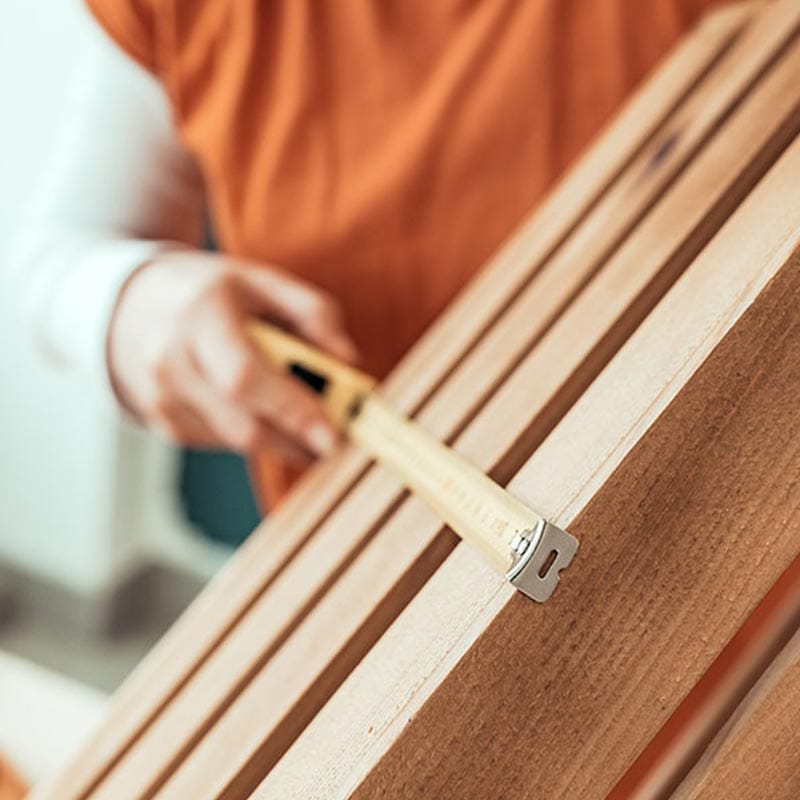
Individual components can meet their own limits while the completed assembly still fits poorly. For cabinet backing panel, consider actual panel thickness, edge covering, hardware position and adjoining frame dimensions together. Define the reference faces and identify which dimensions control the critical reveal or joint.
Assemble the tightest representative detail before releasing batch production. Record the final fit and inspect whether extra trimming or forced assembly was needed. With cabinet backing panel, allocate tolerances deliberately rather than allowing each supplier to choose them independently. Keep the approved drawing revision with the sample so a change in edge-band thickness or hardware offset can be reviewed against the same assembly requirement before it creates a full production run of mismatched parts.
Preserve veneer sequence in the cutting plan
Visible grain can be broken by a cutting plan that treats every offcut as interchangeable. For cabinet backing panel, coordinate sheet orientation and component sequence before machining. Assign stable part labels to doors, drawer fronts or wall panels that need to be viewed together. Distinguish the decorative layout from purely geometric nesting.
Dry-assemble the visible set before finishing and compare it with the approved design. Confirm how spare components will be identified and stored. A high-yield cutting plan for cabinet backing panel remains useful only if the resulting parts meet the appearance requirement. Where grain continuity matters, reserve the necessary material explicitly and include that allowance in the quotation instead of expecting the workshop to recover it from random remaining pieces.
Worked example for cabinet box production
Take a cabinet corner with a cam connector and a dowel. The board trial should contain the cam recess, edge bore and face bore in their intended relationship. Assembling only the dowel hole omits the feature that may leave the least material around the connector. For cabinet backing panel, test the left and right component together and inspect the joint after the required assembly sequence. Keep the connector reference with the approved cabinet backing panel drawing. If the fitting changes, compare its bore depths and operating clearances before assuming that the old machining pattern still applies.
Comparison of three purchasing approaches
| Approach | What it resolves | What remains to check |
|---|---|---|
| Buy from a face sample | Initial color or texture preference | Core, finished detail, component fit and documented use |
| Buy to a written construction | Defined material, dimensions and delivered condition | Whether the workshop can produce the intended finished part |
| Approve a representative finished trial | Construction and processing tested on the relevant component | Commercial-lot consistency and any later material or process changes |
For cabinet backing panel in cabinet box production, the third approach usually provides the clearest evidence for this decision: coordinate plywood thickness with grooves and attachment details. It also makes the limits explicit. A finished trial covers its documented construction and conditions; it does not qualify every product sold under the same material name.
A practical trial for this order
Identify the requirement: coordinate plywood thickness with grooves and attachment details. Add the drawing revision, intended environment and delivered material construction to the trial record.
Prepare representative cabinet backing panel samples from the proposed commercial construction. Include both the visible face and the critical machined or assembled detail.
Run the agreed verification: measure cabinet diagonals before and after attaching the back. Use the intended equipment, adjacent components and finishing route so the result represents normal production.
Record acceptance and unresolved questions. Specifically check whether the process risks forcing an oversized back into the groove and distorting the box. Keep extra repair or finishing labor visible in the cost comparison.
Retain the approved cabinet backing panel sample and transfer the same specification to the purchase order. Review a substitution or changed process before releasing the affected repeat batch.
For background on wood structure, moisture, composite panels, joints and finishing, consult the USDA Forest Products Laboratory Wood Handbook. This independent technical reference supports material understanding; it is not a certification or test report for any DA AO product.
Discuss the specified construction with DA AO
DA AO lists melamine-faced plywood within its panel range. Its wood-panel services describe customization of size, thickness, surface finish and decorative pattern. Send the proposed application and drawing so the available construction can be checked against the requirement before quotation.
For a cabinet backing panel inquiry about cabinet box production, include dimensions, quantity, required finish, exposed edges, hardware or fixing details and the evidence needed for approval. Ask the team to confirm the supplied construction and sample arrangement in writing. Use the inquiry form after the FAQ to request a specification review and a quotation based on the same information.
Frequently asked questions
What is the first check when buying cabinet backing panel for this application?
For cabinet box production, first coordinate plywood thickness with grooves and attachment details. Identify the supplied construction and put that requirement in the quotation request so the supplier and workshop evaluate the same finished component.
What sample should I request for cabinet backing panel?
Request representative commercial material, then measure cabinet diagonals before and after attaching the back. Keep the drawing, material identity and process conditions with the result. A sample that omits the critical detail cannot establish whether that detail will work in production.
Which mistake should this cabinet backing panel order avoid?
Avoid forcing an oversized back into the groove and distorting the box. Agree on the intended construction, finished detail and acceptance method before batch processing, then check a representative commercial lot against the retained approval.
Can a supplier substitute another cabinet backing panel construction?
Review the proposed change against the signed specification and the critical trial. A matching name or finish does not establish equivalent machining, fit or service behavior. Obtain written approval and repeat the affected evaluation where necessary.
What should a cabinet backing panel quotation include?
Include actual dimensions, quantity, supplied finish, packing and delivery basis, together with the requirements for cabinet box production. Identify sample approval and any required technical evidence separately so the commercial offer can be compared consistently.