Table of Contents
Solid Wood Furniture Panels: Grain Layout for Table Components
Solid wood furniture panels should be evaluated against a defined production task. For solid-wood furniture manufacture, the priority is to plan grain direction, visible joints and component orientation together. That turns a broad material search into a decision about the finished component, the process needed to make it and the evidence required before a repeat order.
This guide focuses on that specific buying situation. The useful next step is to dry-assemble the visible parts before finishing. In particular, avoid optimizing cutting yield without considering how the grain meets at corners. A clear sample and written specification make it easier to compare solid wood furniture panels offers without relying on a surface photograph or an undefined quality claim.
The decision for solid-wood furniture manufacture
Begin the solid wood furniture panels evaluation by separating the part requirement from the general product description. The solid wood furniture panels buyer needs to plan grain direction, visible joints and component orientation together; the workshop needs a repeatable way to produce the approved result. Put those two responsibilities on one trial sheet with the component drawing, material identity and acceptance decision.
For solid-wood furniture manufacture, use the final viewing position and the hardest production detail to define acceptance. Record what the supplied solid wood furniture panels sample represents and what it leaves unresolved. If a finish, hardware arrangement or service condition changes, revisit the relevant trial before assuming the original result still applies. The goal is a solid wood furniture panels order the receiving team can inspect and the workshop can reproduce.
Build the cutting plan from usable dimensions
Start with actual usable sheet size, then include trimming, saw kerf and any required grain or strength orientation. With solid wood furniture panels, a diagram that fits nominal rectangles can overstate the real yield. Separate components that can be rotated from those whose direction is fixed by appearance or product requirements. Keep reusable offcuts identifiable rather than counting every remainder as future stock.
Run the same component list for each proposed sheet size and confirm that the workshop can handle the chosen format. Review narrow remnants and difficult corners with the operator before approving the plan. For solid wood furniture panels, compare accepted component yield after machining, not only the number of rectangles on a screen. This links the material quotation to real production and makes any extra allowance for matched appearance or spare components visible.
Name the construction behind the solid-wood description
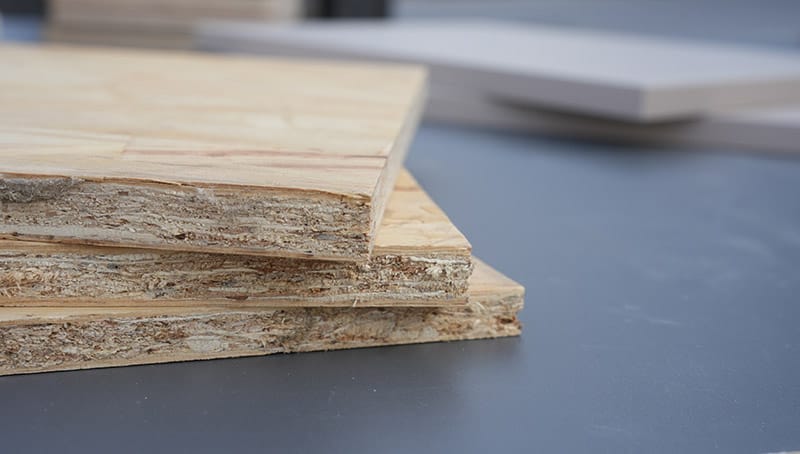
A solid-wood product description may refer to an all-solid panel, jointed strips or a veneered assembly with other internal materials. Those constructions are not interchangeable. For solid wood furniture panels, ask for a clear layer or component description and inspect a cut sample. Identify the species or permitted species range without inferring it from a photograph.
Keep the face appearance and internal construction in the same approval record. If a finished door includes an engineered core, describe it accurately rather than calling every layer solid timber. The purchasing specification for solid wood furniture panels should match the delivered component, its intended indoor use and the machining required. Clear terminology protects both product descriptions and the workshop's assumptions about grain movement, edges and hardware.
Control substitutions and repeat-order changes
Repeatability depends on preserving the approved construction and communicating changes. For solid wood furniture panels, ask the supplier to notify the buyer before changing substrate, decorative facing, thickness, manufacturing source or other material features relevant to the trial. A shared product name does not establish that all those details are unchanged.
Retain the approved sample, specification revision and lot records in a form the next buyer or production manager can use. Compare the first batch after a declared change with the same critical operation used for qualification. For solid wood furniture panels, agree on a written substitution process rather than rejecting every improvement or accepting every equivalent claim automatically. This keeps the order adaptable while preserving the evidence behind the original approval.
Approve the coating on representative wood
Species, grain and surface preparation influence how wood appears after finishing. A stain approved on one sample may look different on a board with another grain pattern or sanding history. For solid wood furniture panels, make the finish trial on representative material from the intended construction and include the full coating sequence.
Examine edges, end grain and permitted knots as well as the broad face. Review the result under the lighting expected in use. With solid wood furniture panels, retain the finished reference and record the surface preparation so the workshop can repeat it. A clear finish is not visually neutral in every situation, and a color name alone cannot define the finished appearance across naturally variable boards.
Inspect protection inside the pack
Outer wrapping alone does not prevent internal rubbing, edge impact or uneven support. For solid wood furniture panels, agree on separators, corner protection and pack restraint that suit the delivered construction. Preserve component and lot labels where matched appearance or machining orientation must be maintained.
Request dispatch photographs showing the internal arrangement as well as the closed pack. On arrival, inspect the pack condition before unpacking and check material from more than one position. For solid wood furniture panels, distinguish estimated pack weight from a verified commercial value and confirm handling arrangements with the logistics team. Packaging approval should protect the finished faces and edges without introducing excessive pressure or trapping uncontrolled moisture against a vulnerable surface.
Trial joints with the actual mating surfaces
A sound glued joint depends on suitable material preparation, adhesive selection and the production procedure. The visual neatness of the glue line does not establish its performance. For solid wood furniture panels, reproduce the intended joint geometry and mating surfaces, then follow the adhesive supplier's instructions for application, clamping and cure.
Evaluate representative joints after full cure using a trial appropriate to the component's intended use. Record surface preparation and environmental conditions so the result can be repeated. With solid wood furniture panels, changing the species, moisture condition or finishing residue on a bonding surface can change the result. Resolve those variables before scaling production, and do not treat extra clamp pressure as a universal remedy for poor preparation or an unsuitable joint arrangement.
Compare the cost of an accepted finished part
Use one fixed drawing and production route to compare quotations. For solid wood furniture panels, include material consumption, cutting losses, edging, machining, finishing and expected handling work. Keep the supplier's quote separate from assumed downstream costs, and use trial results where available instead of inventing a rejection allowance.
An illustrative comparison can express cost per accepted part as total trial material and conversion cost divided by accepted trial quantity. Identify whether packing and freight are included so the result has a clear basis. For solid wood furniture panels, the lowest sheet price may still be attractive, but the decision should survive that complete comparison. Record quotation date and validity and refresh commercial figures before placing the order rather than treating a worked example as a current market price.
Reserve material for the intended machining sequence
A delivered board can be rough, planed, sanded or already finished. Its nominal thickness does not explain how much material remains available for later processing. For solid wood furniture panels, distinguish the delivered condition from the required finished component dimensions. Include the agreed machining allowance in the order rather than leaving it to an informal assumption.
Run a trial through the complete sequence, including profiling and any hardware recesses. Check the final dimensions and visible surface after the last operation. The solid wood furniture panels approval should also identify where knots or joints may intersect critical machining details. Ordering exactly the final thickness can be appropriate for a finished product, but it is a different purchase from buying stock that must still be flattened and shaped.
Worked example for solid-wood furniture manufacture
Consider an illustrative 1220 × 2440 mm sheet with 10 mm trimmed from every edge. The usable rectangle is 1200 × 2420 mm. For 600 × 400 mm parts and a 3 mm kerf, two 600 mm parts cannot fit across the 1200 mm width because the separating cut also needs space. Rotating the parts permits two 400 mm widths and four 600 mm lengths, giving eight parts in that simple layout. For solid wood furniture panels, use measured sheet dimensions and the permitted orientation. This solid wood furniture panels example demonstrates why a nominal area calculation is not a verified cutting yield; it does not claim the illustrated layout is globally optimal.
Comparison of three purchasing approaches
| Approach | What it resolves | What remains to check |
|---|---|---|
| Buy from a face sample | Initial color or texture preference | Core, finished detail, component fit and documented use |
| Buy to a written construction | Defined material, dimensions and delivered condition | Whether the workshop can produce the intended finished part |
| Approve a representative finished trial | Construction and processing tested on the relevant component | Commercial-lot consistency and any later material or process changes |
For solid wood furniture panels in solid-wood furniture manufacture, the third approach usually provides the clearest evidence for this decision: plan grain direction, visible joints and component orientation together. It also makes the limits explicit. A finished trial covers its documented construction and conditions; it does not qualify every product sold under the same material name.
A practical trial for this order
Identify the requirement: plan grain direction, visible joints and component orientation together. Add the drawing revision, intended environment and delivered material construction to the trial record.
Prepare representative solid wood furniture panels samples from the proposed commercial construction. Include both the visible face and the critical machined or assembled detail.
Run the agreed verification: dry-assemble the visible parts before finishing. Use the intended equipment, adjacent components and finishing route so the result represents normal production.
Record acceptance and unresolved questions. Specifically check whether the process risks optimizing cutting yield without considering how the grain meets at corners. Keep extra repair or finishing labor visible in the cost comparison.
Retain the approved solid wood furniture panels sample and transfer the same specification to the purchase order. Review a substitution or changed process before releasing the affected repeat batch.
For background on wood structure, moisture, composite panels, joints and finishing, consult the USDA Forest Products Laboratory Wood Handbook. This independent technical reference supports material understanding; it is not a certification or test report for any DA AO product.
Discuss the specified construction with DA AO
DA AO lists DA AO door-panel construction options within its panel range. Its wood-panel services describe customization of size, thickness, surface finish and decorative pattern. Send the proposed application and drawing so the available construction can be checked against the requirement before quotation.
For a solid wood furniture panels inquiry about solid-wood furniture manufacture, include dimensions, quantity, required finish, exposed edges, hardware or fixing details and the evidence needed for approval. Ask the team to confirm the supplied construction and sample arrangement in writing. Use the inquiry form after the FAQ to request a specification review and a quotation based on the same information.
Frequently asked questions
What is the first check when buying solid wood furniture panels for this application?
For solid-wood furniture manufacture, first plan grain direction, visible joints and component orientation together. Identify the supplied construction and put that requirement in the quotation request so the supplier and workshop evaluate the same finished component.
What sample should I request for solid wood furniture panels?
Request representative commercial material, then dry-assemble the visible parts before finishing. Keep the drawing, material identity and process conditions with the result. A sample that omits the critical detail cannot establish whether that detail will work in production.
Which mistake should this solid wood furniture panels order avoid?
Avoid optimizing cutting yield without considering how the grain meets at corners. Agree on the intended construction, finished detail and acceptance method before batch processing, then check a representative commercial lot against the retained approval.
Can a supplier substitute another solid wood furniture panels construction?
Review the proposed change against the signed specification and the critical trial. A matching name or finish does not establish equivalent machining, fit or service behavior. Obtain written approval and repeat the affected evaluation where necessary.
What should a solid wood furniture panels quotation include?
Include actual dimensions, quantity, supplied finish, packing and delivery basis, together with the requirements for solid-wood furniture manufacture. Identify sample approval and any required technical evidence separately so the commercial offer can be compared consistently.