
Table of Contents
4×8 Oriented Strand Board: Sheet Yield for Interior Fixtures
4×8 oriented strand board should be evaluated against a defined production task. For OSB shopfitting components, the priority is to confirm actual dimensions and strength-axis requirements before nesting. That turns a broad material search into a decision about the finished component, the process needed to make it and the evidence required before a repeat order.
This guide focuses on that specific buying situation. The useful next step is to run a component layout using measured sheets. In particular, avoid rotating every part for yield where orientation matters. A clear sample and written specification make it easier to compare 4×8 oriented strand board offers without relying on a surface photograph or an undefined quality claim.
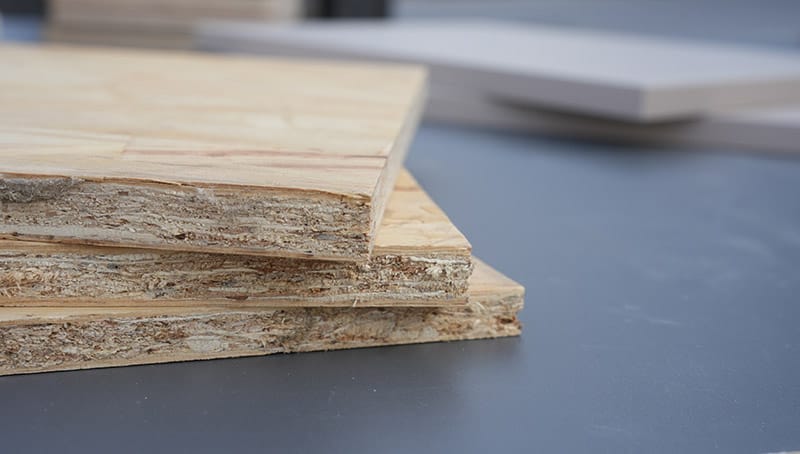
The decision for OSB shopfitting components
Begin the 4×8 oriented strand board evaluation by separating the part requirement from the general product description. The 4×8 oriented strand board buyer needs to confirm actual dimensions and strength-axis requirements before nesting; the workshop needs a repeatable way to produce the approved result. Put those two responsibilities on one trial sheet with the component drawing, material identity and acceptance decision.
For OSB shopfitting components, use the final viewing position and the hardest production detail to define acceptance. Record what the supplied 4×8 oriented strand board sample represents and what it leaves unresolved. If a finish, hardware arrangement or service condition changes, revisit the relevant trial before assuming the original result still applies. The goal is a 4×8 oriented strand board order the receiving team can inspect and the workshop can reproduce.
Build the cutting plan from usable dimensions
Start with actual usable sheet size, then include trimming, saw kerf and any required grain or strength orientation. With 4×8 oriented strand board, a diagram that fits nominal rectangles can overstate the real yield. Separate components that can be rotated from those whose direction is fixed by appearance or product requirements. Keep reusable offcuts identifiable rather than counting every remainder as future stock.
Run the same component list for each proposed sheet size and confirm that the workshop can handle the chosen format. Review narrow remnants and difficult corners with the operator before approving the plan. For 4×8 oriented strand board, compare accepted component yield after machining, not only the number of rectangles on a screen. This links the material quotation to real production and makes any extra allowance for matched appearance or spare components visible.
Keep orientation within the cutting decision
OSB can have direction-dependent properties, so a cutting plan must consider the panel's stated orientation requirements as well as geometric yield. For 4×8 oriented strand board, identify the application and any marked strength axis before rotating components to fit an offcut. Decorative use can also have an appearance direction that the buyer wants to preserve across adjacent faces.
Make the component layout from the actual delivered sheet dimensions and the product's instructions. Where structural performance matters, use the designer's specified orientation and support arrangement. A good nesting plan for 4×8 oriented strand board satisfies those conditions while reducing avoidable waste. It should not silently trade a required panel direction for an extra part, even if the alternative arrangement looks equivalent on a two-dimensional cutting diagram.

Control substitutions and repeat-order changes
Repeatability depends on preserving the approved construction and communicating changes. For 4×8 oriented strand board, ask the supplier to notify the buyer before changing substrate, decorative facing, thickness, manufacturing source or other material features relevant to the trial. A shared product name does not establish that all those details are unchanged.
Retain the approved sample, specification revision and lot records in a form the next buyer or production manager can use. Compare the first batch after a declared change with the same critical operation used for qualification. For 4×8 oriented strand board, agree on a written substitution process rather than rejecting every improvement or accepting every equivalent claim automatically. This keeps the order adaptable while preserving the evidence behind the original approval.
Trial machined edges on the strand-based substrate
OSB's visible strands and local surface texture can affect the result of cutting, routing and edge treatment. For 4×8 oriented strand board, use the actual component drawing and intended tooling in a trial. Check the edges beside holes, corners and narrow returns, where local material disturbance may be more noticeable than along a long straight cut.
Inspect the part after its final edge preparation and finish. If the board will receive an edge band, qualify that process on the supplied construction rather than copying settings from MDF. A useful approval for 4×8 oriented strand board records both the raw cut and the accepted finished edge. This gives the workshop a repeatable process and avoids treating extra hand repair on every component as an invisible consequence of a low sheet price.
Trial the hardest feature in the component set
The most demanding detail often determines whether a panel works on the production line. For 4×8 oriented strand board, choose the narrow return, deep groove, recessed hinge or complex opening that creates the greatest risk of chipping or weak remaining material. Reproduce it with the intended tool and support arrangement.
Inspect the raw operation and the finished part after edging or coating. Record tool condition, operation sequence and any hand repair needed for acceptance. Qualification of 4×8 oriented strand board should demonstrate that the part can be made repeatedly under normal workshop conditions. A successful straight cut is useful evidence for that cut, but it cannot establish the quality of a routed corner or a recess that removes much more of the panel thickness.
Use written quotations instead of unsupported market forecasts
Panel prices change with product specification, quantity, delivery basis and quotation date. For 4×8 oriented strand board, build a comparison from current written supplier offers covering the same construction. Record actual dimensions, finish, packing and the freight basis alongside each price so the purchasing team can identify real differences.
Convert the quote into cost per usable component when sheet sizes or machining requirements differ. Keep estimate assumptions visible and ask for an updated offer when validity expires. A buying decision for 4×8 oriented strand board does not need a speculative percentage forecast to be useful. It needs comparable offers, a validated component trial and a clear understanding of the costs that remain outside the quoted material price.

Compare the cost of an accepted finished part
Use one fixed drawing and production route to compare quotations. For 4×8 oriented strand board, include material consumption, cutting losses, edging, machining, finishing and expected handling work. Keep the supplier's quote separate from assumed downstream costs, and use trial results where available instead of inventing a rejection allowance.
An illustrative comparison can express cost per accepted part as total trial material and conversion cost divided by accepted trial quantity. Identify whether packing and freight are included so the result has a clear basis. For 4×8 oriented strand board, the lowest sheet price may still be attractive, but the decision should survive that complete comparison. Record quotation date and validity and refresh commercial figures before placing the order rather than treating a worked example as a current market price.
Keep the lower sheets and edges protected in storage
Moisture can reach a stack from below or through exposed edges even when its top is covered. For 4×8 oriented strand board, keep packs on suitable dry supports and protect them according to the supplier's storage instructions. Maintain level, aligned support so long sheets are not forced into a distorted shape while waiting for processing.
Inspect lower sheets, corners and packaging condition before releasing the lot to production. Record any wet areas and separate affected material for review. With 4×8 oriented strand board, conditioning and storage history can influence the apparent flatness or edge condition at machining. Preserve lot labels through unpacking so a problem can be traced to a particular delivery rather than mixed with unaffected stock.
Worked example for OSB shopfitting components
Consider an illustrative 1220 × 2440 mm sheet with 10 mm trimmed from every edge. The usable rectangle is 1200 × 2420 mm. For 600 × 400 mm parts and a 3 mm kerf, two 600 mm parts cannot fit across the 1200 mm width because the separating cut also needs space. Rotating the parts permits two 400 mm widths and four 600 mm lengths, giving eight parts in that simple layout. For 4×8 oriented strand board, use measured sheet dimensions and the permitted orientation. This 4×8 oriented strand board example demonstrates why a nominal area calculation is not a verified cutting yield; it does not claim the illustrated layout is globally optimal.
Comparison of three purchasing approaches
| Approach | What it resolves | What remains to check |
|---|---|---|
| Buy from a face sample | Initial color or texture preference | Core, finished detail, component fit and documented use |
| Buy to a written construction | Defined material, dimensions and delivered condition | Whether the workshop can produce the intended finished part |
| Approve a representative finished trial | Construction and processing tested on the relevant component | Commercial-lot consistency and any later material or process changes |
For 4×8 oriented strand board in OSB shopfitting components, the third approach usually provides the clearest evidence for this decision: confirm actual dimensions and strength-axis requirements before nesting. It also makes the limits explicit. A finished trial covers its documented construction and conditions; it does not qualify every product sold under the same material name.
A practical trial for this order
Identify the requirement: confirm actual dimensions and strength-axis requirements before nesting. Add the drawing revision, intended environment and delivered material construction to the trial record.
Prepare representative 4×8 oriented strand board samples from the proposed commercial construction. Include both the visible face and the critical machined or assembled detail.
Run the agreed verification: run a component layout using measured sheets. Use the intended equipment, adjacent components and finishing route so the result represents normal production.
Record acceptance and unresolved questions. Specifically check whether the process risks rotating every part for yield where orientation matters. Keep extra repair or finishing labor visible in the cost comparison.
Retain the approved 4×8 oriented strand board sample and transfer the same specification to the purchase order. Review a substitution or changed process before releasing the affected repeat batch.
For background on wood structure, moisture, composite panels, joints and finishing, consult the USDA Forest Products Laboratory Wood Handbook. This independent technical reference supports material understanding; it is not a certification or test report for any DA AO product.
Discuss the specified construction with DA AO
DA AO lists oriented strand board within its panel range. Its wood-panel services describe customization of size, thickness, surface finish and decorative pattern. Send the proposed application and drawing so the available construction can be checked against the requirement before quotation.
For a 4×8 oriented strand board inquiry about OSB shopfitting components, include dimensions, quantity, required finish, exposed edges, hardware or fixing details and the evidence needed for approval. Ask the team to confirm the supplied construction and sample arrangement in writing. Use the inquiry form after the FAQ to request a specification review and a quotation based on the same information.
Frequently asked questions
What is the first check when buying 4×8 oriented strand board for this application?
For OSB shopfitting components, first confirm actual dimensions and strength-axis requirements before nesting. Identify the supplied construction and put that requirement in the quotation request so the supplier and workshop evaluate the same finished component.
What sample should I request for 4×8 oriented strand board?
Request representative commercial material, then run a component layout using measured sheets. Keep the drawing, material identity and process conditions with the result. A sample that omits the critical detail cannot establish whether that detail will work in production.
Which mistake should this 4×8 oriented strand board order avoid?
Avoid rotating every part for yield where orientation matters. Agree on the intended construction, finished detail and acceptance method before batch processing, then check a representative commercial lot against the retained approval.
Can a supplier substitute another 4×8 oriented strand board construction?
Review the proposed change against the signed specification and the critical trial. A matching name or finish does not establish equivalent machining, fit or service behavior. Obtain written approval and repeat the affected evaluation where necessary.
What should a 4×8 oriented strand board quotation include?
Include actual dimensions, quantity, supplied finish, packing and delivery basis, together with the requirements for OSB shopfitting components. Identify sample approval and any required technical evidence separately so the commercial offer can be compared consistently.