Table of Contents
Introduction
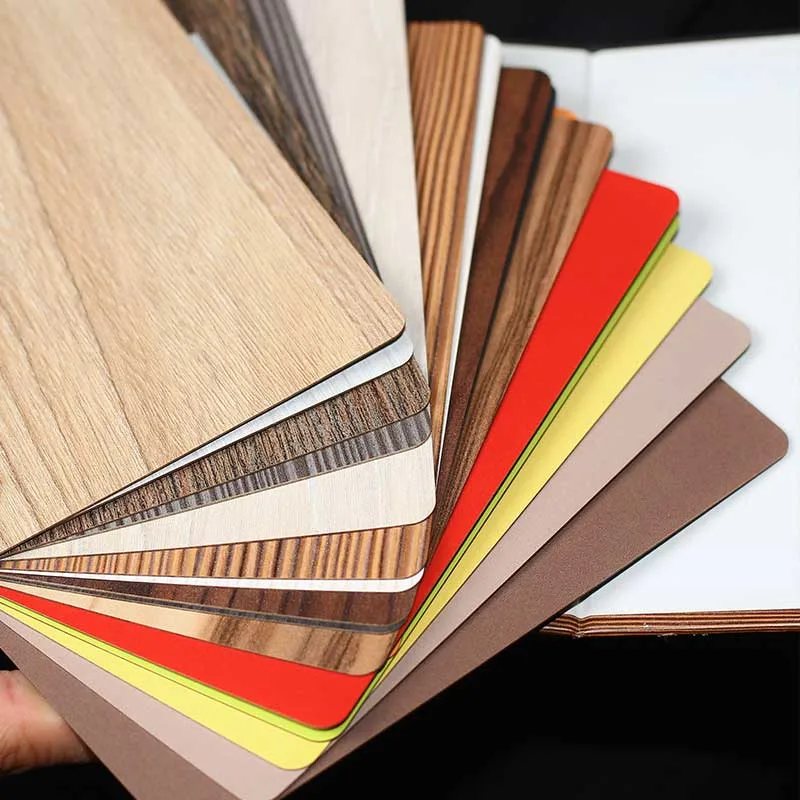
Decorative wood panels are no longer limited to simple wall coverings. They are widely used across furniture manufacturing, residential interiors, offices, hotels, retail environments and commercial fit-outs because they can combine appearance, dimensional consistency and efficient installation in one panel system.
For manufacturers and project buyers, however, choosing decorative panels involves more than selecting a color or wood grain. The substrate, surface finish, thickness, machining requirements, installation environment and final application all influence whether a panel will perform well after cutting, edge finishing, installation and long-term use.
DA AO Wood manufactures wooden panels including MDF, plywood, particle board, OSB and other panel products for furniture, interior decoration and construction applications. Its current product system also includes melamine-faced plywood and particle board for applications where a finished decorative surface is required.
The best decorative wood panels are therefore not simply the panels with the most attractive surface. They are the panels whose core, finish and processing characteristics match the actual project.
Quick Answer: Which Decorative Wood Panel Should You Choose?
For smooth painted decorative surfaces and detailed CNC machining, MDF is usually a strong starting point because its fine fiber structure supports routing and surface finishing.
For large flat furniture or wall components with a ready-made decorative surface, melamine-faced particle board can provide an efficient solution for cutting, drilling and edge banding.
For projects that require layered structural performance, decorative plywood or melamine-faced plywood may be more appropriate.
Natural wood veneer panels are often selected where authentic grain variation and a more natural wood appearance are important.
The final choice should consider both the visible surface and the core underneath it.
Decorative Wood Panels at a Glance
| Panel Type | Typical Decorative Finish | Suitable Applications | Key Strength |
|---|---|---|---|
| MDF | Paint, veneer, melamine, film | Feature walls, doors, furniture fronts | Smooth surface and machining |
| Particle Board | Melamine, laminate, veneer | Cabinets, wardrobes, flat wall systems | Efficient large-panel production |
| Plywood | Veneer, melamine, clear finish | Furniture, interiors, commercial projects | Layered construction |
| Wood Veneer Panel | Natural veneer | Premium interiors, furniture, wall panels | Natural wood appearance |
| Solid Wood Panel | Natural finish, stain, coating | Premium visible surfaces | Authentic solid wood character |
| OSB | Clear coating, exposed texture | Industrial-style interiors, utility spaces | Distinctive strand appearance |
This comparison shows why decorative panel selection should begin with the project requirement rather than with appearance alone.
What Are Decorative Wood Panels?
Decorative wood panels are wood-based panels designed to provide both a functional substrate and a visible finished or finish-ready surface.
The term can include several different constructions.
A decorative panel may be:
- MDF prepared for painting
- MDF with a melamine surface
- Particle board with decorative paper
- Plywood with a finished face
- Plywood with melamine
- A panel faced with natural wood veneer
- A solid wood panel used as an exposed decorative surface
The underlying materials are not interchangeable.
For example, wood veneer consists of thin slices of wood that can be bonded to substrates such as MDF or particle board to create decorative doors, cabinet parts and flat panels.
This means buyers need to evaluate two separate elements:
the decorative surface
and
the supporting core.
Both influence the finished product.
Why the Core Material Matters
Once installed, two decorative panels may look almost identical.
One may have an MDF core.
Another may use particle board.
A third may use plywood.
The decorative layer can hide these differences visually, but the core still affects:
- Cutting behavior
- CNC machining
- Edge quality
- Screw holding
- Weight
- Thickness
- Panel stiffness
- Moisture response
- Installation method
- Cost efficiency
For this reason, specifications such as “oak decorative panel” or “walnut wall panel” are often incomplete for B2B purchasing.
A more useful specification should identify the required substrate, surface, dimensions and application.
MDF for Decorative Wood Panels
MDF is particularly useful where the panel itself needs to be machined as part of the decorative design.
Its relatively uniform fiber structure allows manufacturers to create:
- Routed lines
- Fluted patterns
- Grooves
- Geometric profiles
- Decorative recesses
- Shaped edges
- CNC-carved surfaces
This makes MDF suitable for many decorative wall panels, cabinet fronts, furniture features and retail interior components.
MDF is also commonly used as a substrate beneath paint, veneer and other decorative finishes.
For projects involving smooth surfaces or repeatable machined patterns, DA AO’s MDF range can provide the core material for furniture and interior applications.
Particle Board for Decorative Interior Panels
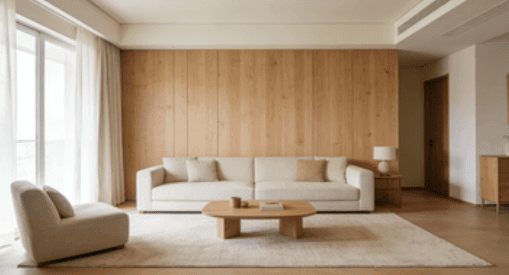
Particle board is often chosen when the decorative surface has already been applied and the component will remain relatively flat.
For example, melamine-faced particle board can move directly into:
- Cutting
- Drilling
- Edge banding
- Assembly
This makes it suitable for decorative interior applications involving standardized panels.
Common examples include:
- Wardrobes
- Storage walls
- Office cabinets
- Retail fixtures
- Interior partitions
- Cabinet side panels
- Shelving
- Flat decorative surfaces
DA AO’s particle board category includes melamine-faced products intended for furniture and interior applications. The company describes its panel production around standardized specifications and consistent performance for manufacturing use.
For large-volume projects, this repeatability can be as important as the decorative design itself.
Plywood for Decorative Panels
Plywood is manufactured by bonding multiple layers of wood veneer together.
The grain direction of adjacent veneers is generally alternated, which contributes to dimensional stability and strength. Plywood belongs to the broader family of engineered wood panels and is widely used in furniture and construction-related applications.
In decorative interiors, plywood can be used when a project requires a combination of appearance and panel strength.
Applications may include:
- Decorative furniture
- Shelving
- Wall panel systems
- Retail interiors
- Cabinet components
- Commercial fit-outs
- Display structures
The surface can be left visibly wood-like, veneered or faced with a decorative material.
DA AO also currently offers Melamine Faced Plywood, combining a plywood core with a finished surface. The listed specification includes customizable colors, a 1220 × 2440 mm size and thickness options from 15 mm to 25 mm.
Natural Wood Veneer Panels
Natural veneer panels are often selected when designers want the visual character of real wood without constructing the entire panel from solid timber.
Because veneer is cut from real wood, grain patterns naturally vary between sheets.
This can create a more organic appearance than printed decorative surfaces.
Natural veneer panels can work well for:
- Hotel interiors
- Executive offices
- Premium furniture
- Reception areas
- Feature walls
- Cabinet doors
- Decorative millwork
However, that natural variation should be considered during project planning.
If a project requires highly uniform color and pattern across hundreds of panels, a manufactured decorative surface may provide easier batch matching.
If authentic variation is desirable, veneer can be an excellent choice.
Melamine Decorative Panels
Melamine-faced panels are among the most practical options for large-scale interior and furniture production.
They combine an engineered wood core with a factory-applied decorative face.
This can reduce the need for secondary painting or surface finishing after the board arrives at the furniture factory.
Melamine surfaces can reproduce:
- Wood grains
- Solid colors
- Stone effects
- Concrete effects
- Textile-like patterns
- Matte finishes
- Textured finishes
For manufacturers, this provides a large design range while retaining standardized panel dimensions.
Melamine-faced plywood and particle board can therefore be useful for projects where surface consistency and manufacturing speed are both important.
Painted Decorative Panels
Painted panels remain popular because they give designers freedom over color and surface effect.
MDF is especially common in this type of application.
A properly selected MDF substrate can support:
- Primer
- Matte paint
- Gloss paint
- Lacquer systems
- Decorative coatings
Painted MDF is often used for:
- Feature walls
- Cabinet doors
- Decorative molding panels
- Hotel interiors
- Retail display walls
- Residential wall paneling
The quality of the final finish depends heavily on preparation.
Surface sanding, edge preparation, primer and coating systems all influence the result.
The board should therefore be selected with the intended finishing system already in mind.
Decorative Wall Panels for Residential Interiors
Decorative wall panels can be used to create visual depth and texture in residential spaces.
Common locations include:
- Living rooms
- Bedrooms
- Dining areas
- Entrances
- Home offices
- TV feature walls
Different panel materials create different results.
MDF can support routed or painted designs.
Veneer panels provide natural wood grain.
Melamine panels provide consistent color and pattern with limited secondary finishing.
Plywood can provide a more structural or natural panel appearance.
The appropriate material depends on whether the wall is primarily decorative or whether it must also support fixtures, shelving or other loads.
Decorative Wall Panels for Commercial Interiors
Commercial projects typically create additional requirements because the same design may need to be reproduced across many rooms or locations.
Hotels, offices, stores and restaurants may require dozens or hundreds of matching decorative panels.
Important purchasing factors therefore include:
- Color consistency
- Surface repeatability
- Panel dimensions
- Thickness tolerance
- Flatness
- Edge quality
- Installation speed
- Replacement availability
In this environment, material consistency can matter more than the appearance of one individual panel.
A sample that looks attractive is not sufficient if later production batches vary significantly.
Decorative Panels for Furniture Manufacturing
Decorative panels are also an important part of furniture design.
They can be used for:
- Cabinet doors
- Wardrobe doors
- Drawer fronts
- Desk surfaces
- Shelving
- Side panels
- Headboards
- Retail furniture
- Storage systems
The panel should match the manufacturing process.
A routed decorative door may require MDF.
A flat wardrobe side may be more efficiently produced from melamine particle board.
A premium visible furniture surface may use veneer-faced plywood or another veneer-based panel.
This component-based approach helps furniture manufacturers avoid over-specifying materials.
How to Choose Decorative Wood Panels for Walls
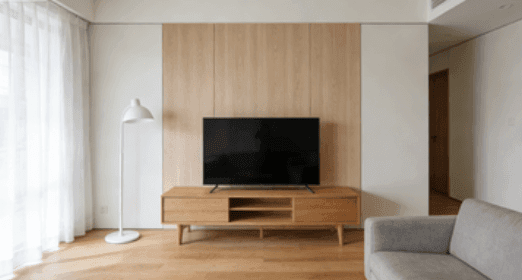
When decorative wood panels are intended for wall applications, buyers should consider more than color.
A practical specification should address:
Installation Method
Will the panels be:
- Screwed
- Mechanically fixed
- Bonded
- Mounted on battens
- Installed as part of a modular system
The fixing method can influence panel thickness and core selection.
Panel Size
Large panels reduce the number of joints but can be more difficult to transport and install.
Smaller panels may create more seams but provide greater installation flexibility.
Weight
Panel weight affects handling, mounting systems and installation labor.
MDF can be relatively dense.
Other cores may provide different weight-to-performance relationships.
Edge Treatment
Visible edges may require:
- Edge banding
- Veneer strips
- Painting
- Profiles
- Trims
Edge design should be decided before panel production.
Surface Durability
High-contact commercial interiors may need different surface characteristics from decorative bedroom wall panels.
How to Choose Decorative Wood Panels for Furniture
Furniture manufacturers should focus on the component’s production route.
Ask:
Will the board be routed?
Will it be painted?
Will it be edge-banded?
Will hinges be installed?
Will it carry weight?
Will the decorative surface already be applied?
Will hundreds of identical parts be produced?
These questions quickly narrow down the material options.
For example:
| Furniture Requirement | Suitable Starting Point |
|---|---|
| Routed decorative door | MDF |
| Flat melamine wardrobe panel | Particle board |
| Premium natural-grain front | Veneer-faced panel |
| Load-bearing decorative shelf | Plywood |
| Painted furniture feature | MDF |
| Large standardized furniture run | Melamine particle board |
The final specification should still be tested against the actual production process.
Surface Finish Should Match the Project
Choosing a decorative surface is not simply a design decision.
Different finishes create different manufacturing and maintenance requirements.
Melamine
Useful for standardized production and consistent appearance.
Natural Veneer
Suitable where authentic grain and premium visual character are priorities.
Paint
Provides broad color freedom and supports custom designs.
Laminate
Can provide a manufactured decorative surface for furniture and interior applications.
Clear-Coated Wood Surface
Useful when the natural material itself is intended to remain visible.
Each finish should be evaluated alongside the substrate rather than independently.
Color Consistency Matters in Large Projects
A small residential project may tolerate natural variation.
A large hotel or retail rollout may not.
If hundreds of panels are installed across a project, even small changes in color or texture can become noticeable.
For this reason, commercial buyers should discuss:
- Batch control
- Master samples
- Color references
- Grain direction
- Surface texture
- Replacement panels
before production begins.
This is particularly important with natural wood veneer, where some variation is inherent to the material.
Grain Direction Should Be Planned Before Cutting
Wood-look decorative surfaces have a visual direction.
If grain direction is not considered during cutting, adjacent doors or panels may appear mismatched after installation.
Manufacturers should define whether the grain will run:
- Vertically
- Horizontally
- Continuously across multiple panels
- In mirrored patterns
- Randomly
Grain planning can influence cutting layouts and material yield.
For furniture and commercial interiors, it should therefore be decided before mass production rather than during final assembly.
Edge Quality Is Part of the Decorative Result
The face of the panel is only one visible part of the finished product.
Edges can strongly influence perceived quality.
Furniture panels may require:
- PVC edge banding
- ABS edge banding
- Veneer edging
- Painted edges
- Solid wood lipping
Wall panels may use shadow gaps, profiles or concealed edges.
A poorly finished edge can undermine an otherwise high-quality decorative surface.
For this reason, core quality and edge-processing compatibility should be evaluated during sampling.
Moisture Conditions Must Be Considered
Interior decorative panels are often assumed to operate in dry environments, but actual conditions vary.
Kitchens, bathrooms, hospitality environments and some commercial interiors may experience higher humidity or occasional moisture exposure.
The panel specification should therefore consider:
- Core grade
- Surface protection
- Edge sealing
- Installation environment
- Ventilation
- Potential water contact
A decorative surface alone should not be assumed to make the complete panel waterproof.
Exposed edges, holes and cut-outs can still allow moisture to reach the core.
Indoor Air and Formaldehyde Requirements
Decorative wood panels used indoors may also be subject to emissions requirements depending on the material and destination market.
The U.S. Environmental Protection Agency states that TSCA Title VI regulates hardwood plywood, MDF and particleboard for formaldehyde emissions. These composite wood products are commonly used in furniture, cabinets and other indoor products.
For projects entering the United States, buyers can review the EPA Formaldehyde Emission Standards for Composite Wood Products when defining procurement requirements. The EPA also proposed updates to parts of the rule in February 2026, including newer consensus standards and an additional quality-control test method, which reinforces the importance of confirming current market requirements rather than relying on old specifications.
For international projects, compliance requirements should therefore be defined before panel production begins.
What Should B2B Buyers Check Before Ordering?
For decorative wood panel sourcing, a professional purchase specification should cover both appearance and manufacturing performance.
| Purchasing Factor | Why It Matters |
|---|---|
| Core Material | Determines machining and structural behavior |
| Surface Finish | Defines appearance and finishing requirements |
| Panel Size | Affects cutting and installation |
| Thickness | Influences weight, hardware and rigidity |
| Flatness | Important for walls and furniture fronts |
| Surface Consistency | Critical for visible installations |
| Grain Direction | Affects visual continuity |
| Color Matching | Important for multi-panel projects |
| Edge Quality | Influences final appearance |
| Machining Requirement | Determines suitable substrate |
| Moisture Condition | Helps define appropriate grade |
| Emission Requirement | Important for regulated markets |
| Packaging | Protects decorative faces during transport |
| Batch Repeatability | Critical for large projects |
This information helps suppliers understand what the panel actually needs to achieve.
Common Mistakes When Selecting Decorative Wood Panels
Choosing by Appearance Alone
Two panels can look similar while behaving very differently during machining and installation.
Always evaluate the core.
Ignoring the Final Processing Method
If CNC routing, drilling or edge banding is required, these processes should influence material selection from the beginning.
Assuming Every Wood-Look Panel Is Veneer
Printed melamine surfaces and real wood veneer are fundamentally different decorative systems.
The specification should clearly identify which one is required.
Forgetting Grain Direction
Incorrect grain orientation can make finished furniture or walls look inconsistent.
Ignoring Batch Variation
Large projects should establish reference samples and expectations for consistency before mass production.
Treating Decorative Panels as Waterproof
A finished face does not automatically protect all edges, joints and drilled areas against moisture.
How to Select the Right Decorative Panel Step by Step
Start with the application.
Determine whether the panel will become a wall surface, cabinet, door, shelf, furniture front or commercial interior element.
Next, define the visual requirement.
Decide whether the project needs a natural wood appearance, consistent manufactured grain, solid color or painted finish.
Then define the processing method.
Will the panel be routed, cut, drilled, edge-banded or simply installed as a finished sheet?
After that, evaluate the core.
MDF, particle board and plywood provide different processing and structural characteristics.
Finally, define environmental and market requirements, including humidity conditions, emissions standards, packaging and batch consistency.
This sequence is more reliable than selecting a decorative finish first and trying to make the substrate fit afterward.
FAQ
What are decorative wood panels?
Decorative wood panels are wood-based panels used to provide a finished or finish-ready visible surface in furniture, walls and interior projects. They may use MDF, particle board, plywood, solid wood or another substrate with paint, melamine, veneer or another decorative finish.
Which board is best for decorative wall panels?
MDF is often a good choice for routed or painted wall panels, while veneer-faced panels provide natural wood appearance. Plywood or other engineered panels may be suitable when different structural or installation requirements apply.
Are decorative wood panels made from real wood?
Some are. Natural veneer panels use thin slices of real wood on a supporting core, while melamine surfaces reproduce wood patterns using manufactured decorative layers. Solid wood panels are another separate category.
Is MDF suitable for decorative wall paneling?
Yes. MDF is widely suited to decorative wall applications because its relatively uniform core supports routing, grooving and painting. The correct grade should still be selected for the installation environment.
Can melamine panels be used for walls?
Yes. Melamine-faced panels can be used in suitable interior wall, cabinetry and furniture applications where a consistent finished surface and efficient installation are priorities.
Is plywood suitable for decorative interiors?
Yes. Plywood can be used in furniture, wall systems and commercial interiors, particularly when a project benefits from its layered construction. It can also be combined with veneer or melamine decorative surfaces.
What should I specify when ordering decorative panels?
Buyers should define the core material, dimensions, thickness, surface finish, color or décor, texture, grain direction, machining requirements, application, quantity and destination-market requirements.
Conclusion
Decorative wood panels should be selected as complete material systems rather than by surface appearance alone.
MDF is well suited to routed, painted and highly machined decorative components. Particle board can provide efficient production for flat melamine-faced furniture and interior panels. Plywood offers a layered structure that can support furniture and decorative project applications, while natural veneer panels provide authentic wood grain for premium interiors.
The correct choice depends on the interaction between the panel core, decorative finish, machining process, installation environment and visual requirement.
DA AO Wood supplies a broad wooden panel product system that includes MDF, particle board, plywood, OSB and other panels for furniture manufacturing and interior decoration.
For projects that require a finished decorative panel, DA AO’s Melamine Faced Plywood and particle board product range provide additional options for furniture and interior applications.
Buyers preparing a furniture collection, wall panel project or commercial interior can use the DA AO Wood Contact Us page to provide the required substrate, thickness, dimensions, decorative finish, application and quantity so the panel specification can be matched to the actual project.
.jpg)