Table of Contents
Key Takeaways
- A plywood sheet is an engineered wood panel made from multiple layers of wood veneer bonded together.
- Different plywood grades are designed for different applications, including furniture, construction, decoration, and packaging.
- Thickness, veneer quality, adhesive type, surface treatment, and moisture resistance are key purchasing factors.
- Plywood is often compared with OSB, MDF, and particle board because each material has different advantages.
- Furniture manufacturers should focus on machining performance, surface quality, and edge finishing.
- Construction buyers should consider strength, stability, exposure conditions, and certification requirements.
- Choosing the right plywood supplier is important for consistent quality and long-term cooperation.
Introduction
-2.jpg.webp)
Plywood has remained one of the most widely used engineered wood materials in global construction, furniture manufacturing, interior decoration, packaging, and industrial applications.
Compared with solid wood, plywood provides better dimensional stability and more efficient use of wood resources. Its layered structure allows manufacturers to produce large panels with consistent performance, making it suitable for both structural and decorative applications.
However, not every plywood sheet is suitable for every project.
Furniture factories, construction companies, distributors, and interior designers need to consider veneer quality, plywood grade, thickness, moisture resistance, surface finish, and processing requirements before purchasing.
This guide explains how to choose the right plywood panel for different applications and how to evaluate supplier quality.
What Is a Plywood Sheet?
A plywood sheet is an engineered wood panel made by bonding several thin layers of wood veneer together. The grain direction of each veneer layer is usually arranged at different angles to improve strength and stability.
This cross-layer structure reduces the natural expansion and contraction problems commonly found in solid wood.
Veneer Layer Structure
The basic structure of plywood consists of face veneers, core veneers, and back veneers.
The visible surface layer determines appearance quality, while the inner layers contribute to strength, stiffness, and dimensional stability.
Cross-Laminated Design
The alternating grain directions help balance internal stresses within the panel.
This design allows plywood to perform well in applications where panels need to maintain shape under changing temperature and humidity conditions.
Adhesive Bonding
The adhesive system influences moisture resistance, durability, and environmental performance.
Different applications may require different adhesive types, including interior-grade and exterior-oriented bonding systems.
Manufacturing Process
The production process normally includes veneer preparation, drying, grading, layering, pressing, trimming, sanding, and quality inspection.
Manufacturing accuracy directly affects thickness tolerance, flatness, surface quality, and final usability.
Why Choose Plywood Sheet for Wood Projects?
.jpg)
Plywood continues to be popular because it combines strength, versatility, and processing flexibility.
Strong Panel Performance
The cross-layer structure distributes stress more evenly than many single-layer wood products.
This makes plywood suitable for furniture components, wall panels, flooring systems, packaging structures, and construction applications.
Better Dimensional Stability
Wood naturally reacts to moisture changes. Plywood reduces movement through its layered construction.
This stability is especially useful for large furniture panels, cabinets, doors, and interior structures.
Flexible Surface Options
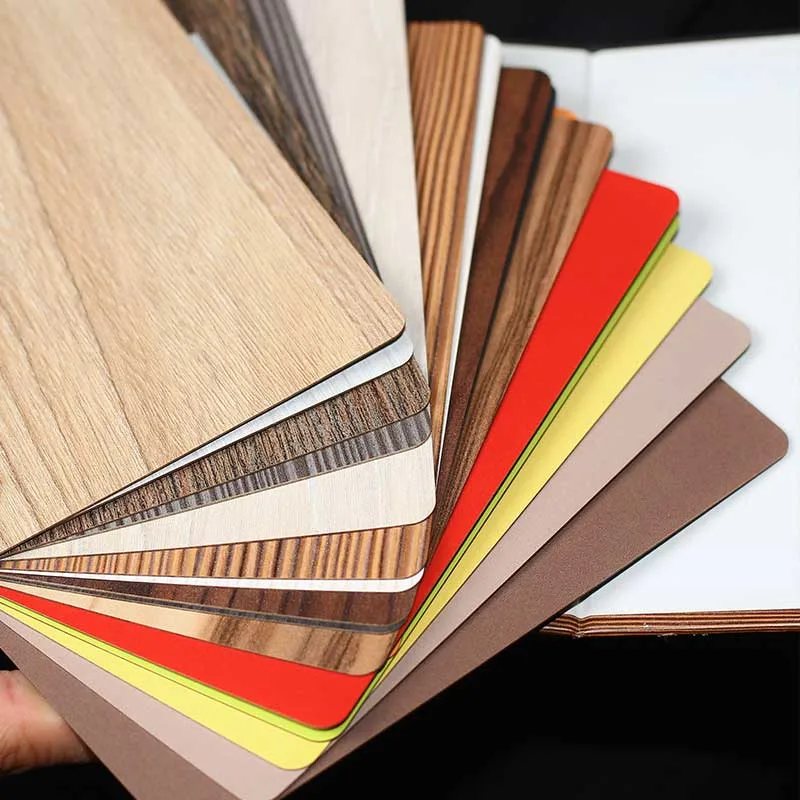
Plywood can be supplied with different surface treatments, including veneer, laminate, melamine paper, film coating, and decorative finishes.
This allows manufacturers to select the right appearance for different markets.
Easy Processing
Plywood can be cut, drilled, CNC-machined, laminated, painted, and combined with other materials.
Its processing flexibility makes it suitable for both large-scale production and customized projects.
How to Choose the Right Plywood Sheet?
Selecting plywood requires more than choosing a thickness or appearance. The correct specification depends on the final application.
| Selection Factor | Why It Matters |
|---|---|
| Thickness | Determines strength, weight, and application suitability |
| Veneer quality | Influences appearance and surface performance |
| Core structure | Affects stability and machining |
| Adhesive type | Determines moisture resistance and durability |
| Surface finish | Defines decorative appearance |
| Panel size | Influences cutting efficiency and material waste |
| Certification | Supports market and project requirements |
Step 1: Choose the Correct Plywood Grade
Different plywood grades are designed for different environments and performance requirements.
Commercial Plywood
Commercial plywood is commonly used for furniture, decoration, cabinets, shelves, and general interior applications.
It provides a balance between performance and cost efficiency.
Structural Plywood
Structural plywood is designed for applications requiring higher mechanical performance.
It is commonly considered for construction systems where strength and stability are important.
Marine Plywood
Marine plywood is manufactured for applications exposed to more demanding moisture conditions.
However, it should not be confused with completely waterproof material. Proper design and protection are still necessary.
Decorative Plywood
Decorative plywood focuses on surface appearance.
It may use high-quality veneers, special textures, or finishing treatments for premium interiors and furniture.
Step 2: Select the Appropriate Thickness
Plywood thickness should match the project requirements.
| Thickness Range | Common Applications |
| 3–6 mm | Back panels, decorative applications, lightweight components |
| 9–12 mm | Furniture parts, partitions, interior panels |
| 15–18 mm | Cabinets, shelves, tables, general construction |
| 21 mm+ | Heavy-duty structures and industrial applications |
The correct thickness depends on load requirements, support spacing, hardware selection, and design.
Step 3: Compare Plywood with Other Wood Panels
Different engineered wood panels serve different purposes.
Plywood vs Oriented Strand Board OSB
Plywood uses layered wood veneers, while OSB uses oriented wood strands.
Plywood generally provides a more traditional wood appearance, while OSB offers a distinctive strand texture and is widely used for structural and industrial applications.
For buyers comparing both materials, DA AO Wood Industry also provides oriented strand board OSB solutions.
Plywood vs MDF
MDF has a smooth fiber-based structure and is often preferred for painting, routing, and detailed decorative processing.
Plywood provides better layered strength and is often selected where panel stability is important.
Buyers looking for smooth decorative panels can also review MDF medium density fiberboard.
Plywood vs Particle Board
Particle board is commonly used for economical furniture production, especially when covered with melamine or laminate surfaces.
Plywood is generally selected when stronger structure, better edge performance, or premium appearance is required.
DA AO Wood Industry also supplies particle board products for furniture manufacturing.
Plywood Applications in Different Industries
Furniture Manufacturing
Plywood is widely used for:
- Tables
- Cabinets
- Chairs
- Shelves
- Doors
- Decorative furniture
Its strength and machining flexibility make it suitable for both residential and commercial furniture.
Interior Decoration
Interior designers use plywood for wall panels, ceilings, partitions, and custom structures.
Surface treatments allow plywood to match different design styles.
Construction Projects
Plywood can be used in walls, floors, roofing systems, concrete formwork, and temporary structures.
The correct grade should always match the construction requirement.
Packaging Industry
Plywood is also used for export crates, industrial packaging, and protective structures.
Strength, weight, and transport conditions should be considered together.
How to Check Plywood Quality Before Buying?
Inspect the Surface
Check for:
- Cracks
- Bubbles
- Veneer separation
- Uneven sanding
- Color inconsistency
A high-quality surface reduces processing problems.
Check the Edge
The edge reveals the internal veneer structure.
Look for:
- Excessive gaps
- Loose layers
- Uneven bonding
- Delamination signs
Measure Thickness Accuracy
Thickness variation affects furniture assembly, CNC processing, and installation.
Buyers should confirm acceptable tolerance before production.
Test Machining Performance
Before large orders, test cutting, drilling, sanding, and finishing using actual production equipment.
A small sample test can prevent major production issues.
How to Choose a Reliable Plywood Supplier?
A professional supplier should provide more than product availability.
Complete Product Information
A reliable supplier should provide:
- Thickness options
- Veneer details
- Adhesive information
- Surface treatments
- Technical specifications
- Quality documents
Stable Production Capability
For long-term purchasing, consistent production is more important than a single successful shipment.
Buyers should evaluate factory capacity, inspection systems, and repeat-order performance.
Export Experience
International plywood buyers should confirm:
- Packaging method
- Loading capacity
- Documentation support
- Shipping experience
- Quality inspection process
DA AO Wood Industry provides multiple wood panel solutions, including plywood, OSB, MDF, and particle board for international customers.
Common Plywood Purchasing Mistakes
-3.jpg)
Choosing Only by Price
Lower prices may come from differences in veneer quality, thickness tolerance, adhesive systems, or packaging.
The lowest quotation is not always the lowest total cost.
Ignoring Application Requirements
Furniture, construction, decoration, and packaging require different plywood specifications.
Always define the final use before selecting the product.
Not Testing Samples
A sample allows buyers to evaluate:
- Surface quality
- Cutting performance
- Edge condition
- Finishing results
Overlooking Documentation
Different markets may require emission reports, certificates, or sourcing documents.
Confirm requirements before production.
FAQ
What is a plywood sheet used for?
A plywood sheet is used for furniture, construction, decoration, packaging, cabinets, flooring systems, wall panels, and many industrial applications.
Its layered structure provides strength and stability for different projects.
Is plywood stronger than MDF?
Generally, plywood provides better structural performance because of its cross-layer veneer construction.
MDF is often preferred for smooth surfaces and detailed machining.
Is plywood waterproof?
Standard plywood is not completely waterproof.
Some plywood types provide improved moisture resistance, but proper protection and installation are still required.
What thickness plywood should I use for furniture?
Common furniture thicknesses include 12 mm, 15 mm, and 18 mm, but the correct choice depends on the design, load, hardware, and structure.
How do I choose a plywood supplier?
Choose a supplier with stable production, clear specifications, quality documentation, sample approval, and export experience.
Can plywood be used outdoors?
Some plywood grades are designed for exterior or protected outdoor applications.
The correct grade, coating, and installation method must be selected.
Which is better, plywood or OSB?
Both materials have advantages.
Plywood offers layered veneer structure and traditional appearance, while OSB provides a distinctive strand structure and efficient panel performance.
Can plywood be painted?
Yes. Proper surface preparation, primer selection, and finishing methods can create high-quality painted surfaces.
What affects plywood quality?
Quality depends on veneer grade, layer structure, adhesive, pressing process, thickness accuracy, surface treatment, and manufacturing control.
Conclusion
Choosing the right plywood sheet requires understanding the relationship between material structure, application requirements, processing methods, and supplier capability.
Plywood remains a reliable choice for furniture manufacturers, construction companies, interior designers, and industrial buyers because it combines strength, flexibility, and wide application possibilities.
Before purchasing, buyers should evaluate plywood grade, thickness, veneer quality, moisture requirements, surface treatment, and technical documentation.
DA AO Wood Industry provides plywood and other engineered wood materials for global customers, including plywood products, oriented strand board, MDF, and particle board.
By selecting the correct panel specification and working with an experienced supplier, buyers can improve production efficiency, reduce waste, and achieve more consistent project results.
Thank you for reading!
I’m glad you joined me on this journey. If you found this content useful or interesting, I would love to hear your thoughts.
- Follow me on Facebook for tips, updates, and community discussions.
Click here to connect - Subscribe to my YouTube channel for tutorials, demonstrations, and practical insights.
Click here to subscribe
Feel free to share your feedback or questions in the comments or on social media. Let’s keep learning and growing together!
.jpg)