Table of Contents
Introduction
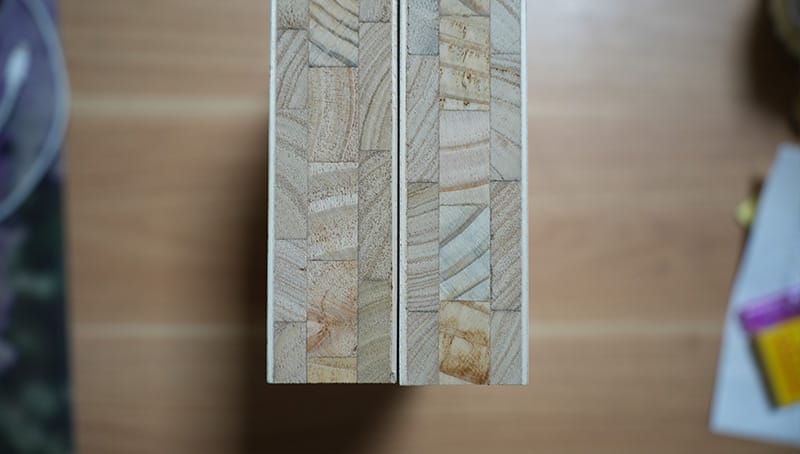
Wood glue particle board is one of the most widely used materials in modern furniture manufacturing. Known for its cost efficiency, consistent structure, and adaptability, it has become a staple for both large-scale production and custom furniture projects. For furniture makers, understanding how this material performs, how it is manufactured, and how to select the right type can directly impact product quality, durability, and profitability.
This guide provides a comprehensive overview of wood glue particle board, combining technical knowledge with practical insights to help you make informed decisions in real-world applications.
What Is Wood Glue Particle Board
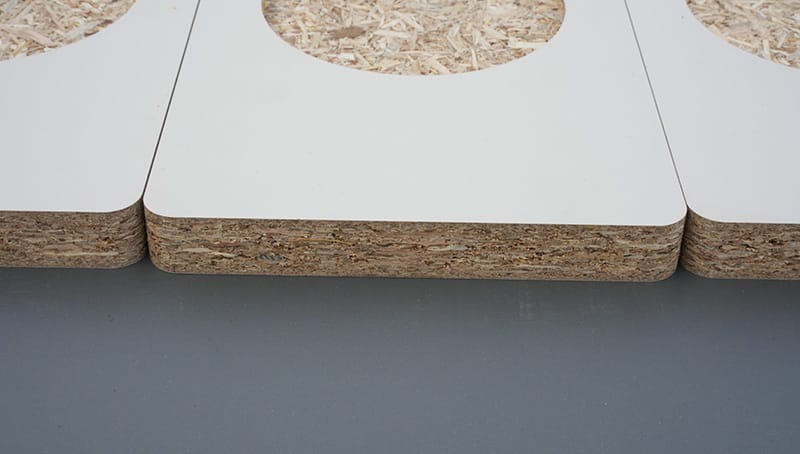
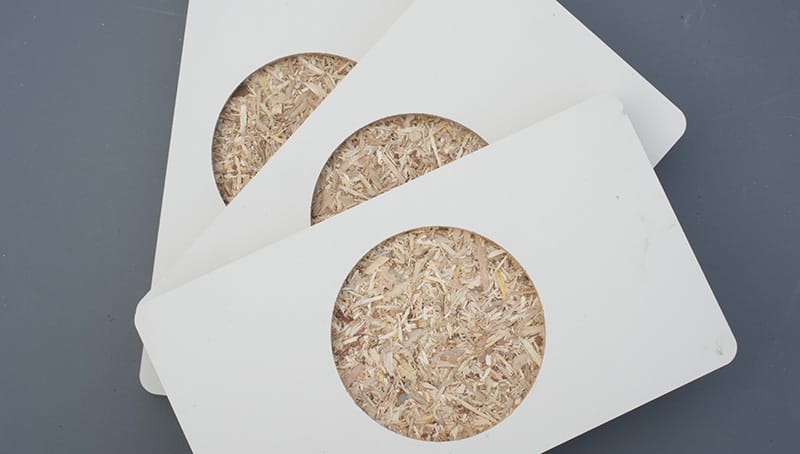
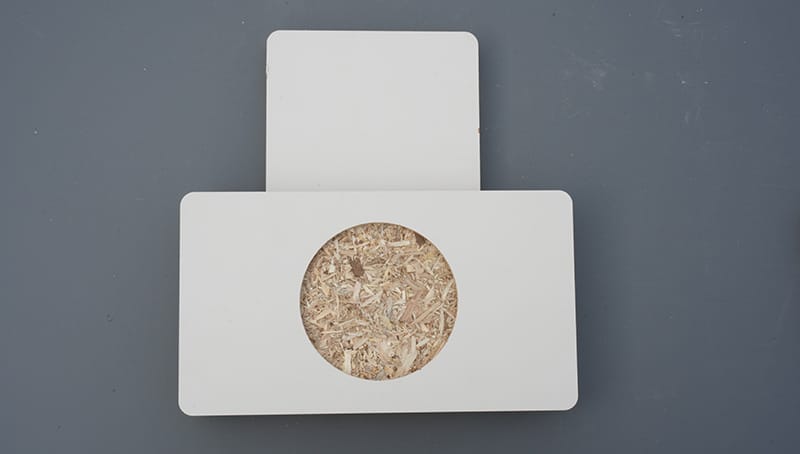
Wood glue particle board is an engineered wood product made by compressing wood particles such as chips, sawdust, and shavings together with adhesive resins under heat and pressure. The “wood glue” component refers to the binding agents that hold the particles together, forming a solid, flat panel.
Unlike solid wood, this material is designed for uniformity and efficiency. Its internal structure allows manufacturers to produce large sheets with consistent thickness and density, making it ideal for standardized furniture production.
Industry manufacturing data shows that engineered wood products, including particle board, account for a significant portion of global panel consumption due to their scalability and affordability.
How Wood Glue Particle Board Is Made
The production process of wood glue particle board involves several controlled steps to ensure quality and consistency.
Raw wood materials are first collected and processed into small particles. These particles are then dried to reduce moisture content, which is critical for achieving strong bonding.
Adhesive resins are added to the particles. Common types include urea-formaldehyde and melamine-based resins, selected based on performance requirements such as moisture resistance.
The mixture is then formed into layers and pressed under high temperature and pressure. This process activates the adhesive, binding the particles into a rigid board.
After pressing, the panels are trimmed, sanded, and finished according to specific requirements.
This controlled process ensures that the final product has uniform density and predictable mechanical properties.
Types of Wood Glue Particle Board
Furniture makers can choose from several types of wood glue particle board depending on application needs.
Standard particle board is used for general furniture components in dry environments. It offers good cost performance but limited resistance to moisture.
Moisture-resistant particle board is treated with specialized resins to improve performance in humid conditions. It is commonly used in kitchens and similar environments.
High-density particle board provides greater strength and load-bearing capacity, making it suitable for structural components.
Laminated particle board includes a decorative surface layer, such as melamine or laminate, which enhances appearance and durability.
Each type is designed to meet specific performance and aesthetic requirements.
Key Performance Characteristics
Understanding performance characteristics is essential when selecting wood glue particle board for furniture production.
Strength and Stability
Particle board provides consistent strength across the panel, making it suitable for flat surfaces and structural elements when properly supported.
Surface Quality
The smooth surface of particle board allows for easy lamination and finishing, which is important for achieving high-quality aesthetics.
Moisture Resistance
Standard particle board is sensitive to moisture, but treated versions offer improved resistance.
Workability
The material is easy to cut, drill, and machine, which increases production efficiency.
Environmental Performance
Low-emission panels are available and are increasingly preferred due to stricter environmental standards and consumer awareness.
Applications in Furniture Manufacturing
Wood glue particle board is widely used across different types of furniture.
In residential furniture, it is commonly used for cabinets, wardrobes, shelving units, and tables. Its affordability makes it ideal for large-scale production.
In office furniture, particle board is used for desks, partitions, and storage systems due to its uniformity and ease of processing.
In commercial applications, laminated particle board is often chosen for its durability and visual appeal.
Its versatility makes it suitable for both functional and decorative components.
Comparison with Other Panel Materials
Choosing the right material often involves comparing wood glue particle board with alternatives such as MDF and plywood.
| Material | Strength | Cost | Moisture Resistance | Surface Finish | Typical Use |
|---|---|---|---|---|---|
| Particle Board | Medium | Low | Low to Medium | Smooth | Budget furniture |
| MDF | Medium | Medium | Medium | Very Smooth | Painted furniture |
| Plywood | High | Medium | High | Natural | Structural components |
This comparison highlights that particle board is best suited for cost-sensitive projects where a smooth surface and uniform structure are required.
How to Choose the Right Wood Glue Particle Board
Selecting the right panel involves evaluating several factors.
Consider the environment where the furniture will be used. For humid areas, moisture-resistant panels are essential.
Evaluate load requirements. High-density boards are better for applications that require additional strength.
Surface finish requirements also play a role. If the panel will be laminated, a smooth and uniform surface is necessary.
Budget constraints should be balanced with performance needs. While particle board is cost-effective, selecting higher-quality options can improve durability.
Processing and Installation Tips
Proper handling and processing can significantly improve the performance of wood glue particle board.
Use sharp cutting tools to prevent edge damage. Sealing edges with edge banding helps protect against moisture and improves appearance.
Pre-drilling holes before inserting screws reduces the risk of splitting. Using appropriate fasteners designed for particle board improves structural integrity.
Ensure proper support for horizontal panels to prevent sagging over time.
Attention to these details can enhance both product quality and longevity.
Common Challenges and Solutions
Despite its advantages, wood glue particle board has limitations that must be managed.
Moisture sensitivity is one of the most common issues. Using moisture-resistant grades and proper sealing reduces risk.
Edge chipping can occur during cutting. Using precision tools and edge banding minimizes this problem.
Lower screw holding strength compared to solid wood can be addressed by using specialized fasteners.
By understanding these challenges, furniture makers can apply effective solutions.
Market Trends and Industry Insights
The demand for wood glue particle board continues to grow due to its affordability and adaptability.
Recent industry reports indicate a shift toward higher-performance particle boards with improved moisture resistance and lower emissions.
Sustainability is also influencing the market. Manufacturers are investing in recycled wood content and environmentally friendly adhesives.
Automation and digital manufacturing are improving production efficiency and consistency, further strengthening the position of particle board in the furniture industry.
Future Outlook for Furniture Makers
Looking ahead, wood glue particle board is expected to remain a core material in furniture manufacturing.
Advancements in adhesive technology will improve durability and environmental performance. Customization options will expand, allowing for more diverse applications.
As furniture design continues to evolve toward modular and scalable systems, particle board will play a critical role in supporting these trends.
Conclusion
Wood glue particle board offers a practical balance between cost, performance, and versatility. By understanding its properties and applications, furniture makers can optimize production processes and deliver high-quality products that meet modern market expectations.
FAQ
What is wood glue particle board and how is it used?
Wood glue particle board is an engineered wood product made by bonding wood particles with adhesive resins under heat and pressure. It is widely used in furniture manufacturing for cabinets, shelves, and panels due to its cost efficiency, uniform structure, and ease of processing.
Is wood glue particle board strong enough for furniture?
Yes, wood glue particle board offers adequate strength for many furniture applications, especially when properly supported. High-density versions provide better load-bearing capacity, making them suitable for desks, cabinets, and shelving systems in both residential and commercial use.
How does wood glue particle board compare to MDF and plywood?
Wood glue particle board is more affordable than MDF and plywood, but it generally has lower moisture resistance and screw-holding strength. MDF provides a smoother surface for painting, while plywood offers higher durability and structural strength for heavy-duty applications.
Can wood glue particle board be used in humid environments?
Standard particle board is sensitive to moisture, but moisture-resistant wood glue particle board is available for use in kitchens or other humid areas. Proper sealing, edge banding, and surface finishing are essential to improve its performance and lifespan.
What should you consider when choosing wood glue particle board?
You should consider factors such as density, moisture resistance, surface finish, load requirements, and environmental standards. Selecting the right type ensures better durability, easier processing, and improved performance in your furniture projects.
Need Help Choosing the Right Wood Glue Particle Board?
If you’re unsure which wood glue particle board best suits your furniture design, performance requirements, or production budget, our experts are here to help. Contact us today for a personalized consultation and get professional guidance on selecting high-quality, durable, and cost-effective panel solutions. Don’t wait until manufacturing begins—get in touch now to ensure your furniture projects achieve reliable performance and long-lasting results!
.jpg)