
Table of Contents
Particleboard Weight: Estimating Pack and Component Mass
Particleboard weight should be evaluated against a defined production task. For furniture logistics, the priority is to calculate mass from actual density and dimensions. That turns a broad material search into a decision about the finished component, the process needed to make it and the evidence required before a repeat order.
This guide focuses on that specific buying situation. The useful next step is to weigh a representative finished component including its hardware. In particular, avoid using a nominal density to promise an exact shipping weight. A clear sample and written specification make it easier to compare particleboard weight offers without relying on a surface photograph or an undefined quality claim.
The decision for furniture logistics
Begin the particleboard weight evaluation by separating the part requirement from the general product description. The particleboard weight buyer needs to calculate mass from actual density and dimensions; the workshop needs a repeatable way to produce the approved result. Put those two responsibilities on one trial sheet with the component drawing, material identity and acceptance decision.
For furniture logistics, use the final viewing position and the hardest production detail to define acceptance. Record what the supplied particleboard weight sample represents and what it leaves unresolved. If a finish, hardware arrangement or service condition changes, revisit the relevant trial before assuming the original result still applies. The goal is a particleboard weight order the receiving team can inspect and the workshop can reproduce.
Keep estimated and verified mass separate
Calculate material mass from actual dimensions and a justified density input, then add finishes, hardware and packing as appropriate. For particleboard weight, identify every assumption and keep a calculated estimate separate from a measured commercial value. Use consistent units so a millimeter thickness is not mistakenly entered as meters.
Weigh a representative finished component and confirm pack totals with the supplier or logistics team. Record whether the quoted weight is net material weight or includes the pallet and protective materials. With particleboard weight, a different core or facing can change mass even when dimensions remain constant. Verification is especially useful before selecting handling equipment, finalizing a packing arrangement or comparing freight allowances across suppliers.
Calculate weight from measured inputs
Panel mass can be estimated from length, width, thickness and density, provided the units are consistent. With dimensions in meters and density in kilograms per cubic meter, their product gives kilograms. For particleboard weight, use the actual supplied construction and distinguish an estimate from a weighed value. Decorative layers and attached hardware can change finished-part mass.
For planning, an illustrative 1.22 by 2.44 by 0.018 meter panel at an assumed density of 650 kilograms per cubic meter would weigh about 34.8 kilograms before additional components. This is a calculation example, not a DA AO product specification. Verify particleboard weight pack and component weights with the supplier and a representative weighing before making transport or handling commitments.
Compare the cost of an accepted finished part
Use one fixed drawing and production route to compare quotations. For particleboard weight, include material consumption, cutting losses, edging, machining, finishing and expected handling work. Keep the supplier's quote separate from assumed downstream costs, and use trial results where available instead of inventing a rejection allowance.
An illustrative comparison can express cost per accepted part as total trial material and conversion cost divided by accepted trial quantity. Identify whether packing and freight are included so the result has a clear basis. For particleboard weight, the lowest sheet price may still be attractive, but the decision should survive that complete comparison. Record quotation date and validity and refresh commercial figures before placing the order rather than treating a worked example as a current market price.
Read the face and core as a layered system
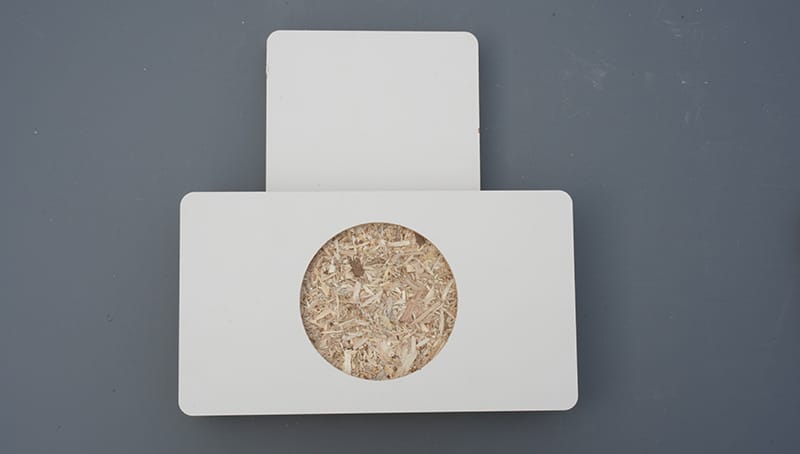
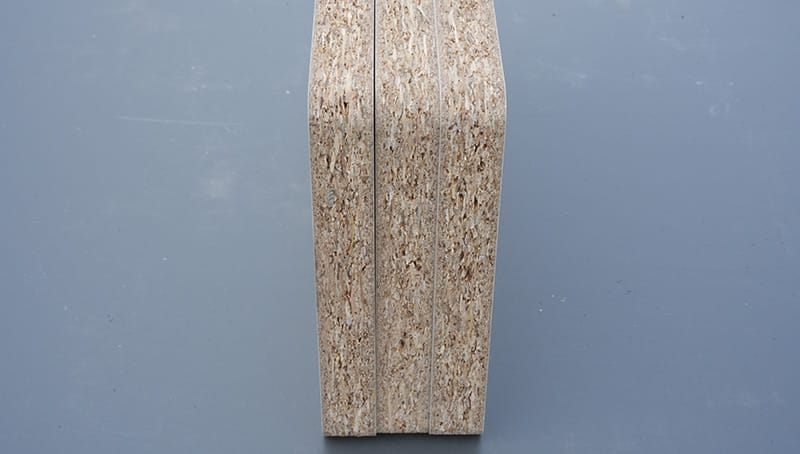
Particleboard is formed from wood particles bonded into a panel. Many furniture products use finer material near the faces and coarser particles inside. For particleboard weight, inspect a fresh cut rather than judging the board only by its decorative face. The surface and internal structure play different roles when cutting, edging and installing hardware.
A sample should represent the commercial product, including its finish and actual thickness. Check several locations where the intended part will be machined. When buying particleboard weight, avoid assuming that two visually similar decorative boards have identical cores. Keep the material description tied to the supplier's construction information and to the behavior of a representative assembled component.
Check the accumulated fit of the finished assembly
Individual components can meet their own limits while the completed assembly still fits poorly. For particleboard weight, consider actual panel thickness, edge covering, hardware position and adjoining frame dimensions together. Define the reference faces and identify which dimensions control the critical reveal or joint.
Assemble the tightest representative detail before releasing batch production. Record the final fit and inspect whether extra trimming or forced assembly was needed. With particleboard weight, allocate tolerances deliberately rather than allowing each supplier to choose them independently. Keep the approved drawing revision with the sample so a change in edge-band thickness or hardware offset can be reviewed against the same assembly requirement before it creates a full production run of mismatched parts.
Qualify environmental statements individually
An eco description can refer to different attributes, including sourcing, production inputs or a particular emissions assessment. It does not establish all of them at once. For particleboard weight, identify which claim matters to the buyer and request evidence for the exact supplied product. Keep the evidence date and product identity with the technical approval.
Avoid turning a material trade name into an unsupported product certification statement. Where a project has formal requirements, the responsible buyer or specifier should confirm the relevant documentation. The particleboard weight purchasing record should distinguish a supplier's general policy from a product-specific report. This gives distributors and furniture manufacturers a clearer basis for their own descriptions and reduces the risk of passing an unverified claim to customers.

Test the joint in a representative assembly
Choose hardware using the actual component mass, dimensions, material and expected use. For particleboard weight, reproduce the pilot holes, recesses and edge distances on the final drawing. Follow the hardware maker's installation instructions and keep the assembly equipment consistent during comparison trials.
Build the representative corner, shelf connection or complete door and observe the relevant repeated-use or assembly sequence. Inspect movement, local damage and hole enlargement after the trial. An approval for particleboard weight should record the tested arrangement so a later connector or thickness substitution can be assessed. Testing an isolated fastener in a loose offcut cannot represent every load and leverage condition that occurs in a finished furniture or interior assembly.
Validate connector geometry in the chosen core
Furniture connectors depend on hole position, depth, pilot preparation and the material surrounding the fixing. A trial should reproduce the final joint rather than use a convenient scrap. With particleboard weight, test face and edge applications separately where both occur. Include the actual component thickness and the closest permitted distance to a finished edge.
Use the hardware maker's installation guidance and consistent assembly equipment. Inspect cracking, enlarged holes and movement after the relevant assembly cycles. For particleboard weight, record the tested combination of board and connector so a later change can be reviewed. Increasing installation torque is not a reliable remedy for an incompatible joint or poorly controlled drilling. Resolve the geometry and material choice before production.
Worked example for furniture logistics
As a calculation example, assume a panel measuring 1.22 × 2.44 × 0.018 meters and a density of 650 kg/m³. Multiplication gives approximately 34.8 kg. Ten such panels would be about 348 kg before pallet, wrapping, separators or hardware. For particleboard weight, replace the assumed density with the supplied construction's justified value and confirm a representative weighing. The example is not a DA AO product weight. A particleboard weight freight comparison should state whether its weight is net material, packed shipment or a preliminary estimate.
Comparison of three purchasing approaches
| Approach | What it resolves | What remains to check |
|---|---|---|
| Buy from a face sample | Initial color or texture preference | Core, finished detail, component fit and documented use |
| Buy to a written construction | Defined material, dimensions and delivered condition | Whether the workshop can produce the intended finished part |
| Approve a representative finished trial | Construction and processing tested on the relevant component | Commercial-lot consistency and any later material or process changes |
For particleboard weight in furniture logistics, the third approach usually provides the clearest evidence for this decision: calculate mass from actual density and dimensions. It also makes the limits explicit. A finished trial covers its documented construction and conditions; it does not qualify every product sold under the same material name.
A practical trial for this order
Identify the requirement: calculate mass from actual density and dimensions. Add the drawing revision, intended environment and delivered material construction to the trial record.
Prepare representative particleboard weight samples from the proposed commercial construction. Include both the visible face and the critical machined or assembled detail.
Run the agreed verification: weigh a representative finished component including its hardware. Use the intended equipment, adjacent components and finishing route so the result represents normal production.
Record acceptance and unresolved questions. Specifically check whether the process risks using a nominal density to promise an exact shipping weight. Keep extra repair or finishing labor visible in the cost comparison.
Retain the approved particleboard weight sample and transfer the same specification to the purchase order. Review a substitution or changed process before releasing the affected repeat batch.
For background on wood structure, moisture, composite panels, joints and finishing, consult the USDA Forest Products Laboratory Wood Handbook. This independent technical reference supports material understanding; it is not a certification or test report for any DA AO product.
Discuss the specified construction with DA AO
DA AO lists melamine-faced particleboard within its panel range. Its wood-panel services describe customization of size, thickness, surface finish and decorative pattern. Send the proposed application and drawing so the available construction can be checked against the requirement before quotation.
For a particleboard weight inquiry about furniture logistics, include dimensions, quantity, required finish, exposed edges, hardware or fixing details and the evidence needed for approval. Ask the team to confirm the supplied construction and sample arrangement in writing. Use the inquiry form after the FAQ to request a specification review and a quotation based on the same information.
Frequently asked questions
What is the first check when buying particleboard weight for this application?
For furniture logistics, first calculate mass from actual density and dimensions. Identify the supplied construction and put that requirement in the quotation request so the supplier and workshop evaluate the same finished component.
What sample should I request for particleboard weight?
Request representative commercial material, then weigh a representative finished component including its hardware. Keep the drawing, material identity and process conditions with the result. A sample that omits the critical detail cannot establish whether that detail will work in production.
Which mistake should this particleboard weight order avoid?
Avoid using a nominal density to promise an exact shipping weight. Agree on the intended construction, finished detail and acceptance method before batch processing, then check a representative commercial lot against the retained approval.
Can a supplier substitute another particleboard weight construction?
Review the proposed change against the signed specification and the critical trial. A matching name or finish does not establish equivalent machining, fit or service behavior. Obtain written approval and repeat the affected evaluation where necessary.
What should a particleboard weight quotation include?
Include actual dimensions, quantity, supplied finish, packing and delivery basis, together with the requirements for furniture logistics. Identify sample approval and any required technical evidence separately so the commercial offer can be compared consistently.