Table of Contents
Key Takeaways
- Medium density fiberboard MDF is an engineered wood panel made from refined wood fibers bonded under heat and pressure.
- MDF provides a smooth, consistent surface that is widely used for furniture, cabinets, interior decoration, and decorative processing.
- The correct MDF specification depends on thickness, density, moisture resistance, surface finish, and final application.
- MDF is often compared with plywood, OSB, and particle board because each material has different advantages.
- Furniture manufacturers choose MDF because it is suitable for painting, routing, laminating, and detailed machining.
- Moisture resistant MDF and standard MDF are designed for different environments and should not be used interchangeably.
- Buyers should evaluate technical specifications, samples, processing performance, and supplier reliability before placing large orders.
Introduction
-768x436.jpg.webp)
Medium density fiberboard MDF has become one of the most widely used engineered wood panels in furniture manufacturing, interior design, retail displays, cabinetry, and decorative applications.
Compared with natural wood, MDF offers a more uniform structure and predictable processing performance. Its smooth surface makes it especially popular for painted furniture, CNC machining, molded doors, decorative panels, and custom interior solutions.
However, selecting the right MDF board requires more than choosing a thickness or appearance.
Different MDF products may vary in density, moisture resistance, surface quality, fiber structure, emission level, and processing performance. These differences directly influence production efficiency, finished product quality, and long-term durability.
This guide explains what medium density fiberboard MDF is, how it is used, how it compares with other wood panels, and what buyers should consider before purchasing.
What Is Medium Density Fiberboard MDF?
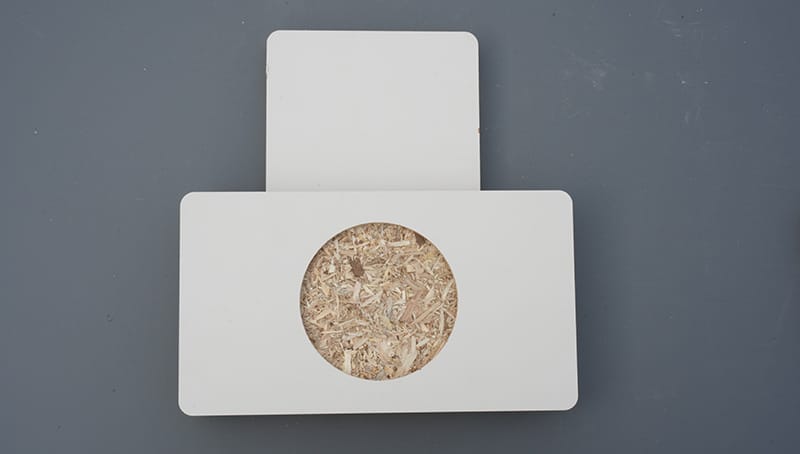
Medium density fiberboard MDF is an engineered wood panel produced by breaking wood materials into fine fibers, combining them with resin, and pressing them under controlled heat and pressure.
Unlike plywood, which is made from layers of veneer, MDF has a homogeneous fiber structure throughout the panel.
This uniform structure gives MDF its smooth surface and makes it suitable for detailed machining and decorative finishing.
Refined Wood Fiber Structure
The manufacturing process separates wood into small fibers rather than using larger strands or particles.
These fine fibers create a consistent panel structure that allows cutting, drilling, routing, and shaping with high precision.
Resin Bonding Process
Wood fibers are mixed with adhesive resin before being formed into a mat and compressed.
The resin system affects internal bonding, moisture resistance, formaldehyde emissions, and overall product performance.
Heat and Pressure Forming
During hot pressing, the fiber mat becomes a dense and stable panel.
Manufacturing control influences thickness accuracy, density distribution, surface smoothness, and dimensional stability.
Sanded Surface
MDF is commonly supplied with a smooth sanded surface that requires minimal preparation before painting, laminating, veneering, or decorative processing.
This characteristic is one of the main reasons MDF is widely used for visible furniture components.
Why Is Medium Density Fiberboard MDF Popular?
MDF has become an important material in modern furniture and interior manufacturing because it combines processing flexibility with a consistent appearance.
Smooth Surface for Finishing
One of MDF’s biggest advantages is its smooth and uniform surface.
Unlike panels with visible particles or strands, MDF provides an even base for:
- Painting
- Veneering
- Laminating
- PVC wrapping
- Decorative coating
This makes it particularly suitable for doors, panels, cabinets, and customized furniture.
Excellent Machining Performance
MDF can be easily processed using CNC routers, drilling machines, saws, and edge-processing equipment.
Its consistent fiber structure helps manufacturers create:
- Decorative grooves
- Raised panels
- Curved designs
- Custom shapes
- Detailed patterns
This flexibility makes MDF popular in modern furniture production.
Consistent Appearance
Natural wood varies in grain, knots, and color. MDF provides a more predictable surface.
For large furniture projects, this consistency helps manufacturers achieve uniform appearance across many components.
Cost Efficiency
Compared with some premium solid wood materials, MDF provides an economical solution for many decorative applications.
It allows manufacturers to create high-quality painted furniture and detailed designs while maintaining production efficiency.
Types of Medium Density Fiberboard MDF
.jpg)
Different MDF types are designed for different applications. Choosing the correct type improves performance and reduces unnecessary costs.
| MDF Type | Characteristics | Common Applications |
|---|---|---|
| Standard MDF | Smooth surface and general-purpose performance | Furniture, cabinets, interior panels |
| Moisture Resistant MDF | Improved resistance to humid conditions | Kitchens, bathrooms, utility areas |
| Fire Resistant MDF | Designed for applications requiring improved fire performance | Commercial interiors and public buildings |
| Decorative MDF | Surface-focused panels for visible applications | Wall panels, furniture, displays |
| Veneered MDF | MDF core with natural wood veneer surface | Premium furniture and interior decoration |
The available classifications depend on regional standards and supplier product ranges.
How to Choose the Right MDF Thickness?
MDF thickness affects strength, weight, machining performance, hardware compatibility, and final appearance.
The correct thickness depends on the component design and intended use.
| Thickness Range | Common Uses |
| 3–6 mm | Cabinet backs, decorative panels, lightweight components |
| 9–12 mm | Interior panels, drawer parts, small furniture components |
| 15–18 mm | Cabinets, shelves, doors, furniture structures |
| 20–25 mm | Heavy shelves, tables, work surfaces, decorative features |
| 30 mm+ | Special designs and customized applications |
A thicker MDF board is not always better. Excess thickness may increase weight, transportation costs, and machining requirements without improving the final product.
MDF for Furniture Manufacturing
Furniture production is one of the largest application areas for MDF.
Its smooth surface and machining flexibility allow manufacturers to create both simple and highly decorative products.
Cabinet Doors
MDF is widely used for cabinet doors because it can be shaped, painted, wrapped, or coated.
The uniform surface allows detailed profiles and decorative patterns that are difficult to achieve with many other wood panels.
Wardrobes and Storage Furniture
MDF can be used for wardrobe doors, decorative panels, shelving systems, and customized storage solutions.
The ability to receive paint and decorative finishes makes it suitable for modern interior styles.
Office Furniture
Desks, partitions, storage cabinets, and reception furniture often use MDF components.
The smooth surface supports professional finishes required in commercial environments.
Decorative Furniture
MDF is frequently selected for:
- Wall panels
- TV cabinets
- Display units
- Decorative partitions
- Customized furniture
Its machining flexibility supports creative designs.
DA AO Wood Industry provides medium density fiberboard MDF solutions for furniture, decoration, and manufacturing applications.
MDF vs Plywood: Which One Should You Choose?
MDF and plywood are two common engineered wood panels, but they have different characteristics.
| Comparison | MDF | Plywood |
| Core structure | Wood fibers | Wood veneer layers |
| Surface | Very smooth and uniform | Natural layered appearance |
| Machining | Excellent for routing and shaping | Good for cutting and structural uses |
| Edge quality | Smooth but requires protection | Strong layered edge |
| Weight | Usually heavier | Often lighter at similar thickness |
| Painting | Excellent | Good with preparation |
| Structural strength | Suitable for many furniture uses | Generally stronger for structural applications |
| Common use | Decorative furniture and interior panels | Construction, furniture, structural components |
Choose MDF When:
- You need a smooth painted surface.
- The design includes grooves or detailed shapes.
- The product requires CNC machining.
- Surface consistency is important.
Choose Plywood When:
- Structural strength is the priority.
- Visible wood grain is desired.
- The product requires stronger edges.
- The application involves higher mechanical requirements.
DA AO Wood Industry also supplies plywood sheets for buyers comparing different engineered wood solutions.
MDF vs Oriented Strand Board OSB
MDF and OSB are both engineered wood panels but serve different purposes.
OSB uses larger oriented wood strands, creating a visible textured surface and strong panel structure.
MDF uses fine wood fibers, creating a smooth surface suitable for painting and detailed processing.
| Feature | MDF | OSB |
| Appearance | Smooth and uniform | Visible strand texture |
| Best finish | Paint and decorative coating | Clear coating and industrial styles |
| Machining | Excellent | Good depending on grade |
| Typical use | Furniture and interior decoration | Construction, packaging, industrial applications |
For projects requiring a natural strand appearance, buyers can explore DA AO Wood Industry’s oriented strand board OSB.
MDF vs Particle Board
Particle board is another widely used furniture material.
The main difference is the internal structure. MDF uses refined fibers, while particle board uses larger wood particles.
MDF Advantages
- Smoother surface
- Better for painting
- Better for detailed machining
- More uniform appearance
Particle Board Advantages
- Cost-efficient
- Suitable for laminated furniture
- Widely used in large-volume furniture production
For buyers focused on economical furniture manufacturing, DA AO Wood Industry also offers particle board products.
Moisture Resistant MDF: When Should You Use It?
Standard MDF is mainly designed for dry interior environments.
When applications involve higher humidity, buyers may consider moisture resistant MDF.
Kitchen Applications
Kitchen cabinets and panels may encounter steam, occasional splashes, and cleaning moisture.
Moisture resistant MDF can provide improved performance when combined with proper edge sealing and installation.
Bathroom Furniture
Bathroom cabinets and decorative panels require careful material selection because humidity levels are higher.
Moisture resistant MDF should still be protected from direct water exposure.
Commercial Interiors
Restaurants, hotels, and public spaces may require more durable materials due to frequent cleaning and higher usage.
The selected MDF specification should match the actual environment.
How to Check MDF Quality Before Buying?

Check Surface Smoothness
A quality MDF panel should have a consistent and smooth surface.
Inspect for:
- Uneven sanding
- Surface defects
- Fiber exposure
- Press marks
Check Thickness Accuracy
Thickness variation affects furniture assembly and CNC machining.
Measure samples from different areas to confirm consistency.
Check Edge Quality
MDF edges should be compact and suitable for machining.
Weak edges may affect screws, hinges, and decorative processing.
Check Density Consistency
A stable density distribution supports better cutting, drilling, and finishing results.
Test Machining Performance
Before large production orders, test:
- Cutting
- Routing
- Drilling
- Painting
- Edge processing
Real production testing provides more accurate results than visual inspection alone.
How to Choose a Reliable MDF Supplier?
A professional MDF supplier should provide consistent quality, technical information, and reliable production support.
Product Specifications
Confirm:
- Thickness range
- Density
- Moisture resistance
- Emission standards
- Surface treatment options
- Available sizes
Sample Approval
Samples should represent the actual production material.
Test samples using your own manufacturing process before confirming large orders.
Stable Production
For furniture factories and distributors, consistent supply is essential.
Evaluate factory capacity, quality control procedures, and repeat-order capability.
Export Support
International buyers should confirm:
- Packaging
- Shipping documents
- Inspection process
- Loading method
- Delivery schedule
Common MDF Purchasing Mistakes
Choosing Only the Lowest Price
Cheap MDF may have differences in density, bonding quality, surface smoothness, and consistency.
The lowest price does not always create the lowest production cost.
Selecting the Wrong MDF Type
Standard MDF should not automatically replace moisture resistant MDF in humid environments.
The application should determine the specification.
Ignoring Processing Requirements
A panel suitable for basic furniture may not perform well for detailed CNC machining.
Always match the board with production requirements.
Not Considering Edge Treatment
MDF edges require suitable finishing depending on the application.
Paint, veneer, edge banding, and wrapping systems all have different requirements.
Skipping Sample Testing
A sample test helps identify:
- Cutting quality
- Dust behavior
- Screw holding
- Paint results
- Surface performance
How Is MDF Used in Modern Interior Design?
Wall Panels
MDF is widely used for decorative wall panels because it can be shaped and finished in many styles.
Door Panels
Painted MDF doors are popular because they provide smooth surfaces and consistent appearance.
Retail Displays
Stores use MDF for shelves, counters, display walls, and customized fixtures.
Office Interiors
Partitions, storage systems, desks, and decorative elements often use MDF.
Custom Furniture
MDF supports personalized designs through CNC machining and surface finishing.
FAQ About Medium Density Fiberboard MDF
What is medium density fiberboard MDF made of?
MDF is made from refined wood fibers combined with resin and compressed under heat and pressure.
The fiber structure creates a smooth and uniform panel.
Is MDF better than plywood?
MDF is better for smooth finishes, painting, and detailed machining. Plywood is often preferred for structural strength and visible wood grain.
The best choice depends on the application.
Is MDF waterproof?
Standard MDF is not waterproof.
Moisture resistant MDF provides improved performance in humid environments but still requires proper protection.
Can MDF be used for kitchen cabinets?
Yes, MDF is commonly used for kitchen cabinet doors and decorative components.
Proper sealing and installation are important in humid areas.
Can MDF be painted?
Yes. MDF is one of the most popular materials for painted furniture because of its smooth surface.
What thickness MDF should I choose?
The correct thickness depends on the application. Furniture structures often use medium thickness panels, while decorative components may require thinner or customized sizes.
Does MDF hold screws well?
MDF can hold screws when appropriate screws, pilot holes, and edge distances are used.
For heavy loads, engineering consideration is recommended.
Is MDF environmentally friendly?
Environmental performance depends on wood sourcing, resin technology, manufacturing efficiency, and certifications.
Buyers should request relevant documentation.
How do I cut MDF without damaging it?
Use suitable blades, correct machine settings, and proper support during cutting.
Professional equipment helps achieve cleaner edges.
Can MDF be used outdoors?
Standard MDF is not designed for outdoor exposure.
Exterior applications require specially designed materials and protective systems.
Conclusion
Medium density fiberboard MDF remains one of the most versatile engineered wood panels for modern furniture, interior decoration, and manufacturing.
Its smooth surface, consistent structure, and excellent machining performance make it an ideal choice for painted furniture, decorative panels, cabinets, doors, and customized designs.
However, choosing the right MDF requires careful consideration of thickness, density, moisture resistance, surface quality, processing requirements, and supplier capability.
DA AO Wood Industry provides medium density fiberboard MDF together with OSB, plywood, particle board, and other engineered wood materials.
By selecting the correct MDF specification and working with a reliable supplier, manufacturers and project buyers can improve production efficiency and achieve consistent finished products.
.jpg)