
Table des matières
Tableau de particules de colle de bois : choisir un essai conjoint
Wood glue particle board should be evaluated against a defined production task. For furniture joint development, the priority is to match adhesive to porous edges or decorative faces separately. That turns a broad material search into a decision about the finished component, the process needed to make it and the evidence required before a repeat order.
This guide focuses on that specific buying situation. The useful next step is to test the proposed joint after the adhesive's specified cure. In particular, avoid selecting glue by brand without checking the bonding surfaces. A clear sample and written specification make it easier to compare wood glue particle board offers without relying on a surface photograph or an undefined quality claim.
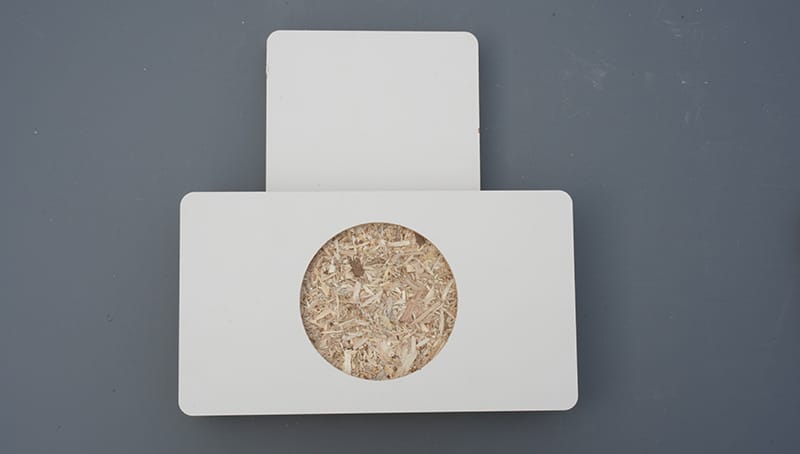
The decision for furniture joint development
Begin the wood glue particle board evaluation by separating the part requirement from the general product description. The wood glue particle board buyer needs to match adhesive to porous edges or decorative faces separately; the workshop needs a repeatable way to produce the approved result. Put those two responsibilities on one trial sheet with the component drawing, material identity and acceptance decision.
For furniture joint development, use the final viewing position and the hardest production detail to define acceptance. Record what the supplied wood glue particle board sample represents and what it leaves unresolved. If a finish, hardware arrangement or service condition changes, revisit the relevant trial before assuming the original result still applies. The goal is a wood glue particle board order the receiving team can inspect and the workshop can reproduce.
Choose the adhesive for the actual bonding surfaces
An adhesive must suit the materials being joined and the intended service conditions. For wood glue particle board, distinguish porous wood edges from melamine faces, existing coatings or other nonporous surfaces. Follow the adhesive maker's requirements for preparation, application and cure instead of choosing a product solely by a broad wood-glue description.
Make a trial with the actual mating surfaces, joint geometry and clamping arrangement. Inspect the bond after the specified cure and an appropriate project trial. With wood glue particle board, record any cleaning or sanding needed to prepare the surface and include it in the production cost. A successful bond on clean raw wood cannot establish performance over a contaminated old finish or a different decorative backing.
Lisez le visage et le noyau comme un système en couches
Particleboard is formed from wood particles bonded into a panel. Many furniture products use finer material near the faces and coarser particles inside. For wood glue particle board, inspect a fresh cut rather than judging the board only by its decorative face. The surface and internal structure play different roles when cutting, edging and installing hardware.
A sample should represent the commercial product, including its finish and actual thickness. Check several locations where the intended part will be machined. When buying wood glue particle board, avoid assuming that two visually similar decorative boards have identical cores. Keep the material description tied to the supplier's construction information and to the behavior of a representative assembled component.
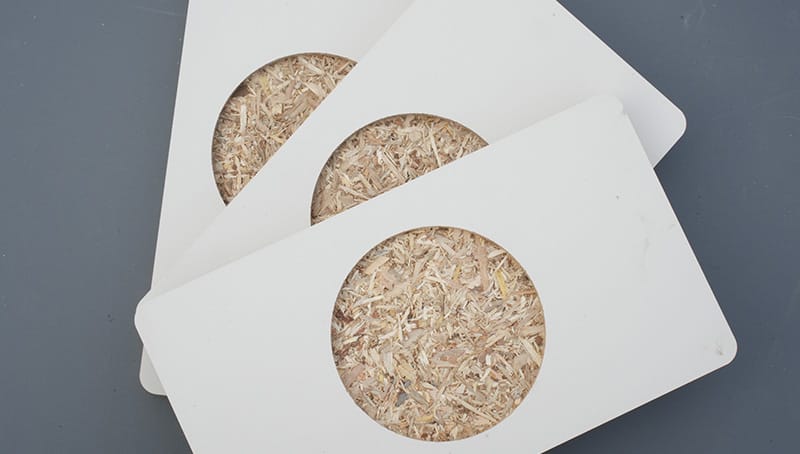
Approuver le coin au lieu de la bande seule
An edge finish combines the substrate, adhesive, covering and trimming process. For wood glue particle board, select these together and make a representative corner sample. Check the bond and the visible transition separately: an edge can be securely attached yet have an unacceptable glue line, lip or color mismatch.
Include the thinnest strip or most exposed return required by the design. Inspect the sample under realistic viewing conditions and after the adhesive's specified cure. The approval for wood glue particle board should identify which edges are visible and the actual finished dimensions. This helps purchasing compare complete component costs and gives the workshop a repeatable acceptance standard instead of leaving every operator to interpret a small roll of edge tape differently.
Coordinate drilling datums and part identity
A repeated hole pattern needs a defined reference edge, face and orientation. Two correctly spaced patterns can still fail to meet if their datums differ. For wood glue particle board, send coordinate drawings that identify the finished edges and any edge-band allowance. Distinguish mirrored components clearly in the drawing and pack labels.
Assemble a left-and-right set with the real shelves, rails or back panel before releasing batch drilling. Inspect the finished relationship rather than only checking each hole in isolation. When wood glue particle board arrives as pre-machined components, retain the approved drawing revision with the purchasing record. This makes it possible to identify whether a fit problem comes from the board, machining coordinates, orientation or a later hardware change.
Qualify the facing, backing and bond as one construction
Specify the decorative face, substrate, reverse layer and bonding process together. For wood glue particle board, determine whether the supplier delivers a completed laminate or the buyer will perform a later facing operation. That responsibility affects the sample, process controls and evidence needed before a commercial order.
Trial the full construction, then inspect it after the specified cure and conditioning period. Include corners and cutouts because those details may reveal lifting or imbalance that a broad flat coupon misses. An approval for wood glue particle board should record the materials and processing route actually tested. If the face, adhesive or backing changes, review the trial rather than assuming an unchanged color or nominal thickness guarantees the same finished behavior.
Calculez le poids à partir des entrées mesurées
Panel mass can be estimated from length, width, thickness and density, provided the units are consistent. With dimensions in meters and density in kilograms per cubic meter, their product gives kilograms. For wood glue particle board, use the actual supplied construction and distinguish an estimate from a weighed value. Decorative layers and attached hardware can change finished-part mass.
For planning, an illustrative 1.22 by 2.44 by 0.018 meter panel at an assumed density of 650 kilograms per cubic meter would weigh about 34.8 kilograms before additional components. This is a calculation example, not a DA AO product specification. Verify wood glue particle board pack and component weights with the supplier and a representative weighing before making transport or handling commitments.
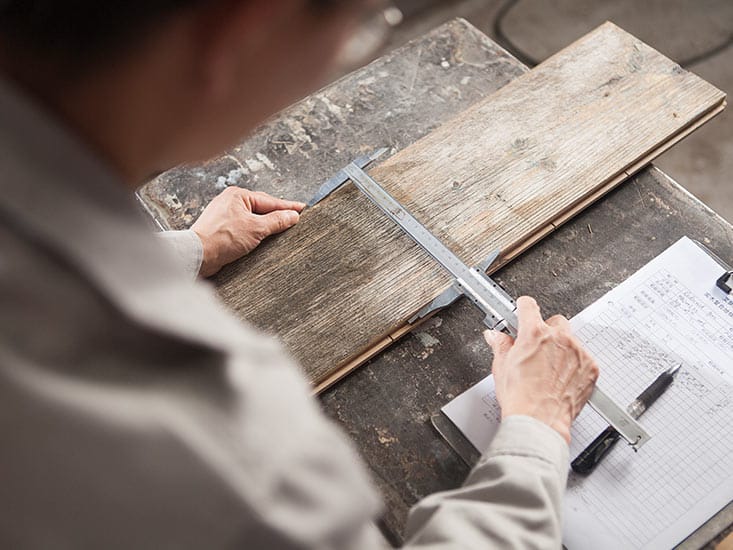
Inspectez la surface finie depuis la position de visualisation normale
Surface approval should reflect how the product will be seen and used. For wood glue particle board, review the final face, edge and adjacent components under realistic light. Distinguish raw-material texture from handling damage and from a finishing defect so each observation leads to the correct action.
Agree on the visible faces and retain a reference that shows the accepted appearance. Inspect dark or high-gloss surfaces particularly carefully for cut-edge damage and handling marks. With wood glue particle board, judge the completed component rather than one attractive swatch. This gives the receiving team a practical visual standard and helps the workshop avoid unnecessary rework on concealed areas while maintaining consistency at prominent joints, corners and long runs of neighboring panels.
Comparez les composants acceptés au lieu des feuilles seules
A sheet quotation becomes useful when it is connected to a stable bill of components. The same cabinet design can yield different waste, edging work and assembly losses depending on the panel. For wood glue particle board, compare the cost of accepted parts after cutting and machining, using the same drawings for every candidate.
Record offcuts that can be reused separately from waste that cannot. Include damaged faces, chipped edges and drilling failures in the trial results instead of ignoring them as workshop noise. A repeat order for wood glue particle board should preserve the approved board and processing assumptions. A cheaper sheet can be a good choice, but that conclusion needs the full conversion result rather than an unexplained difference in the supplier's price list.
Worked example for furniture joint development
A bond trial on clean raw timber does not represent a cabinet skin bonded over an existing decorative coating. Prepare a trial using the actual old finish and the new backing, following the adhesive maker's instructions. For wood glue particle board, check both whether the new bond holds and whether the old coating remains securely attached to its substrate. Allow the specified cure before evaluation. The approved wood glue particle board procedure should include cleaning and any permitted surface preparation, because a strong new adhesive cannot resolve a weak or contaminated layer beneath the bonded part.
Comparaison de trois approches d'achat
| Approche | Ce qu'il résout | Ce qui reste à vérifier |
|---|---|---|
| Achetez à partir d'un échantillon de visage | Préférence initiale de couleur ou de texture | Noyau, détail fini, ajustement des composants et utilisation documentée |
| Acheter à une construction écrite | Matériau défini, dimensions et état de livraison | Si l'atelier peut produire la pièce finie prévue |
| Approuver un procès terminé par un représentant | Construction et traitement testés sur le composant concerné | Cohérence du terrain commercial et tout changement ultérieur de matériau ou de processus |
For wood glue particle board in furniture joint development, the third approach usually provides the clearest evidence for this decision: match adhesive to porous edges or decorative faces separately. It also makes the limits explicit. A finished trial covers its documented construction and conditions; it does not qualify every product sold under the same material name.
Un essai pratique pour cette commande
Identify the requirement: match adhesive to porous edges or decorative faces separately. Add the drawing revision, intended environment and delivered material construction to the trial record.
Prepare representative wood glue particle board samples from the proposed commercial construction. Include both the visible face and the critical machined or assembled detail.
Run the agreed verification: test the proposed joint after the adhesive's specified cure. Use the intended equipment, adjacent components and finishing route so the result represents normal production.
Record acceptance and unresolved questions. Specifically check whether the process risks selecting glue by brand without checking the bonding surfaces. Keep extra repair or finishing labor visible in the cost comparison.
Retain the approved wood glue particle board sample and transfer the same specification to the purchase order. Review a substitution or changed process before releasing the affected repeat batch.
Pour obtenir un arrière-plan sur la structure du bois, l'humidité, les panneaux composites, les joints et la finition, consultez le Manuel sur le bois du laboratoire des produits forestiers de l'USDA. Cette référence technique indépendante soutient la compréhension des matériaux ; il ne s'agit pas d'une certification ou d'un rapport d'essai pour un produit DA AO.
Discutez de la construction spécifiée avec DA AO
Listes DA AO panneau de particules à face mélamine dans sa gamme de panneaux. Son services bois-panneaux décrivez la personnalisation de la taille, de l'épaisseur, de la finition de surface et du motif décoratif Envoyez l'application et le dessin proposés afin que la construction disponible puisse être vérifiée par rapport à l'exigence avant la citation.
For a wood glue particle board inquiry about furniture joint development, include dimensions, quantity, required finish, exposed edges, hardware or fixing details and the evidence needed for approval. Ask the team to confirm the supplied construction and sample arrangement in writing. Use the inquiry form after the FAQ to request a specification review and a quotation based on the same information.
Questions fréquemment posées
What is the first check when buying wood glue particle board for this application?
For furniture joint development, first match adhesive to porous edges or decorative faces separately. Identify the supplied construction and put that requirement in the quotation request so the supplier and workshop evaluate the same finished component.
What sample should I request for wood glue particle board?
Request representative commercial material, then test the proposed joint after the adhesive’s specified cure. Keep the drawing, material identity and process conditions with the result. A sample that omits the critical detail cannot establish whether that detail will work in production.
Which mistake should this wood glue particle board order avoid?
Avoid selecting glue by brand without checking the bonding surfaces. Agree on the intended construction, finished detail and acceptance method before batch processing, then check a representative commercial lot against the retained approval.
Can a supplier substitute another wood glue particle board construction?
Examiner la modification proposée par rapport à la spécification signée et à l'essai critique Un nom ou une finition correspondant n'établit pas un comportement équivalent en matière d'usinage, d'ajustement ou de service Obtenir une approbation écrite et répéter l'évaluation concernée si nécessaire.
What should a wood glue particle board quotation include?
Include actual dimensions, quantity, supplied finish, packing and delivery basis, together with the requirements for furniture joint development. Identify sample approval and any required technical evidence separately so the commercial offer can be compared consistently.

