Table of Contents
Finger Joint Plywood: Questions About Core Construction
Finger joint plywood should be evaluated against a defined production task. For furniture plywood sourcing, the priority is to identify whether finger joints occur in core strips or another layer. That turns a broad material search into a decision about the finished component, the process needed to make it and the evidence required before a repeat order.
This guide focuses on that specific buying situation. The useful next step is to inspect a cut section and supplier construction drawing. In particular, avoid assuming the term finger joint describes the entire panel. A clear sample and written specification make it easier to compare finger joint plywood offers without relying on a surface photograph or an undefined quality claim.

The decision for furniture plywood sourcing
Begin the finger joint plywood evaluation by separating the part requirement from the general product description. The finger joint plywood buyer needs to identify whether finger joints occur in core strips or another layer; the workshop needs a repeatable way to produce the approved result. Put those two responsibilities on one trial sheet with the component drawing, material identity and acceptance decision.
For furniture plywood sourcing, use the final viewing position and the hardest production detail to define acceptance. Record what the supplied finger joint plywood sample represents and what it leaves unresolved. If a finish, hardware arrangement or service condition changes, revisit the relevant trial before assuming the original result still applies. The goal is a finger joint plywood order the receiving team can inspect and the workshop can reproduce.
Resolve broad material names before comparing options
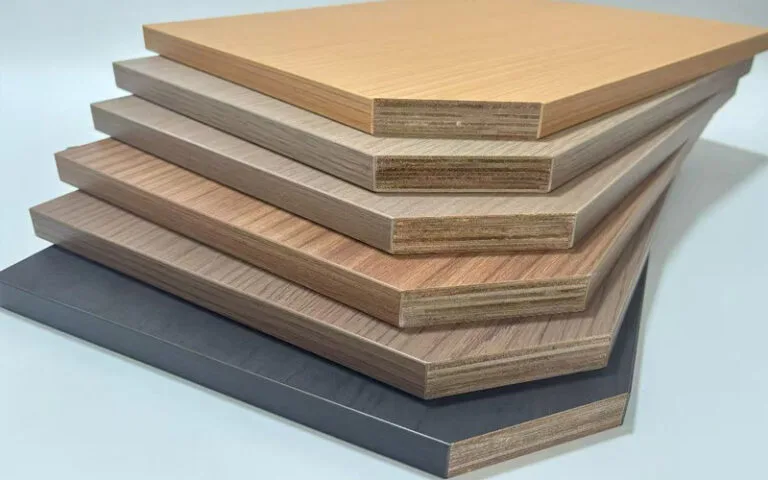
Terms such as engineered wood, composite board or decorative panel cover several constructions. For finger joint plywood, identify the actual core and the surface treatment instead of treating those broad terms as a specification. Request a cut section or construction drawing when the supplied name leaves the layers unclear.
Compare the candidate materials in the operation that matters to the final part: routing, hardware installation, edge finishing or appearance across adjacent panels. Keep the same drawing and service conditions for a useful comparison. With finger joint plywood, a change in core can alter processing and assembly even if the visible finish looks similar. Record the approved construction in the purchase order so the supplier and workshop are working from the same material definition.
Record what finger-jointed construction means
Finger-joint terminology can refer to different elements within a product description. A solid-wood panel made from jointed strips is different from plywood containing jointed core material. For finger joint plywood, ask the supplier to locate the jointed material on a construction drawing. Inspect the corresponding cut section rather than inferring the full construction from the trade name.
Match the sample to the operation that matters, such as edge exposure, hardware installation or final finishing. If a quote includes a film face or a claimed service performance, evaluate that evidence separately. Approval of finger joint plywood should identify the actual panel layers, joints and intended use. Clear terminology helps purchasing teams compare equivalent constructions and gives the workshop a realistic basis for its machining trial.

Match technical evidence to the supplied construction
A report is useful only when its product identity and test conditions match the decision being made. For finger joint plywood, check the named material, thickness, facing and any installation conditions relevant to the project. Separate a general company statement from evidence for the exact supplied construction.
Ask the responsible project specifier to confirm applicability where a formal classification or assembly performance is required. Keep the evidence revision with the purchasing approval and request clarification when details differ. With finger joint plywood, avoid converting a material color, generic certificate or familiar trade name into an unsupported claim. Clear records let the buyer describe the product accurately and identify when a changed construction needs a new review before it reaches production.
Look for core discontinuities at critical details
Internal gaps and overlapping material can become visible during routing or drilling. Their importance depends on where they fall in the final component. With finger joint plywood, cut trial pieces through areas that will carry hardware, show an exposed edge or receive a deep profile. Inspect more than one small sample from a single sheet corner.
Document acceptable and unacceptable conditions with the supplier before batch production. A hidden discontinuity beside a fixing may matter more than an isolated appearance variation on a covered face. Qualifying finger joint plywood around the critical details helps prevent a good-looking delivery from failing later in machining. Keep rejected examples and lot identifiers so the supplier can investigate the construction rather than relying on a vague complaint about quality.
Control substitutions and repeat-order changes
Repeatability depends on preserving the approved construction and communicating changes. For finger joint plywood, ask the supplier to notify the buyer before changing substrate, decorative facing, thickness, manufacturing source or other material features relevant to the trial. A shared product name does not establish that all those details are unchanged.
Retain the approved sample, specification revision and lot records in a form the next buyer or production manager can use. Compare the first batch after a declared change with the same critical operation used for qualification. For finger joint plywood, agree on a written substitution process rather than rejecting every improvement or accepting every equivalent claim automatically. This keeps the order adaptable while preserving the evidence behind the original approval.
Review the reverse face and panel balance
A veneered or overlaid panel needs a coordinated construction on both faces. The decorative front is only one part of that system. For finger joint plywood, identify the reverse layer and any finishing treatment before making a full-size trial. Discuss an asymmetric construction with the fabricator rather than leaving the back to an unspecified production choice.
Check flatness after the intended cure, finishing and conditioning stages on the relevant support arrangement. A small coupon may stay flat while a tall finished door shows noticeable bow. The useful approval for finger joint plywood records the finished panel size and construction. Keep those conditions consistent when ordering again or requesting a substitution, particularly where a visible panel must fit a close reveal or a rigid frame.
Compare alternatives on one defined component
A material comparison becomes actionable when the candidates are assessed on the same part. For finger joint plywood, hold dimensions, finish, hardware and service conditions constant wherever possible. Identify which variables must change for each material and include the resulting processing work in the comparison.
Record accepted results rather than rank materials on a single generic attribute. A panel can provide a smooth painted face while needing different edge preparation, or offer a useful decorative edge while changing component weight. For finger joint plywood, choose the option that meets the required performance and appearance at an understood total cost. Keep the decision tied to the tested component so the result is not generalized to unrelated doors, shelves or wall assemblies.
Separate interior facing from wet-service performance
A plywood face may resist routine wiping while its edges, core and glue lines require different protection. For finger joint plywood, establish the actual service environment and ask for evidence covering the complete panel construction. Do not infer continuous exterior or wet-service suitability from a smooth melamine surface or a film color.
Review cutouts, end grain exposure, fixing holes and any location that can trap water. The project designer should approve construction use where formal structural or durability requirements apply. For finger joint plywood, use product-specific instructions and appropriate test information to support that decision. A decorative indoor product can still be a useful furniture material, but its suitability follows the stated use and the finished detail rather than a broad waterproof marketing label.
Worked example for furniture plywood sourcing
A decorative face can conceal a particle, fiber or veneer-layer substrate. When comparing two offers, request cut samples and name the core in each quotation. For finger joint plywood, then perform the same critical operation on both constructions, such as installing a connector or finishing a visible edge. Record any process change required by the alternative. This finger joint plywood comparison prevents a surface match from being mistaken for full construction equivalence and gives purchasing a clear basis for deciding whether a substitution meets the actual component requirement.
Comparison of three purchasing approaches
| Approach | What it resolves | What remains to check |
|---|---|---|
| Buy from a face sample | Initial color or texture preference | Core, finished detail, component fit and documented use |
| Buy to a written construction | Defined material, dimensions and delivered condition | Whether the workshop can produce the intended finished part |
| Approve a representative finished trial | Construction and processing tested on the relevant component | Commercial-lot consistency and any later material or process changes |
For finger joint plywood in furniture plywood sourcing, the third approach usually provides the clearest evidence for this decision: identify whether finger joints occur in core strips or another layer. It also makes the limits explicit. A finished trial covers its documented construction and conditions; it does not qualify every product sold under the same material name.
A practical trial for this order
Identify the requirement: identify whether finger joints occur in core strips or another layer. Add the drawing revision, intended environment and delivered material construction to the trial record.
Prepare representative finger joint plywood samples from the proposed commercial construction. Include both the visible face and the critical machined or assembled detail.
Run the agreed verification: inspect a cut section and supplier construction drawing. Use the intended equipment, adjacent components and finishing route so the result represents normal production.
Record acceptance and unresolved questions. Specifically check whether the process risks assuming the term finger joint describes the entire panel. Keep extra repair or finishing labor visible in the cost comparison.
Retain the approved finger joint plywood sample and transfer the same specification to the purchase order. Review a substitution or changed process before releasing the affected repeat batch.
For background on wood structure, moisture, composite panels, joints and finishing, consult the USDA Forest Products Laboratory Wood Handbook. This independent technical reference supports material understanding; it is not a certification or test report for any DA AO product.
Discuss the specified construction with DA AO
DA AO lists melamine-faced plywood within its panel range. Its wood-panel services describe customization of size, thickness, surface finish and decorative pattern. Send the proposed application and drawing so the available construction can be checked against the requirement before quotation.
For a finger joint plywood inquiry about furniture plywood sourcing, include dimensions, quantity, required finish, exposed edges, hardware or fixing details and the evidence needed for approval. Ask the team to confirm the supplied construction and sample arrangement in writing. Use the inquiry form after the FAQ to request a specification review and a quotation based on the same information.
Frequently asked questions
What is the first check when buying finger joint plywood for this application?
For furniture plywood sourcing, first identify whether finger joints occur in core strips or another layer. Identify the supplied construction and put that requirement in the quotation request so the supplier and workshop evaluate the same finished component.
What sample should I request for finger joint plywood?
Request representative commercial material, then inspect a cut section and supplier construction drawing. Keep the drawing, material identity and process conditions with the result. A sample that omits the critical detail cannot establish whether that detail will work in production.
Which mistake should this finger joint plywood order avoid?
Avoid assuming the term finger joint describes the entire panel. Agree on the intended construction, finished detail and acceptance method before batch processing, then check a representative commercial lot against the retained approval.
Can a supplier substitute another finger joint plywood construction?
Review the proposed change against the signed specification and the critical trial. A matching name or finish does not establish equivalent machining, fit or service behavior. Obtain written approval and repeat the affected evaluation where necessary.
What should a finger joint plywood quotation include?
Include actual dimensions, quantity, supplied finish, packing and delivery basis, together with the requirements for furniture plywood sourcing. Identify sample approval and any required technical evidence separately so the commercial offer can be compared consistently.