Table of Contents
Medium Density Fiberboard Manufacturing Process: Sanding Controls
Medium density fiberboard manufacturing process should be evaluated against a defined production task. For paint-ready panel sourcing, the priority is to link final sanding consistency to coating thickness and visible scratches. That turns a broad material search into a decision about the finished component, the process needed to make it and the evidence required before a repeat order.
This guide focuses on that specific buying situation. The useful next step is to view trial painted surfaces under raking light. In particular, avoid expecting a thick topcoat to hide deep sanding marks. A clear sample and written specification make it easier to compare medium density fiberboard manufacturing process offers without relying on a surface photograph or an undefined quality claim.

The decision for paint-ready panel sourcing
Begin the medium density fiberboard manufacturing process evaluation by separating the part requirement from the general product description. The medium density fiberboard manufacturing process buyer needs to link final sanding consistency to coating thickness and visible scratches; the workshop needs a repeatable way to produce the approved result. Put those two responsibilities on one trial sheet with the component drawing, material identity and acceptance decision.
For paint-ready panel sourcing, use the final viewing position and the hardest production detail to define acceptance. Record what the supplied medium density fiberboard manufacturing process sample represents and what it leaves unresolved. If a finish, hardware arrangement or service condition changes, revisit the relevant trial before assuming the original result still applies. The goal is a medium density fiberboard manufacturing process order the receiving team can inspect and the workshop can reproduce.
Connect process records to a practical trial
A manufacturing description explains how a material is made, but purchasing approval depends on the supplied product. For medium density fiberboard manufacturing process, ask which process stages control the property relevant to the application and how the commercial lot is identified. Request records that can be matched to the trial material rather than a generic presentation of factory capability.
Use a production sample to check the resulting operation: cutting, routing, bonding, assembly or finishing. Compare the trial findings with the stated specification and document any exceptions. An audit of medium density fiberboard manufacturing process is more useful when it produces a clear control sample and change-notification requirement. The buyer then has a basis for evaluating repeat batches instead of relying on an impressive equipment list to establish product consistency.
Separate the fiber core from the decorative finish
MDF is made from wood fibers bonded into a panel. Its relatively fine, uniform structure supports detailed machining and smooth decorative finishes. When specifying medium density fiberboard manufacturing process, identify the substrate and facing separately. A painted board, a veneered board and a melamine-faced board may share a core family while needing different edge preparation and production settings.
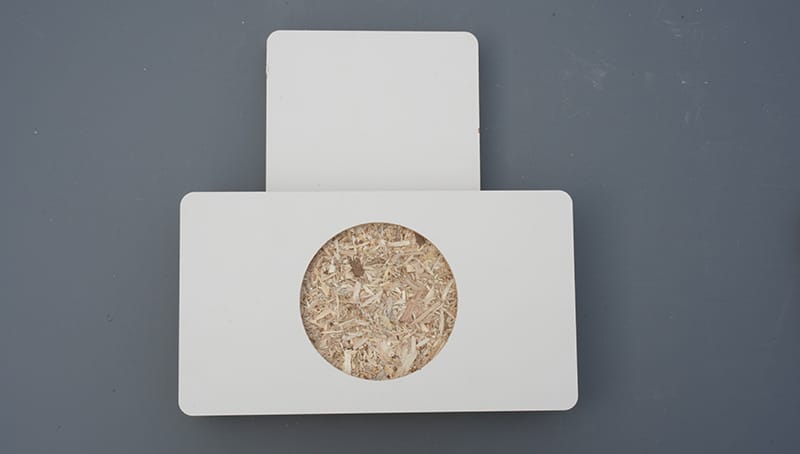
A useful cut sample exposes the surface, edge and full thickness. For medium density fiberboard manufacturing process, compare that sample with the finished component drawing. Check whether the deepest groove, hinge recess or trimmed edge reaches a part of the core that needs additional preparation. Appearance alone cannot establish the board's moisture, fire or load performance.

Trial the hardest feature in the component set
The most demanding detail often determines whether a panel works on the production line. For medium density fiberboard manufacturing process, choose the narrow return, deep groove, recessed hinge or complex opening that creates the greatest risk of chipping or weak remaining material. Reproduce it with the intended tool and support arrangement.
Inspect the raw operation and the finished part after edging or coating. Record tool condition, operation sequence and any hand repair needed for acceptance. Qualification of medium density fiberboard manufacturing process should demonstrate that the part can be made repeatedly under normal workshop conditions. A successful straight cut is useful evidence for that cut, but it cannot establish the quality of a routed corner or a recess that removes much more of the panel thickness.
Keep thickness and density as separate checks
Thickness affects component fit. Density and its distribution influence machining behavior, mass and the performance of particular joints. Neither measurement replaces the other. For medium density fiberboard manufacturing process, take thickness readings at agreed locations and use an agreed density method on representative samples. Record the actual results instead of reporting only the nominal product label.
A buyer should also test the finished operation that matters: a routed face, an edge-band bond or a connector installation. Two panels with similar average density can behave differently in that operation. Approving medium density fiberboard manufacturing process on both measured dimensions and a production trial gives the purchasing team a more useful control than selecting the heaviest board without considering its intended use.
Control substitutions and repeat-order changes
Repeatability depends on preserving the approved construction and communicating changes. For medium density fiberboard manufacturing process, ask the supplier to notify the buyer before changing substrate, decorative facing, thickness, manufacturing source or other material features relevant to the trial. A shared product name does not establish that all those details are unchanged.
Retain the approved sample, specification revision and lot records in a form the next buyer or production manager can use. Compare the first batch after a declared change with the same critical operation used for qualification. For medium density fiberboard manufacturing process, agree on a written substitution process rather than rejecting every improvement or accepting every equivalent claim automatically. This keeps the order adaptable while preserving the evidence behind the original approval.
Allow for the full finishing sequence
A raw sheet price does not include the work needed to turn it into a paint-ready component. Edge sealing, sanding, primer consumption and drying space can change conversion cost. Compare medium density fiberboard manufacturing process using the same finished drawing and finish schedule across candidate boards. Record both material use and labor so a low initial price does not conceal a difficult production process.
Include the corners and recesses that the finishing line handles least easily. When a sample needs extra hand sanding, record that additional work instead of treating it as a one-time exception. A useful quotation for medium density fiberboard manufacturing process separates the supplied board from downstream operations and makes clear which party is responsible for final preparation. This keeps purchasing decisions aligned with the workshop's actual workload.
Match technical evidence to the supplied construction
A report is useful only when its product identity and test conditions match the decision being made. For medium density fiberboard manufacturing process, check the named material, thickness, facing and any installation conditions relevant to the project. Separate a general company statement from evidence for the exact supplied construction.
Ask the responsible project specifier to confirm applicability where a formal classification or assembly performance is required. Keep the evidence revision with the purchasing approval and request clarification when details differ. With medium density fiberboard manufacturing process, avoid converting a material color, generic certificate or familiar trade name into an unsupported claim. Clear records let the buyer describe the product accurately and identify when a changed construction needs a new review before it reaches production.
Protect edges around cutouts and penetrations
A decorative face does not protect newly cut edges, drilled holes or unfinished returns. In a dry indoor assembly, occasional moisture can still reach these locations during cleaning or through a plumbing leak. When using medium density fiberboard manufacturing process, identify vulnerable edges on the drawing and specify a compatible treatment rather than leaving protection to an undocumented workshop habit.
Check the complete detail, including edge tape, sealant interfaces and service openings. A moisture-resistant board remains a specified product with defined limitations; it does not make an arbitrary assembly waterproof. For medium density fiberboard manufacturing process, select the construction for the expected environment and verify it with the supplier's information and an appropriate finished-part trial. Avoid placing vulnerable edges where routine water can collect.
Worked example for paint-ready panel sourcing
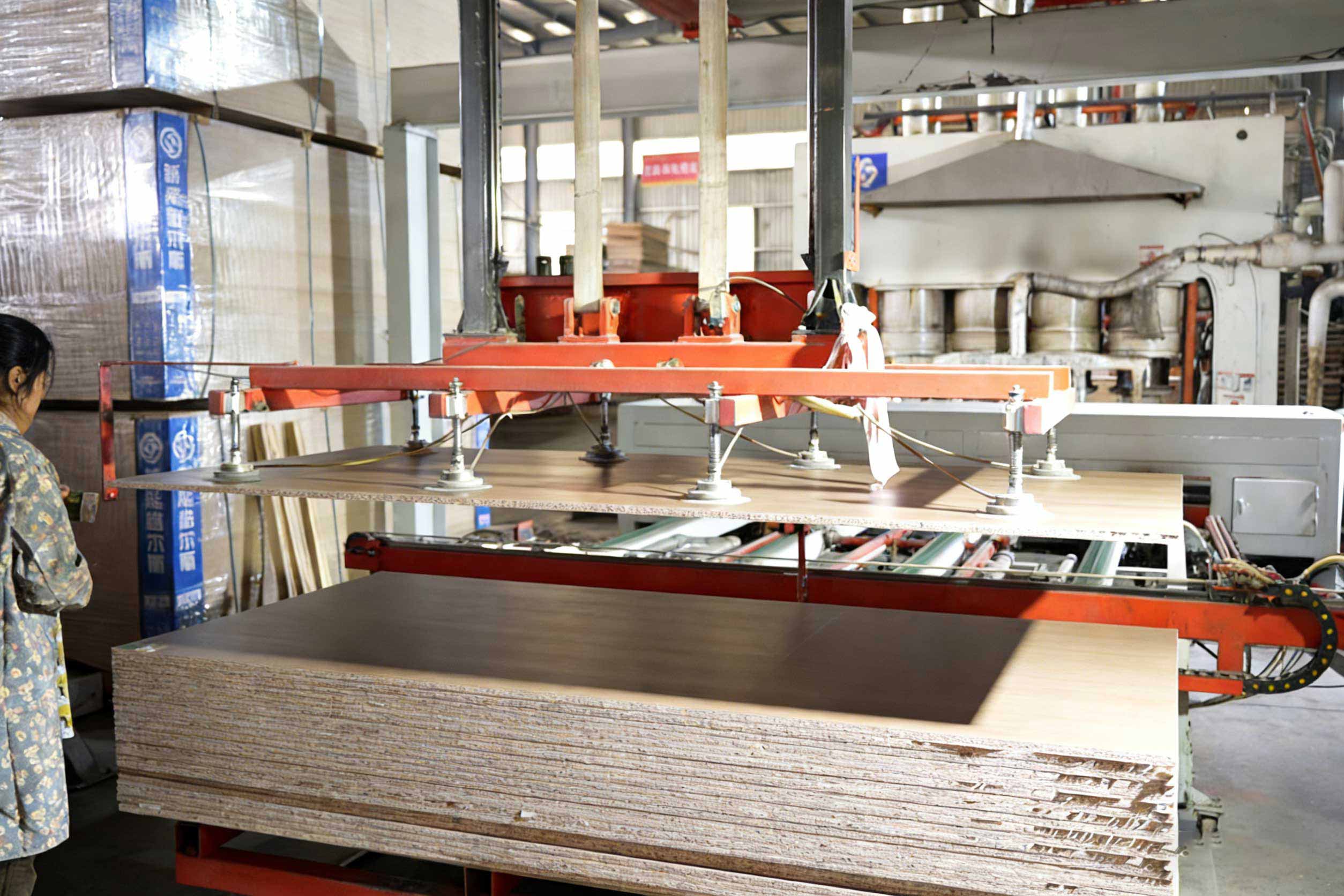
Follow one commercial pack backward through the available records. Its label should connect the delivered construction with the relevant production batch and inspection result. A photograph of the press can explain equipment, but it does not identify the sheet inside that pack. For medium density fiberboard manufacturing process, select a representative sheet and compare its machining behavior with the declared specification. Record any mismatch for supplier investigation. A useful medium density fiberboard manufacturing process factory review leaves a traceable example of this connection, rather than only a collection of unrelated process photographs and general quality statements.
Comparison of three purchasing approaches
| Approach | What it resolves | What remains to check |
|---|---|---|
| Buy from a face sample | Initial color or texture preference | Core, finished detail, component fit and documented use |
| Buy to a written construction | Defined material, dimensions and delivered condition | Whether the workshop can produce the intended finished part |
| Approve a representative finished trial | Construction and processing tested on the relevant component | Commercial-lot consistency and any later material or process changes |
For medium density fiberboard manufacturing process in paint-ready panel sourcing, the third approach usually provides the clearest evidence for this decision: link final sanding consistency to coating thickness and visible scratches. It also makes the limits explicit. A finished trial covers its documented construction and conditions; it does not qualify every product sold under the same material name.
A practical trial for this order
Identify the requirement: link final sanding consistency to coating thickness and visible scratches. Add the drawing revision, intended environment and delivered material construction to the trial record.
Prepare representative medium density fiberboard manufacturing process samples from the proposed commercial construction. Include both the visible face and the critical machined or assembled detail.
Run the agreed verification: view trial painted surfaces under raking light. Use the intended equipment, adjacent components and finishing route so the result represents normal production.
Record acceptance and unresolved questions. Specifically check whether the process risks expecting a thick topcoat to hide deep sanding marks. Keep extra repair or finishing labor visible in the cost comparison.
Retain the approved medium density fiberboard manufacturing process sample and transfer the same specification to the purchase order. Review a substitution or changed process before releasing the affected repeat batch.
For background on wood structure, moisture, composite panels, joints and finishing, consult the USDA Forest Products Laboratory Wood Handbook. This independent technical reference supports material understanding; it is not a certification or test report for any DA AO product.
Discuss the specified construction with DA AO
DA AO lists MDF product information within its panel range. Its wood-panel services describe customization of size, thickness, surface finish and decorative pattern. Send the proposed application and drawing so the available construction can be checked against the requirement before quotation.
For a medium density fiberboard manufacturing process inquiry about paint-ready panel sourcing, include dimensions, quantity, required finish, exposed edges, hardware or fixing details and the evidence needed for approval. Ask the team to confirm the supplied construction and sample arrangement in writing. Use the inquiry form after the FAQ to request a specification review and a quotation based on the same information.
Frequently asked questions
What is the first check when buying medium density fiberboard manufacturing process for this application?
For paint-ready panel sourcing, first link final sanding consistency to coating thickness and visible scratches. Identify the supplied construction and put that requirement in the quotation request so the supplier and workshop evaluate the same finished component.
What sample should I request for medium density fiberboard manufacturing process?
Request representative commercial material, then view trial painted surfaces under raking light. Keep the drawing, material identity and process conditions with the result. A sample that omits the critical detail cannot establish whether that detail will work in production.
Which mistake should this medium density fiberboard manufacturing process order avoid?
Avoid expecting a thick topcoat to hide deep sanding marks. Agree on the intended construction, finished detail and acceptance method before batch processing, then check a representative commercial lot against the retained approval.
Can a supplier substitute another medium density fiberboard manufacturing process construction?
Review the proposed change against the signed specification and the critical trial. A matching name or finish does not establish equivalent machining, fit or service behavior. Obtain written approval and repeat the affected evaluation where necessary.
What should a medium density fiberboard manufacturing process quotation include?
Include actual dimensions, quantity, supplied finish, packing and delivery basis, together with the requirements for paint-ready panel sourcing. Identify sample approval and any required technical evidence separately so the commercial offer can be compared consistently.