
Table of Contents
Particleboard Manufacturing: Why Density Distribution Matters
Particleboard manufacturing should be evaluated against a defined production task. For hardware-intensive cabinet lines, the priority is to evaluate machining and fastener behavior across the board thickness. That turns a broad material search into a decision about the finished component, the process needed to make it and the evidence required before a repeat order.
This guide focuses on that specific buying situation. The useful next step is to test the actual connector in face and edge positions. In particular, avoid using average density as the only quality criterion. A clear sample and written specification make it easier to compare particleboard manufacturing offers without relying on a surface photograph or an undefined quality claim.
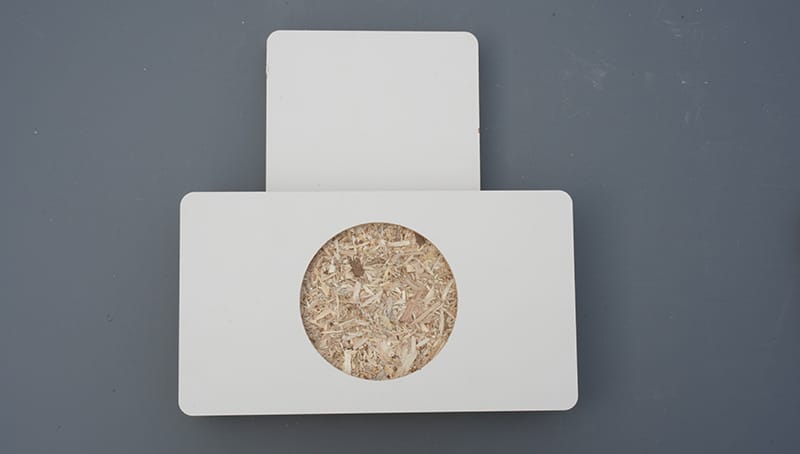
The decision for hardware-intensive cabinet lines
Begin the particleboard manufacturing evaluation by separating the part requirement from the general product description. The particleboard manufacturing buyer needs to evaluate machining and fastener behavior across the board thickness; the workshop needs a repeatable way to produce the approved result. Put those two responsibilities on one trial sheet with the component drawing, material identity and acceptance decision.
For hardware-intensive cabinet lines, use the final viewing position and the hardest production detail to define acceptance. Record what the supplied particleboard manufacturing sample represents and what it leaves unresolved. If a finish, hardware arrangement or service condition changes, revisit the relevant trial before assuming the original result still applies. The goal is a particleboard manufacturing order the receiving team can inspect and the workshop can reproduce.
Define acceptance before inspecting the shipment
An inspection works best when the buyer and supplier share a clear acceptance basis. For particleboard manufacturing, identify dimensional limits, visible-face requirements and the specific production operation that must succeed. Use measurements where practical and a reference sample where appearance needs judgment. Undefined requests for perfect quality are difficult to apply consistently.
Choose representative samples from the commercial lot and record where they came from. Inspect both the most visible surface and the detail most likely to fail in production. The receiving record for particleboard manufacturing should include the lot, sample position, observation and resulting action. This makes a rejection traceable and prevents an isolated attractive sample from standing in for a shipment whose other packs have not been assessed.
Read the face and core as a layered system
Particleboard is formed from wood particles bonded into a panel. Many furniture products use finer material near the faces and coarser particles inside. For particleboard manufacturing, inspect a fresh cut rather than judging the board only by its decorative face. The surface and internal structure play different roles when cutting, edging and installing hardware.
A sample should represent the commercial product, including its finish and actual thickness. Check several locations where the intended part will be machined. When buying particleboard manufacturing, avoid assuming that two visually similar decorative boards have identical cores. Keep the material description tied to the supplier's construction information and to the behavior of a representative assembled component.
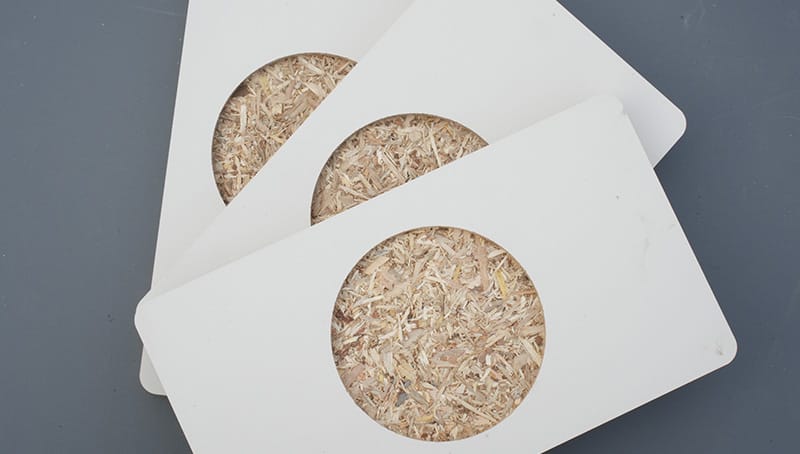
Connect process records to a practical trial
A manufacturing description explains how a material is made, but purchasing approval depends on the supplied product. For particleboard manufacturing, ask which process stages control the property relevant to the application and how the commercial lot is identified. Request records that can be matched to the trial material rather than a generic presentation of factory capability.
Use a production sample to check the resulting operation: cutting, routing, bonding, assembly or finishing. Compare the trial findings with the stated specification and document any exceptions. An audit of particleboard manufacturing is more useful when it produces a clear control sample and change-notification requirement. The buyer then has a basis for evaluating repeat batches instead of relying on an impressive equipment list to establish product consistency.
Control exposed edges as finished components
A clean decorative face can be undermined by a chipped or poorly bonded edge. Agree on edge-band material, thickness and visible joint appearance before ordering particleboard manufacturing. Prepare the substrate using the intended cutting and edging sequence, then inspect the finished corner. Separate adhesive bond quality from color matching because a strong edge can still look wrong.
Check the most difficult part in the component set, such as a narrow strip or a return beside a cutout. Confirm that trimming does not damage the face or leave a sharp lip. The approval for particleboard manufacturing should cover a fully edged sample. A raw sheet swatch does not show the combined effect of core preparation, adhesive, tape and final trimming.
Inspect the finished surface from the normal viewing position
Surface approval should reflect how the product will be seen and used. For particleboard manufacturing, review the final face, edge and adjacent components under realistic light. Distinguish raw-material texture from handling damage and from a finishing defect so each observation leads to the correct action.
Agree on the visible faces and retain a reference that shows the accepted appearance. Inspect dark or high-gloss surfaces particularly carefully for cut-edge damage and handling marks. With particleboard manufacturing, judge the completed component rather than one attractive swatch. This gives the receiving team a practical visual standard and helps the workshop avoid unnecessary rework on concealed areas while maintaining consistency at prominent joints, corners and long runs of neighboring panels.
Validate connector geometry in the chosen core
Furniture connectors depend on hole position, depth, pilot preparation and the material surrounding the fixing. A trial should reproduce the final joint rather than use a convenient scrap. With particleboard manufacturing, test face and edge applications separately where both occur. Include the actual component thickness and the closest permitted distance to a finished edge.
Use the hardware maker's installation guidance and consistent assembly equipment. Inspect cracking, enlarged holes and movement after the relevant assembly cycles. For particleboard manufacturing, record the tested combination of board and connector so a later change can be reviewed. Increasing installation torque is not a reliable remedy for an incompatible joint or poorly controlled drilling. Resolve the geometry and material choice before production.

Check the accumulated fit of the finished assembly
Individual components can meet their own limits while the completed assembly still fits poorly. For particleboard manufacturing, consider actual panel thickness, edge covering, hardware position and adjoining frame dimensions together. Define the reference faces and identify which dimensions control the critical reveal or joint.
Assemble the tightest representative detail before releasing batch production. Record the final fit and inspect whether extra trimming or forced assembly was needed. With particleboard manufacturing, allocate tolerances deliberately rather than allowing each supplier to choose them independently. Keep the approved drawing revision with the sample so a change in edge-band thickness or hardware offset can be reviewed against the same assembly requirement before it creates a full production run of mismatched parts.
Keep vulnerable areas away from routine water
Particleboard products need to be selected for their stated service environment. A decorative facing does not seal every edge or penetration. With particleboard manufacturing, review the bottom edge, plumbing openings and any location where cleaning water could remain. Specify compatible edge protection and resolve water-trapping details during design.
If the project needs moisture resistance, request the exact product data and evaluate the finished assembly. Do not substitute an undefined waterproof label for that evidence. For particleboard manufacturing, a practical sample includes the cutout, edge and adjacent fitting that are most exposed in use. Protecting those details and maintaining a suitable environment are part of the assembly design, even when the face itself withstands ordinary wiping.
Worked example for hardware-intensive cabinet lines
A receiving record can separate three observations: a measured dimension outside the signed limit, a surface feature permitted by the appearance sample, and a damaged corner caused during handling. Those observations need different actions. For particleboard manufacturing, record the affected face, position and lot rather than grouping every finding under poor quality. Keep a reference photograph or measurement with each decision. Apply the same particleboard manufacturing criteria across the sampled packs, and hold unresolved findings for supplier review instead of changing the acceptance basis after seeing which parts are convenient to use.
Comparison of three purchasing approaches
| Approach | What it resolves | What remains to check |
|---|---|---|
| Buy from a face sample | Initial color or texture preference | Core, finished detail, component fit and documented use |
| Buy to a written construction | Defined material, dimensions and delivered condition | Whether the workshop can produce the intended finished part |
| Approve a representative finished trial | Construction and processing tested on the relevant component | Commercial-lot consistency and any later material or process changes |
For particleboard manufacturing in hardware-intensive cabinet lines, the third approach usually provides the clearest evidence for this decision: evaluate machining and fastener behavior across the board thickness. It also makes the limits explicit. A finished trial covers its documented construction and conditions; it does not qualify every product sold under the same material name.
A practical trial for this order
Identify the requirement: evaluate machining and fastener behavior across the board thickness. Add the drawing revision, intended environment and delivered material construction to the trial record.
Prepare representative particleboard manufacturing samples from the proposed commercial construction. Include both the visible face and the critical machined or assembled detail.
Run the agreed verification: test the actual connector in face and edge positions. Use the intended equipment, adjacent components and finishing route so the result represents normal production.
Record acceptance and unresolved questions. Specifically check whether the process risks using average density as the only quality criterion. Keep extra repair or finishing labor visible in the cost comparison.
Retain the approved particleboard manufacturing sample and transfer the same specification to the purchase order. Review a substitution or changed process before releasing the affected repeat batch.
For background on wood structure, moisture, composite panels, joints and finishing, consult the USDA Forest Products Laboratory Wood Handbook. This independent technical reference supports material understanding; it is not a certification or test report for any DA AO product.
Discuss the specified construction with DA AO
DA AO lists melamine-faced particleboard within its panel range. Its wood-panel services describe customization of size, thickness, surface finish and decorative pattern. Send the proposed application and drawing so the available construction can be checked against the requirement before quotation.
For a particleboard manufacturing inquiry about hardware-intensive cabinet lines, include dimensions, quantity, required finish, exposed edges, hardware or fixing details and the evidence needed for approval. Ask the team to confirm the supplied construction and sample arrangement in writing. Use the inquiry form after the FAQ to request a specification review and a quotation based on the same information.
Frequently asked questions
What is the first check when buying particleboard manufacturing for this application?
For hardware-intensive cabinet lines, first evaluate machining and fastener behavior across the board thickness. Identify the supplied construction and put that requirement in the quotation request so the supplier and workshop evaluate the same finished component.
What sample should I request for particleboard manufacturing?
Request representative commercial material, then test the actual connector in face and edge positions. Keep the drawing, material identity and process conditions with the result. A sample that omits the critical detail cannot establish whether that detail will work in production.
Which mistake should this particleboard manufacturing order avoid?
Avoid using average density as the only quality criterion. Agree on the intended construction, finished detail and acceptance method before batch processing, then check a representative commercial lot against the retained approval.
Can a supplier substitute another particleboard manufacturing construction?
Review the proposed change against the signed specification and the critical trial. A matching name or finish does not establish equivalent machining, fit or service behavior. Obtain written approval and repeat the affected evaluation where necessary.
What should a particleboard manufacturing quotation include?
Include actual dimensions, quantity, supplied finish, packing and delivery basis, together with the requirements for hardware-intensive cabinet lines. Identify sample approval and any required technical evidence separately so the commercial offer can be compared consistently.