Table of Contents
Introduction
.jpg)
In the world of modern interior design and furniture manufacturing, selecting the right materials is critical for balancing durability, aesthetics, and cost. Among the myriad of engineered wood products, Melamine Board OSB stands out as a versatile and reliable choice. This composite material combines oriented strand board (OSB) with a melamine resin coating, producing a surface that is smooth, water-resistant, and visually appealing.
Its applications span from residential furniture to commercial interior paneling, from DIY storage solutions to exhibition displays. With a growing demand for sustainable and efficient construction materials, Melamine Board OSB has been adopted globally in various industries. According to the European Panel Federation, the global demand for melamine-faced boards has been increasing by approximately 5–7% annually, reflecting its growing importance in furniture and interior decoration sectors.
This article will explore seven practical applications of Melamine Board OSB, highlighting professional recommendations, technical specifications, and industry insights to provide a comprehensive guide for designers, manufacturers, and DIY enthusiasts.
Furniture Manufacturing

Furniture production is arguably the most widespread application of Melamine Board OSB. Its smooth surface, dimensional stability, and ease of finishing make it ideal for creating functional and visually appealing furniture pieces.
Cabinets and Shelving
Melamine Board OSB is extensively used in cabinets and shelving units due to its structural strength and ability to hold screws and connectors firmly. A typical kitchen cabinet made from 18mm melamine board can hold between 30–40 kg per shelf without sagging, depending on span and support.
Professional designers often select moisture-resistant Melamine Board OSB for kitchen and bathroom cabinetry to reduce warping caused by humidity. According to a survey conducted by the American Kitchen and Bath Association, over 60% of modern kitchen cabinets in residential projects use melamine-faced boards for interior panels.
In addition to kitchens, commercial storage units and library shelving also rely on Melamine Board OSB for its combination of strength, smooth finish, and cost-effectiveness. Manufacturers note that pre-drilled panels and standardized sheet sizes reduce assembly time by 15–25%, improving production efficiency.
Wardrobes and Closet Interiors
Wardrobes and closet systems benefit from the uniform thickness and smooth finish of Melamine Board OSB. The board allows for clean lines, easy sliding of drawers, and a professional finish.
Edge banding technology is often applied to prevent moisture ingress and improve aesthetic appearance. According to interior design experts, using Melamine Board OSB can reduce construction time for modular closets by up to 20% compared to solid wood due to easier cutting and assembly.
Additionally, the board’s consistency in density ensures that hinges, drawer slides, and hardware fittings maintain their alignment over years of use, avoiding sagging or misalignment common with natural wood alternatives.
Office and Commercial Furniture
In offices and commercial settings, durability and low maintenance are key considerations. Melamine Board OSB offers:
- Scratch-resistant surfaces for high-use desks and partitions
- Easy cleaning and stain resistance for public areas
- Compatibility with ergonomic designs and modular systems
Industry reports show that using Melamine Board OSB in office furniture projects can reduce material costs by 15–25% compared to solid hardwood alternatives. Furthermore, the use of large-format melamine panels allows for fewer joints in partition walls and workstations, which improves both aesthetics and long-term stability. in office furniture projects can reduce material costs by 15–25% compared to solid hardwood alternatives.
Interior Paneling and Decorative Wall Applications
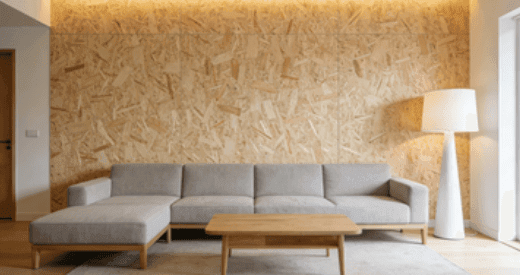
Melamine Board OSB is widely used for decorative wall panels and interior cladding due to its combination of durability and aesthetic versatility.
Aesthetic Versatility
Melamine coatings can simulate wood grains, stone patterns, or abstract textures, offering designers a broad palette for interiors. For instance, a wood grain melamine finish can replicate oak, maple, or walnut without the cost or environmental impact of solid wood. Large-format panels (up to 2800 x 2070 mm) allow minimal joints and seamless wall coverage, enhancing visual appeal.
Protective Properties
The melamine layer provides surface protection against:
- Moisture and humidity
- Scratches from furniture or equipment
- Stains from paints, adhesives, or daily usage
Recommended Installation Practices
Panels should be acclimated to the indoor environment for 48–72 hours before installation. Use adhesives recommended by the manufacturer for optimal bonding. Screws or mechanical fasteners should avoid excessive torque to prevent surface cracking. Leading interior designers note that Melamine Board OSB allows for fast, cost-effective installation without sacrificing aesthetics, making it ideal for commercial offices, hotels, and high-end residential projects.
Additionally, decorative wall panels made from melamine-faced OSB can be combined with acoustic insulation to improve soundproofing, an increasingly important consideration in modern open-plan offices and conference rooms.
Flooring and Subflooring Applications
Although primarily decorative, Melamine Board OSB is also suitable for subflooring and underlayment applications, particularly where stability and moisture resistance are required.
Structural Advantages
- Melamine-coated surfaces reduce surface dust and swelling
- The engineered core provides uniform strength across the board
- Can support laminate, vinyl, or engineered wood flooring systems
Installation Tips
- Boards should be staggered during installation to prevent weak seams
- Proper moisture barriers are recommended in basements or high-humidity environments
- Use screws or flooring nails compatible with the thickness and density of the board
Technical data from ASTM standards indicate that OSB cores with melamine facing have a modulus of rupture between 30–35 MPa and water absorption less than 8% after 24 hours of exposure, ensuring durability for residential and light commercial applications.
Cabinetry and Kitchen Applications
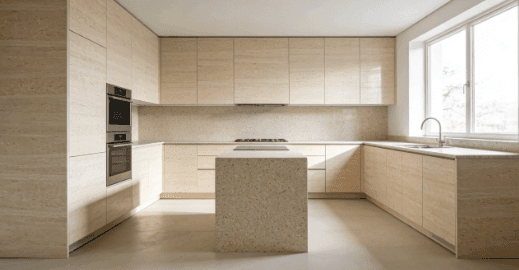
Melamine Board OSB is particularly advantageous in kitchens and wet environments, combining core strength with surface protection.
Kitchen Cabinets
- Smooth surfaces facilitate easy cleaning
- Resistance to oils, water, and mild detergents prolongs cabinet lifespan
- Edge banding ensures moisture protection for cut edges
Bathroom Vanities
- Moisture-resistant Melamine Board OSB reduces warping and delamination
- Compatible with laminated or solid surface countertops
- Supports moderate load-bearing requirements
Commercial Kitchens
- Fire-retardant or high-density variants improve safety and durability
- Easy to repair or replace panels without replacing the entire structure
A study by the National Kitchen and Bath Association shows that melamine boards outperform MDF and plywood in resisting daily moisture exposure when properly sealed.
Partition Walls and Office Dividers
Melamine Board OSB is increasingly used for office partitions, conference room dividers, and educational spaces.
Advantages for Office Applications
- Lightweight and easy to handle during installation
- Can be pre-finished with decorative laminates for immediate aesthetics
- Allows integration of acoustic insulation for soundproofing
Technical Considerations
- Panels should be anchored to support structures at recommended intervals
- Ensure consistent panel alignment to prevent gaps
- Incorporate mechanical connectors for modular design flexibility
Architectural experts emphasize that melamine panels balance cost-effectiveness with professional-grade finishes, enabling rapid interior fit-outs.
DIY Projects and Custom Storage Solutions

Melamine Board OSB is highly accessible for DIY enthusiasts, offering a balance of ease of use and professional results.
DIY Applications
- Modular shelving and storage cabinets
- Customized pet furniture and play areas
- Workshop benches and organizational units
Handling Tips
- Sharp blades should be used for cutting to prevent chipping
- Edge banding improves durability and appearance
- Use clamps and supports to maintain straight cuts during assembly
DIY designers report that using melamine boards reduces project time by approximately 25% compared to traditional hardwood materials while maintaining high aesthetic quality.
Exhibition Stands and Display Units
Trade shows, exhibitions, and retail displays often rely on Melamine Board OSB for its combination of lightweight portability and durability.
Key Benefits
- Panels are easy to transport and assemble
- Resistant to scuffs, scratches, and staining during events
- Can be customized with branding graphics or signage
Professional Insights
Event designers highlight that melamine-faced boards reduce setup and teardown time by 30–40% compared to traditional wooden display panels, lowering labor costs while maintaining a professional look.
Sustainability and Environmental Considerations
Melamine Board OSB is increasingly valued for sustainability in construction and manufacturing.
- Engineered wood cores are often sourced from certified sustainable forests
- Production consumes less raw wood compared to solid timber alternatives
- Melamine coating extends product lifespan, reducing the frequency of replacements
Life cycle assessments (LCA) indicate that melamine-faced OSB panels have a lower carbon footprint than MDF or plywood for equivalent applications, making them a preferred choice in eco-conscious design projects.
Conclusion
Melamine Board OSB is a versatile, durable, and cost-effective material that continues to shape modern furniture design and interior decoration. From kitchen cabinets and office furniture to wall paneling and DIY projects, its combination of structural strength, moisture resistance, and decorative finish makes it an indispensable material for professionals and enthusiasts alike. By selecting the appropriate type, following recommended installation practices, and maintaining proper care, users can maximize both the performance and aesthetics of this engineered wood product.
FAQ
What is Melamine Board OSB?
Melamine Board OSB is a composite material combining oriented strand board with a melamine resin surface for durability, water resistance, and decorative appeal.
Can it be used in wet areas like kitchens and bathrooms?
Yes, moisture-resistant and coated variants are suitable for such applications.
How is it maintained?
Clean with mild detergents, avoid abrasives, and use edge banding to prevent moisture damage.
What thickness is recommended for furniture applications?
Typically, 12–18mm for cabinets and shelving; 18–25mm for subflooring or structural uses.
Is it environmentally friendly?
Yes, using sustainable wood cores and a long-lasting surface, it reduces overall material consumption.
Thank you for reading!
I’m glad you joined me on this journey. If you found this content useful or interesting, I would love to hear your thoughts.
- Follow me on Facebook for tips, updates, and community discussions.
Click here to connect - Subscribe to my YouTube channel for tutorials, demonstrations, and practical insights.
Click here to subscribe
Feel free to share your feedback or questions in the comments or on social media. Let’s keep learning and growing together!
-3.jpg)
.jpg)